Persistent fatigue in women is common, but it is rarely simple. In the early stages, it is often explained as a routine strain, workload, sleep disruption, or irregular meals. Most patients continue through it without a formal evaluation. Then at some point, it stops feeling temporary.
This is not just routine tiredness. It is the kind that lingers, even after rest. Sleep may be adequate in duration yet not restorative. Physical stamina declines. Mental clarity reduces. Some notice irritability. Others describe a steady loss of motivation. What begins as occasional tiredness becomes a constant baseline.
Chronic fatigue is not uncommon in Indian women. More than 12% of women between 18 and 50 report persistent fatigue. Those facing prolonged stress, socioeconomic strain, or underlying mental health concerns showed a higher prevalence. In clinical practice, fatigue is not treated as a diagnosis. It is a presenting symptom. In Ayurveda, a comparable state is described as Ojaokshaya—a gradual depletion of systemic vitality affecting strength, recovery, and immunity.
Why Chronic Fatigue Hits Women Harder — The Biology
Women show a higher prevalence of persistent fatigue, and the reasons are layered.
- Hormonal cycling plays a central role. Monthly fluctuations influence neurotransmitters, the sleep cycle, and energy stability.
- Iron-deficiency anaemia due to heavy menstrual bleeding remains a leading cause. Reduced iron limits oxygen delivery at the cellular level. The body compensates, but at the cost of energy efficiency. Fatigue appears early. Other features, such as breathlessness or palpitations, may follow later.
- Endocrine disorders are another factor. Thyroid dysfunction, insulin resistance, and autoimmune conditions are all more common in women.
In many cases, more than one mechanism is present. That overlap is what makes chronic fatigue in women clinically relevant. At the same time, some smaller contributors tend to be overlooked. Things like dehydration, low vitamin B12, chronic infections, irregular meals, or even inconsistent sleep. Individually, they may not seem significant, but together they can slow recovery.

The Fatigue–Pain–Brain Fog Triad — Understanding the Connection
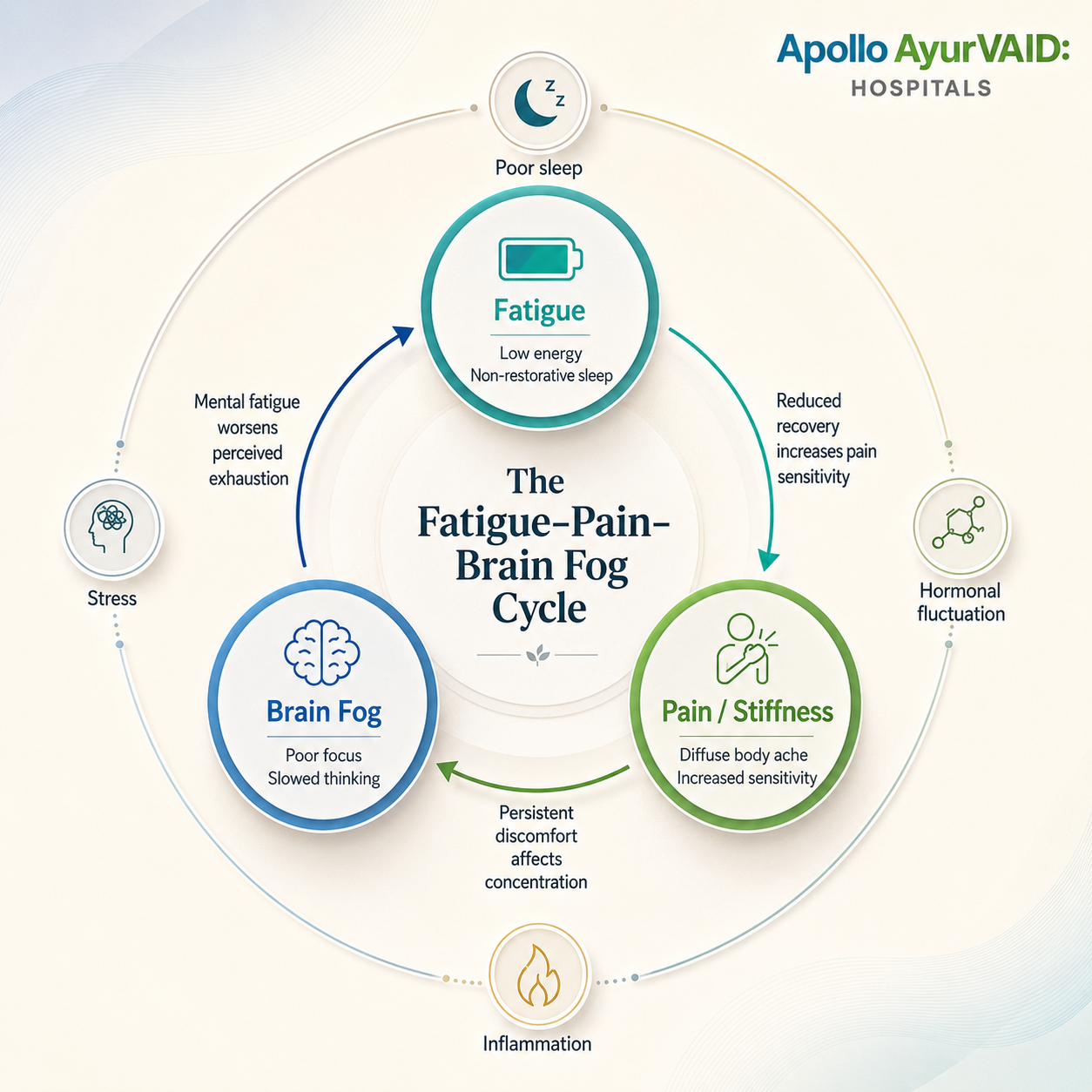
Fatigue rarely exists in isolation. Patients frequently report a cluster of symptoms:
- low-grade body pain
- heaviness or stiffness
- reduced clarity or brain fog, fatigue
At first, these may appear unrelated. With time, the connection becomes clearer. Poor sleep increases pain sensitivity. Chronic fatigue reduces coping capacity. Cognitive fatigue affects attention and memory. This triad tends to reinforce itself. Some patients describe it more simply. They just say they never quite feel fresh, no matter how much they rest. In long-standing cases, patients describe this as a cycle rather than separate complaints.
Hormonal Causes of Fatigue in Women
This is often the most significant category in clinical evaluation.
Disfungsi tiroid
Thyroid disorders frequently present subtly. Hypothyroidism or low thyroid function slows metabolism. Patients don’t usually describe this in clinical terms. They’ll say they feel unusually heavy, like their body has slowed down, and even simple things take more effort. Motivation drops, and the tiredness tends to stay rather than come and go. Weight gain and cold intolerance may appear later, but they are not always obvious at first, which is why these symptoms often go unnoticed at first. This overall pattern is commonly seen in what is referred to as thyroid fatigue in women, where underlying metabolic activity is reduced.
Oestrogen fluctuations (Perimenopause)
Hormonal variability increases during perimenopause. Sleep becomes fragmented. Night waking is common. Even when total sleep duration appears adequate, the quality is reduced. Patients report morning fatigue and reduced daytime endurance. This is typically seen in perimenopause fatigue, often before menstrual changes are fully established.
Adrenal fatigue from chronic stress
Chronic stress alters cortisol rhythm. Patients may feel alert at night but fatigued during the day. Sleep is not restorative. There is often a background of sustained mental load. This presentation is frequently described in women, especially in high-demand environments.
PCOS and insulin dysregulation
Fatigue in PCOS is often under-recognised. Insulin resistance leads to fluctuations in blood glucose. These shifts affect energy levels across the day. Patients may report post-meal drowsiness, cravings, and reduced concentration. This is commonly discussed in the PCOS fatigue Ayurveda view, where metabolic imbalance and impaired agni are emphasised.
Ojokshaya — The Ayurveda Explanation for Chronic Tissue Depletion
Ayurveda approaches fatigue or Klama as a state of depletion rather than only a symptom. This is described as ojas kshaya.
“ओजः सर्वधातूनां सारम्”
Ojas is the essence of all bodily tissues. Ojas reflects the integrity of nourishment across all dhatu. When it is adequate, there is strength, clarity, and stability. When it declines, fatigue becomes persistent. Recovery slows. The system loses resilience. This framework underlies most ojas-depletion Ayurveda treatment approaches. In real practice, this is rarely looked at in isolation. Basic investigations like haemoglobin levels, thyroid profile, vitamin B12, and blood glucose are usually checked alongside.
Signs Your Ojas Is Depleted
Fatigue is usually the most visible symptom, but not the only one.
Other features tend to appear alongside the following:
- persistent low energy not relieved by rest
- reduced clarity or brain fog, fatigue
- increased susceptibility to minor illnesses
- dryness of skin or reduced lustre
- emotional variability or reduced stress tolerance
In practice, this is sometimes first noticed in subtle ways. Reduced endurance. Slower recovery after exertion. Patients may not volunteer these details unless asked. A few also mention mild dizziness or a vague sense of weakness, even on days when they have not done much.
Ojas Restoration Protocol
Management focuses on gradual restoration, not short-term stimulation. Many Rasayana or rejevenative herbs can be used under medical supervision.
Ashwagandha
Ashwagandha for women fatigue treatment in Ayurveda is quite popular. It supports stress adaptation and improves sleep quality over time. It is particularly useful in long-standing fatigue with anxiety or sleep disturbance. Formulations like Apollo AyurVAID Aswagandharishtam help improve stamina, manage stress, and revitalise the body
asparagus
Shatavari benefits for women energy enhancement are well discussed in Ayurveda. It supports hormonal balance and is often used for menstrual irregularities and perimenopausal fatigue. Classical formulations like AyurVAID Sathavarigulam, yang menggabungkan asparagus with digestive support such as Jeera and lipid carriers like Ghrita, are used to address both weakness and underlying reproductive imbalance.
Brahmi
This herb, named after the universal creator Lord Brahma himself, is useful in brain fog fatigue Ayurveda treatment. It supports cognitive function and helps reduce mental fatigue.
Amalaki
A classical rasayana or rejuvenative herb. It is used in rasayana untuk para wanita protocols for antioxidant support and tissue nourishment. A standardised extract such as AmlaPure®, used in formulations like AvestaAyurVAID Bantuan Keradangan & Imuniti, has shown activity in lowering inflammatory markers such as IL-6 while improving antioxidant status. In practice, this becomes relevant in patients who report slow recovery, recurrent minor illness, or underlying digestive irregularity. The effect is gradual, with improvement often noted first in digestion and overall resilience.
Bala
Traditionally used in Ayurvedic medicine for weakness and fatigue. It supports physical strength and recovery in chronic depletion states.
In some cases, supportive therapies like Abhyanga or Shirodhara are added, depending on the patient and overall presentation, under the careful supervision of an Ayurveda doctor.
Dietary Protocol: Ojas-Building Foods for Indian Women
Diet plays a central role in rebuilding energy.
Focus is placed on foods that are nourishing and easy to digest:
- warm, freshly prepared meals
- milk, ghee, and soaked almonds in moderation
- dates, figs, and seasonal fruits
- whole grains and lentils
- iron-rich foods where deficiency is suspected
Irregular eating patterns tend to worsen fatigue.
In practice, patients who stabilise meal timing often report early improvement in energy. Hydration also plays a bigger role than expected. And while caffeine can help briefly, overuse tends to make fatigue worse later.
Sleep, Stress & Dinacharya (Daily Routine) for Fatigue
Maintaining a daily routine has a measurable role in fatigue reduction through stabilisation of sleep and metabolic rhythm.
- Consistent sleep timing improves restorative quality
- Reducing screen exposure at night supports sleep onset
- Gentle daily movement improves circulation
- structured routines reduce physiological stress
Chronic stress is a major driver of fatigue. Simple practices done consistently tend to be more effective than complex interventions done occasionally. Even simple breathing practices, done regularly, can make a noticeable difference over time.
When Fatigue Signals Something More Serious
Not all fatigue is functional. Further evaluation is required when:
- Fatigue persists despite adequate rest
- There is a significant impact on daily functioning
- Associated symptoms such as weight change, menstrual irregularity, or mood changes are present
- There is progressive worsening of symptoms over time
- Persistent dizziness or lightheadedness is present
- Unexplained weight loss or reduced appetite occurs
Conditions such as chronic fatigue syndrome, thyroid disorders, diabetes, and autoimmune diseases need to be considered. Early evaluation prevents prolonged deterioration.
Nota Penutup
Fatigue should not be normalised when it becomes persistent. In most cases, there is an identifiable pattern. Once recognised, it can be addressed. The key is to look beyond the symptom and understand the underlying imbalance. That is where meaningful recovery begins.
Rujukan