المقدمة
Every winter, the city of Delhi as well as the National Capital Region is faced with yet another problem—smog and low air quality leading to an increase in cases of respiratory illnesses.
With falling temperatures, pollutants like PM2.5, PM10, vehicle exhaust and smoke might get trapped in the lower strata of the atmosphere, making one wake up feeling stuffy in their nose, with throat irritation and even a cough; or those suffering from ailments like asthma or other respiratory conditions may experience worsening symptoms.
So, what can we do differently during these months?
Ayurveda looks at respiratory health not only in terms of the symptoms we experience but also in terms of how the environment, digestion, daily routine and individual constitution influence our response to those exposures.
This makes the connection between Delhi air pollution Ayurveda lung health particularly relevant during the winter months.

How Ayurveda Understands Pollution and Respiratory Health
There are descriptions related to exposure to contaminated air and smog in Ayurveda literature through the terms of Raja Dhooma and Visha Vayu.
Continuous exposure to polluted air may lead to problems with respiratory pathways, or برانافاها سروتاس. The disease is known as Pranavaha Srotas Dushti which refers to the impairment of the channels in charge of breathing.
With the repeated irritation of these channels, a person may experience:
- Mucus secretion or feeling of congestion
- Cough and irritation in the throat
- Nasal obstruction and sneezing
- صعوبة في التنفس
- Hyperreactivity of the respiratory pathways
Another concept used in Ayurveda, Dushi Visha, stands for the continuous low exposure of the body to toxins. This disease might be observed in people sensitive to the influence and may result in chronic respiratory disorders such as allergic rhinitis, bronchitis or asthma.
As opposed to focusing on one symptom at a time, Ayurveda tries to understand the whole picture.
Can Nasya Help During Smoggy Weather?
The nose is considered an important gateway for the respiratory system. Ayurveda describes this through the classical statement Nasa Hi Shirso Dwaram—the nose is the gateway to the head.
This is why Nasya is traditionally included in respiratory and upper-airway care.
Pratimarsha Nasya, when appropriate for an individual, involves using a small quantity of suitable medicated oil in the nostrils. Classical oils such as Anu Taila may be prescribed depending on the person’s condition and constitution.
This practice is intended to support the nasal passages, maintain healthy mucosal function and reduce dryness and irritation.
For anyone exploring the exact term ‘air pollution lung protection’, Nasya may be considered as one part of a broader preventive routine rather than as a substitute for masks, pollution avoidance or medical care.
It is also important to remember that Nasya is not suitable in the same way for everyone. An Ayurveda physician should ideally individualise its use, timing and formulation.
Tulsi and Steam: A Simple Winter Support
During winter, congestion and mucus can become especially bothersome for people who are sensitive to pollution.
Tulsi (Ocimum sanctum) has traditionally been valued in Ayurveda for respiratory support. Warm steam may also provide symptomatic relief by helping loosen thick mucus and ease a feeling of nasal or chest congestion.
A simple home routine may include steam inhalation with ingredients traditionally used for respiratory comfort, such as Tulsi, turmeric or ajwain.
However, steam should be comfortable—not excessively hot—and should not be used in a way that risks burns. People with asthma or significant breathing difficulty should also avoid experimenting during an acute episode and seek appropriate medical care.
Ayurveda also describes formulations such as Kamya Rasayana (Health Promoting formulations) and therapies that may be considered for individuals with recurrent cough, allergy or respiratory symptoms. These should be selected based on the person’s clinical assessment rather than used routinely by everyone.
Let the AQI Guide Your Day
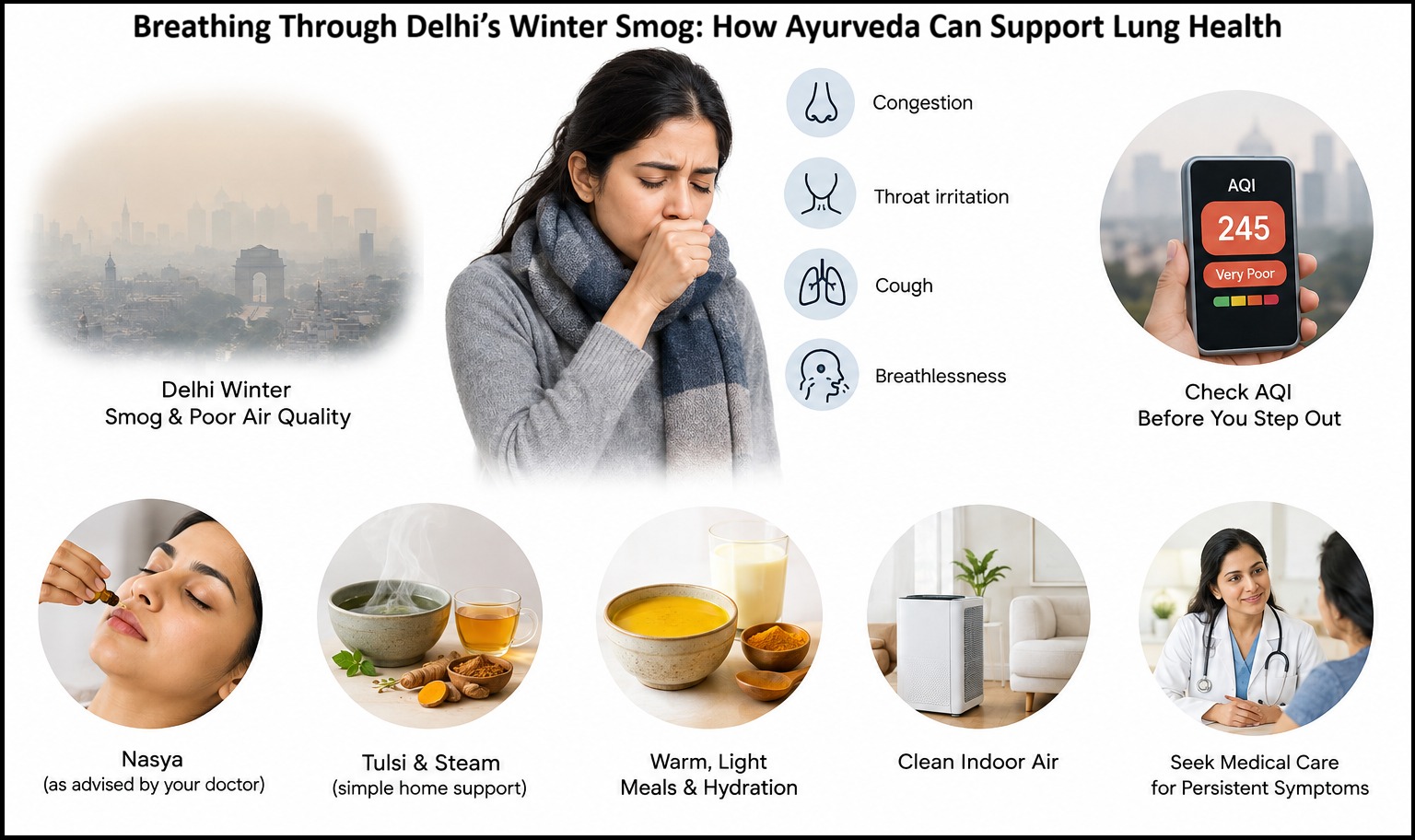
One of the most practical things you can do during Delhi’s winter is paying attention to the Air Quality Index before planning outdoor activities.
For people sensitive to air pollution, outdoor exercise during periods of very poor air quality may increase their exposure to pollutants. The original Ayurveda approach can therefore be complemented with a simple modern habit: check the AQI before stepping out.
| فئة مؤشر جودة الهواء | نطاق تنظيم القاعدة في العراق | Health Guidance & Exposure Strategy |
|---|---|---|
| جيد إلى معتدل | ٢٠٢٤/٢٠٢٣ | Safe for routine outdoor activity. Apply براتيمارشا ناسيا regularly before stepping out. |
| غير صحي | ٢٠٢٤/٢٠٢٣ | Sensitive individuals should limit prolonged outdoor exertion. |
| Severe / Very Poor | ٢٠٢٤/٢٠٢٣ | High concentration of PM 2.5 and chemical gases. Avoid early morning outdoor walks. |
| Hazardous / Toxic | 301 - 500+ | Toxic ground-level smog peak. Strict indoor stay is advised; practise indoor herbal Dhoopana. |
When smog is especially intense:
Keep exposure to a minimum and follow prescribed medical treatment if you already have a respiratory condition.
This is where AQI respiratory health awareness becomes important. Instead of following the same exercise schedule every day, let the quality of the air influence when and where you exercise.
Delhi winter health tips
Winter respiratory care does not have to mean making complicated changes overnight. A few consistent habits can make your routine more supportive.
1. Stay hydrated and choose warm foods
Sip warm or lukewarm water through the day and prefer freshly prepared, warm meals. Ayurveda places importance on maintaining Jatharagni, or digestive function, particularly during seasonal changes.
2. Keep your diet light and comfortable
During periods of congestion, some people find that heavy, fried or excessively cold foods make them feel more sluggish or congested. Choosing warm, freshly cooked meals may feel more comfortable during winter.
3. Use traditional remedies thoughtfully
Warm preparations such as turmeric milk are traditionally used for winter wellbeing. Classical formulations may also be recommended in Ayurveda for cough, allergy or respiratory complaints—but these should be chosen according to the individual’s needs.
4. Be mindful of indoor air
Poor outdoor air does not always mean the air indoors is automatically clean. Avoid unnecessary smoke and strong fumes inside the house and maintain a clean, comfortable environment.
5. Do not ignore persistent symptoms
A cough that does not settle, repeated wheezing, breathlessness, chest discomfort or severe nasal symptoms deserve medical evaluation.
What About Delhi Smog Ayurveda Care?
Ayurveda can offer a personalised framework for supporting respiratory health, especially when pollution exposure is frequent and symptoms keep recurring.
The focus is not simply on treating coughs or congestion after they appear. An Ayurveda physician may assess the person’s symptoms, digestion, lifestyle, constitution, seasonal influences and overall respiratory health before deciding whether any specific therapy is appropriate.
At Apollo AyurVAID, this is approached through Precision Ayurveda and physician-led assessment rather than a one-size-fits-all remedy.
For some patients, care may include dietary and lifestyle changes, internal medicines, Nasya or other physician-supervised therapies depending on the clinical picture.
The important point is that respiratory symptoms should not be self-treated indefinitely, particularly when there is significant breathlessness or an existing condition such as asthma.
Protecting Your Lungs During Delhi's Winter
You do not need to wait for a respiratory problem to become severe before paying attention to your environment.
Checking the AQI, reducing unnecessary exposure during severe smog, maintaining a sensible winter routine and seeking timely medical advice can all form part of responsible respiratory care.
Ayurveda adds another layer by looking at the person as a whole—how they respond to the season, how their respiratory passages are affected and what individual factors may be contributing to recurrent symptoms.
For those exploring air pollution lung protection, the goal should not be to find one magic remedy. It is about building a practical, sustainable routine that supports respiratory health while respecting the severity of environmental exposure.
متى يجب عليك طلب الرعاية الطبية؟
If you or a family member develops a persistent cough, worsening wheezing, significant breathlessness, recurrent sinus symptoms or severe allergy symptoms during the smog season, do not delay evaluation.
Ayurveda care can be integrated with appropriate medical assessment and ongoing treatment where required.
For personalised respiratory care, you can consult the Ayurveda physicians at Apollo AyurVAID, Nehru Enclave, Delhi.
Book a Precision Ayurveda consultation at Apollo AyurVAID Delhi to understand the right approach for your respiratory health this winter.
مراجع حسابات