الوجبات الرئيسية:
- COPD includes chronic bronchitis, which causes airway inflammation and excess mucus, and emphysema, which damages the lungs’ air sacs.
- Persistent cough, mucus production and breathlessness should not be dismissed as ageing or reduced fitness; spirometry is essential to confirm COPD.
- Ayurveda understands respiratory disturbances through Kasa and Shwasa Roga, considering the involvement of Vata, Kapha and Pranavaha Srotas.
- Individualised Ayurveda support may include selected Panchakarma therapies, Rasayana, supervised breathing practices and dietary modifications.
- Ayurveda can complement conventional COPD care, but prescribed inhalers, pulmonary rehabilitation and regular medical monitoring remain essential.
Breathing is something most people don’t really think about until it becomes difficult. For someone with COPD (Chronic Obstructive Pulmonary Disease), the simple act of going up a flight of stairs, walking a few paces, or even getting dressed can be absolutely exhausting. A chronic سعال, loads of mucus, and ضيق التنفس can all progressively affect your day-to-day life.
World COPD Day 2026 (18th November) is all about raising awareness of the importance of early recognition of COPD and appropriate treatment. The 2026 theme is ‘Early Diagnosis and Management for a Better Life’.
WHO figures for 2023 show that COPD was responsible for some 3.4 million deaths worldwide and is therefore the third leading cause of fatality globally. Although the condition currently has no cure, appropriate medical management, lifestyle modifications and pulmonary rehabilitation can help control symptoms and improve quality of life. Alongside conventional treatment, Ayurveda has an individualised approach to supportive respiratory care. It’s worth considering where this approach fits within conventional medical management if you’re considering COPD management with Ayurveda.

What Is COPD and Why Does It Develop?
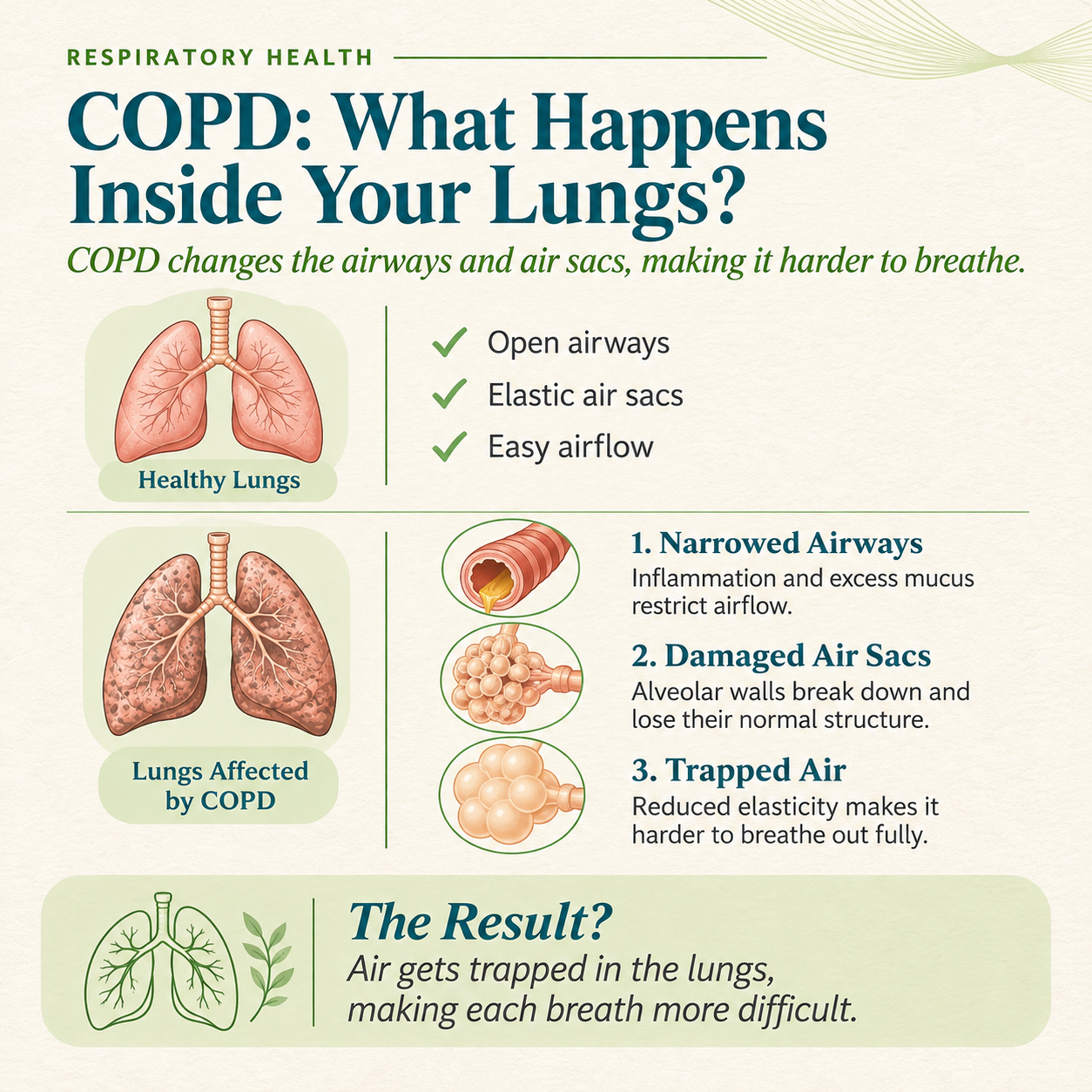
Chronic Obstructive Pulmonary Disease is a progressive lung condition characterised by persistent airflow limitation. It primarily includes two conditions:
- Chronic bronchitis: Long-term inflammation of the bronchial tubes, resulting in persistent cough and mucus secretion.
- Emphysema: Damage to the alveoli, the tiny air sacs that transfer oxygen into the bloodstream. Their destruction reduces the lungs’ ability to exchange gases efficiently.
COPD usually develops following prolonged exposure to substances that irritate and damage the airways. Common risk factors include:
- Cigarette smoking and exposure to second-hand smoke.
- Indoor air pollution from biomass fuels used for cooking.
- Outdoor pollution and long-term exposure to dust, fumes and industrial chemicals.
- Recurrent respiratory infections and a number of respiratory conditions in early life.
- Genetic factors (including alpha-1 antitrypsin deficiency).
COPD is not just the disease of the smoker. It can occur in people who have never smoked at all, particularly those who have had years of exposure to household and occupational pollutants.
Recognising COPD: Symptoms That Should Not Be Ignored
One of the reasons why COPD awareness is so important is that the early symptoms are so easily mistaken for simply getting older, reduced fitness or a recurrence of a respiratory infection. People often modify their lifestyle to cope with breathlessness without realising they need a proper assessment of their lung function. The symptoms are typically:
- Persistent cough (sometimes with sputum).
- Breathlessness with exertion (which may eventually occur even at rest).
- الصفير or a whistling sound when breathing.
- ضيق الصدر.
- التهابات الجهاز التنفسي المتكررة.
- تعب وانخفاض القدرة على ممارسة التمارين الرياضية.
COPD can also involve episodes called exacerbations, during which symptoms become significantly worse than usual. These episodes may involve increased breathlessness, changes in sputum quantity or colour, and worsening cough. Severe breathlessness, chest pain, confusion, bluish lips or a sudden deterioration in breathing require urgent medical attention. An exacerbation should not be managed through home remedies or complementary therapies alone.
كيف يتم تشخيص مرض الانسداد الرئوي المزمن؟
A clinical assessment is essential because symptoms alone cannot establish a COPD diagnosis. Spirometry is the principal test used to confirm persistent airflow obstruction. It measures how much air a person can forcefully exhale and how quickly they can do so. Doctors may also recommend:
- A chest X-ray or CT scan to assess lung structure and rule out any other conditions.
- Oxygen saturation measurement to assess blood oxygen levels.
- Arterial blood gas when indicated clinically.
- Assess symptoms, history of exacerbations, and exercise tolerance.
The post-bronchodilator FEV1/FVC ratio is particularly important. A value below 0.70 supports the diagnosis of persistent airflow obstruction in the appropriate clinical context. COPD is also classified according to airflow limitation, symptoms and exacerbation risk. This assessment helps determine treatment intensity and the requirement for ongoing monitoring.
Understanding COPD Through the Ayurveda Perspective
The clinical picture of COPD is very similar to certain conditions described as Kasa and Shwasa Roga. While these conditions do not exactly correspond to a modern COPD diagnosis, their descriptions offer an Ayurveda perspective on respiratory disturbances. This understanding involves the interaction of different factors:
- فاتا dosha: Aggravation can affect the normal movement of Prana Vata, resulting in disturbed breathing patterns.
- كافا دوشا: Increased or aggravated Kapha may lead to mucus accumulation and obstruction of the respiratory channels.
- Pranavaha Srotas: Disturbances in these channels are associated with respiratory symptoms such as cough, restricted breathing and abnormal respiratory patterns.
- مفهوم تاماكا شواسا shares certain clinical similarities with chronic respiratory conditions, particularly when breathlessness and mucus secretion are prominent.
Understanding chronic obstructive pulmonary disease in Ayurveda through this framework lets physicians consider individual symptoms, Dosha involvement, digestive health, lifestyle and overall strength while planning supportive care.
How Can Ayurveda Support Long-Term COPD Management?
COPD management in Ayurveda aims to treat the individual as a whole, considering overall health, symptom burden, and functional capacity. Treatment will depend on disease severity, existing comorbidities, current medications, and the patient’s ability to tolerate various interventions. An Ayurveda physician may consider any or all of the following as part of an integrative approach.
1. Personalised Panchakarma and Complementary Therapies
بانشاكارما may be indicated in selected patients following a thorough assessment of their clinical stability and physical strength. On an individual basis, the Ayurveda physician will assess the requirements and may opt for:
- الأبيانغا: Therapeutic oil application for relaxation and general well-being.
- Swedana: Selected external heat therapies (where appropriate for the individual’s condition).
- ناسيا: Administration of the prescribed preparation by the nasal route for specific indications.
- Virechana: A purgative procedure indicated in certain patients, as per the Ayurveda assessment.
These procedures are not suitable for everyone with COPD. Intensive purification therapies should not be undertaken during an acute exacerbation or without a detailed medical assessment. They should also not be presented as treatments that reverse emphysema or permanently repair damaged lung tissue.
2. Ayurveda Medicines and Rasayana
Ayurveda formulations may be considered to support general health and manage respiratory symptoms. Rasayana therapies help with nourishment, stamina, and supporting physiological well-being.
One area of clinical interest is Pippali Rasayana. A study with 60 patients examined it alongside standard COPD medication, and the researchers reported some improvements in certain parameters. The study’s methodological limitations, however, mean more robust evidence is still required before we can draw firm conclusions. This distinction is important when discussing the use of Ayurvedic therapy for COPD. Herbal and herbo-mineral preparations should be prescribed only after evaluating potential interactions with inhalers, blood pressure medicines, diabetes medication, and other ongoing treatments.
3. تمارين البراناياما والتنفس
Breathing difficulties can make physical activity and even simple movements challenging for people with COPD. Carefully selected breathing exercises may help individuals become more aware of their breathing patterns. Certain practices associated with COPD Pranayama include:
- Diaphragmatic breathing: Encourages awareness of abdominal movement during breathing.
- Pursed-lip breathing: Inhale through the nose and exhale slowly through gently pursed lips.
- Gentle breathing coordination: Focuses on coordinating breathing with routine movements.
A Cochrane review of 16 trials involving 1,233 participants found that breathing exercises could improve functional exercise capacity. Their effect on breathlessness and quality of life was inconsistent. Breathing exercises should be introduced in people with significant airflow limitations under professional supervision. Forceful breathing and prolonged breath-holding may not be appropriate.
4. Diet and Lifestyle Modifications
Long-term respiratory care also requires attention to nutrition, physical activity, and environmental exposure. An individualised Ayurveda dietary plan may consider digestive capacity, nutritional requirements and the patient’s tolerance for different foods. Some useful considerations include:
- Eating balanced meals with adequate protein to maintain muscle strength.
- Including vegetables, fruits and other nutrient-rich foods.
- Maintaining adequate fluid intake, particularly when mucus is difficult to clear.
- Avoiding foods that consistently aggravate digestive discomfort.
- الحفاظ على وزن صحي.
Avoiding tobacco, indoor smoke, and occupational pollutants is equally important.
Why Conventional Treatment Must Continue Alongside Ayurveda
An important part of COPD management in Ayurveda is recognising the role of conventional respiratory care. Bronchodilator inhalers help relax the airway muscles and improve airflow. Depending on the patient’s condition, doctors may prescribe additional inhaled medication, oxygen therapy or other treatments. Pulmonary rehabilitation is another important component. It combines supervised exercise, breathing education and self-management strategies to improve physical capacity and help patients manage breathlessness.
It is also important to distinguish COPD from الربو. Although both can cause wheezing and breathlessness, their underlying mechanisms and clinical management differ. A discussion of COPD vs asthma ayurveda should not overlook the need for proper medical diagnosis. Similarly, pulmonary fibrosis ayurveda is a separate area of respiratory care because pulmonary fibrosis involves scarring of lung tissue rather than the characteristic airflow obstruction of COPD.
How Apollo AyurVAID Approaches Respiratory Health
At أبولو أيورفيد, the approach to chronic respiratory conditions considers the patient’s symptoms, medical history, existing diagnoses and overall health rather than focusing on respiratory complaints in isolation. A physician-led assessment helps identify relevant dietary, lifestyle, and clinical factors before considering an individualised care plan. For someone living with COPD, this means understanding the extent of respiratory difficulties, current medications, associated health conditions, and the patient’s ability to tolerate supportive interventions. The objective is to complement ongoing medical care with appropriate Ayurveda-based support, lifestyle guidance and continuous clinical monitoring.
If you are considering COPD management with Ayurveda, a consultation with an experienced physician can help determine whether an integrative approach is appropriate for your condition.
World COPD Day 2026: The Importance of Early Recognition
مراجع حسابات