World Diabetes Day (on the 14th of November) is a Global Day of Action to deal with one of the most pressing health issues. There are over 537 million adults with diabetes in the world today, and India is consistently cited as the diabetes capital of the world. In the face of this challenge, we need safe, sustainable and holistic approaches to metabolic health. Modern medicine is very good at acute stabilisation, but traditional systems like Ayurveda have a time-tested approach to reversing lifestyle risk factors, reigniting the metabolic fire, and preventing the development of chronic micro and macrovascular complications.
In Ayurveda, diabetes is Prameha and Type 2 diabetes is Apathyanimittaja Prameha and Santarpanajanya Madhumeha. Rather than just treating the hyperglycaemia, Madhumeha Ayurveda looks at the underlying metabolic derangement. It sees diabetes as a multi-systemic disorder arising from an imbalance of the doshas (primarily Kapha et Vata), an impaired digestive and cellular fire (Agnimandya) and the accumulation of metabolic waste (Il aime) which blocks the channels.
By combining personalised nutrition, evidence-based herbs and regular blood glucose monitoring, an integrative approach to Ayurvedic treatment for diabetes provides a holistic route to restoring glycaemic balance and cellular vitality.
Understanding Type 2 Diabetes in Ayurveda: Root Mechanisms
Type 2 diabetes Ayurveda approach is to deal with the Samrapti (the etiopathogenesis). The Charaka Samhita, for instance, distinguishes between Sahaja Prameha (the hereditary/genetic form of diabetes, i.e. Type 1) and Apathyanimittaja Prameha (the form of diabetes acquired through lifestyle, i.e. Type 2).
Acquired Type 2 diabetes arises when chronic over-nourishment (Santarpana), physical inactivity (Avyayama), day-sleeping (Divaswapna) and a heavy diet of refined foods weaken Jatharagni (the digestive fire) and Dhatvagni (the cellular metabolic fire). This condition leads to excessive morbid fluidity (Bahudrava Kapha) and unrefined fat (Abaddha Meda ), which in turn obstruct Vata and prevent the tissues from taking up nutrition. Over time, this metabolic congestion depletesOjas (vital immunity). The pathway back is to clear the obstructions in the channels, sharpen the metabolic fire and strengthen the tissues without causing a glycaemic spike.
The Power of Vijaysar and Gurmar
| Botanical Herb | Principaux composés phytochimiques | Clinical & Biological Actions |
| Vijaysar (Pterocarpus marsupium) |
Epicatechin, Pterosupin, Marsupsin |
• Stimulates pancreatic beta-cell regeneration and insulin release • Inhibits hepatic gluconeogenesis and digestive alpha-glucosidase • Significantly reduces Fasting (FBS) and Postprandial (PPBS) glucose |
| Gurmar (Gymnema sylvestre) |
Gymnemic acids, Gurmarin |
• Blocks sweet taste receptors and suppresses sugar cravings • Enhances GLUT-4 translocation for improved cellular glucose uptake • Supports pancreatic islet repair and lowers HbA1c levels |
Expanding Your Plate: Glycaemic Index and Diabetes Diet Ayurveda
Nutrition is absolutely fundamental to long-term metabolic health. The diabetes diet Ayurveda approach is based on the ancient principles of Pathya and Apathya (what you can and can’t eat) combined with the modern-day concepts of the Glycaemic Index and Glycaemic Load to prevent the post-prandial blood sugar spike.
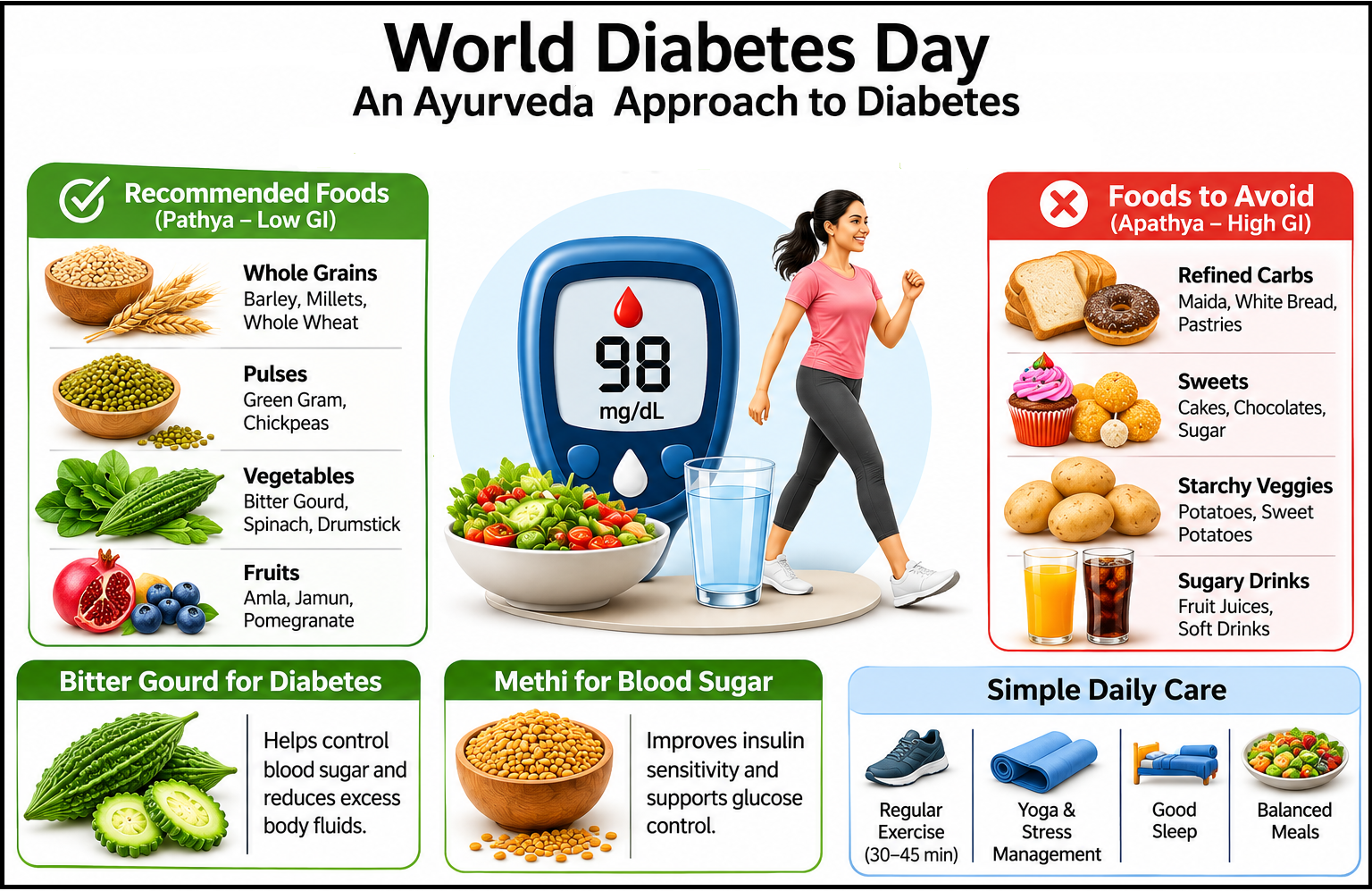
Ayurveda recommends foods that pacify Kapha and Meda while stimulating Agni. Superior grains are low-GI whole grains (aged barley (Yava), millets (Kodo, Bajra, and Jowar), and whole wheat (Godhuma)) rather than refined white flour or polished rice. Barley, in particular, is very high in beta-glucan soluble fibre, which slows carbohydrate absorption and improves insulin sensitivity.
Two Essential Super-Foods for Daily Glycemic Control
1. Bitter Gourd for Diabetes (Karela)
Bitter gourd for diabetes (Momordica charantia) is one of the most effective dietary habits you can adopt. It contains charantin, vicine and polypeptide-p (a plant insulin analogue) and has a direct hypoglycaemic effect. The bitter taste (Tikta Rasa) acts to reduce bodily fluidity (Kleda) and scrape away morbid fat (Lekhana). Clinical studies have shown that drinking fresh bitter gourd juice or eating cooked Karela can reduce fasting glucose by 30-48%.
2. Methi for Blood Sugar (Fenugreek)
Using Methi for blood sugar control (Trigonella foenum-graecum) is a real dual benefit in terms of both glucose and lipid control. It slows gastric emptying and it stimulates insulin secretion in a glucose-dependent manner. The classic method of use is to soak 1 tsp of the seeds in water overnight and drink it every morning; it makes a significant difference in fasting glucose and improves insulin resistance.
Recommended vs. Restricted Foods
| Catégorie d'aliments | Recommended Foods (Pathya – Low GI) | Foods to Limit/Avoid (Apathya – High GI) |
| Grains et céréales | Aged Barley (Maintenant), Kodo Millet, Oats, Whole Wheat | Refined White Flour (Maida), Polished Rice, Instant Cereals |
| Pulses & Legumes | Green Gram (Mudga), Horse Gram (Kulattha), Chickpeas | Gramme noir (Masha) with Heavy Oils, Fried Snacks |
| Légumes | Bitter Gourd (Karela), Pointed Gourd (Patola), Spinach, Drumstick | Potatoes, Sweet Potatoes, Tapioca, Yams |
| Fruits & Drinks | Amla, Jamun, Pomegranate, Green Tea, Herbal Decoctions | Sweet Mangoes, Bananas, Grapes, Sugarcane Juice, Soft Drinks |
Modern Blood Sugar Monitoring with Ayurvedic Care
A very common misconception is that if you’re going down the Ayurveda route for diabetes, you’re effectively abandoning all modern diagnostics. But the integrative approach is required. Routine monitoring is essential for safety, for tuning treatment, and for measuring clinical progress.
Continuous Glucose Monitoring (CGM) & SMBG: Using CGM sensors or home glucometers you can see how various Ayurveda herbs, fenugreek water and low GI meals flatten your actual glucose curve.
Quarterly HbA1c monitoring: HbA1c is still the gold standard for long term control. Aim for the target HbA1c levels (<7.0%) as set by your doctor.
Safe co-management: You must never stop your conventional oral hypoglycemic agents or insulin suddenly when you start the Ayurvedic medicine for diabetes. The herbs will increase your body’s sensitivity to insulin so your doctor can safely reduce the dose of your synthetic drugs to avoid hypoglycaemia.
Daily Regimen & Lifestyle
As per Ayurveda diet and herbs must be combined with daily movement (Vyayama) and stress management to overcome metabolic stagnation.
Daily exercise: 30 to 45 minutes of brisk walking, swimming or cycling each day. Exercise activates muscle GLUT-4 receptors, which allow cells to take up glucose directly from the blood.
Therapeutic yoga asanas (postures) such as Paschimottanasana (Seated Forward Bend), Ardha Matsyendrasana (Spinal Twist), and Dhanurasana (Bow Pose) directly affect the abdominal viscera and improve pancreatic microcirculation.
Stress and sleep hygiene: stress causes the release of cortisol and adrenaline (both of which raise blood sugar). Daily Pranayama (breath control) and maintaining a regular sleep schedule will help to balance the hormones.
Conclusion
Références