ਜਾਣ-ਪਛਾਣ
The weather has become unpredictable nowadays. On a sunny day, it can suddenly start raining, followed by cold, damp weather. This will affect the respiratory system of individuals with weak immunity, such as children, the elderly and people suffering from asthma, COPD and other respiratory ailments.
It usually starts with one family member (probably a school kid bringing home some winter bug), and then it spreads through the family. Very quickly you’ve got the little ones waking up with a cough all night, the working parents having a miserable workday with a sore throat and the oldies in the family just having chest congestion.
Whilst over the counter cough suppressants may provide some short-term relief, a cough that’s going on for weeks needs a much more comprehensive approach. Rather than just suppressing the cough, traditional Ayurvedic medicine for cough aims to re-establish internal balance, build up Agni (digestive fire) and develop long-term immunity for the whole family.

Kasa Roga - Ayurveda approach to cough
In Ayurveda, cough is known as Kasa Roga. Breathing and the function of the respiratory system is the domain of ਪ੍ਰਾਣ ਵਾਤ (a type of Vata which is responsible for breath and respiratory flow). If the body’s internal balance is disturbed by factors such as cold weather, dust, seasonal allergens or diet, then the ਕਪਾ and Vata doshas will be aggravated.
This aggravates the Kapha, which in turn causes a blockage in the respiratory channels (Pranavaha ਸ੍ਰੋਤਾਸ). The normal downward movement of Prana Vata is thus blocked and is forced to move upwards resulting in the explosive exhalation we know as a cough.
In Ayurveda, five types of Kasa (cough) are mentioned, depending on which of the three ਦੋਸ਼ਾ is primarily involved. For managing the condition at home, understanding the two most common seasonal varieties is essential
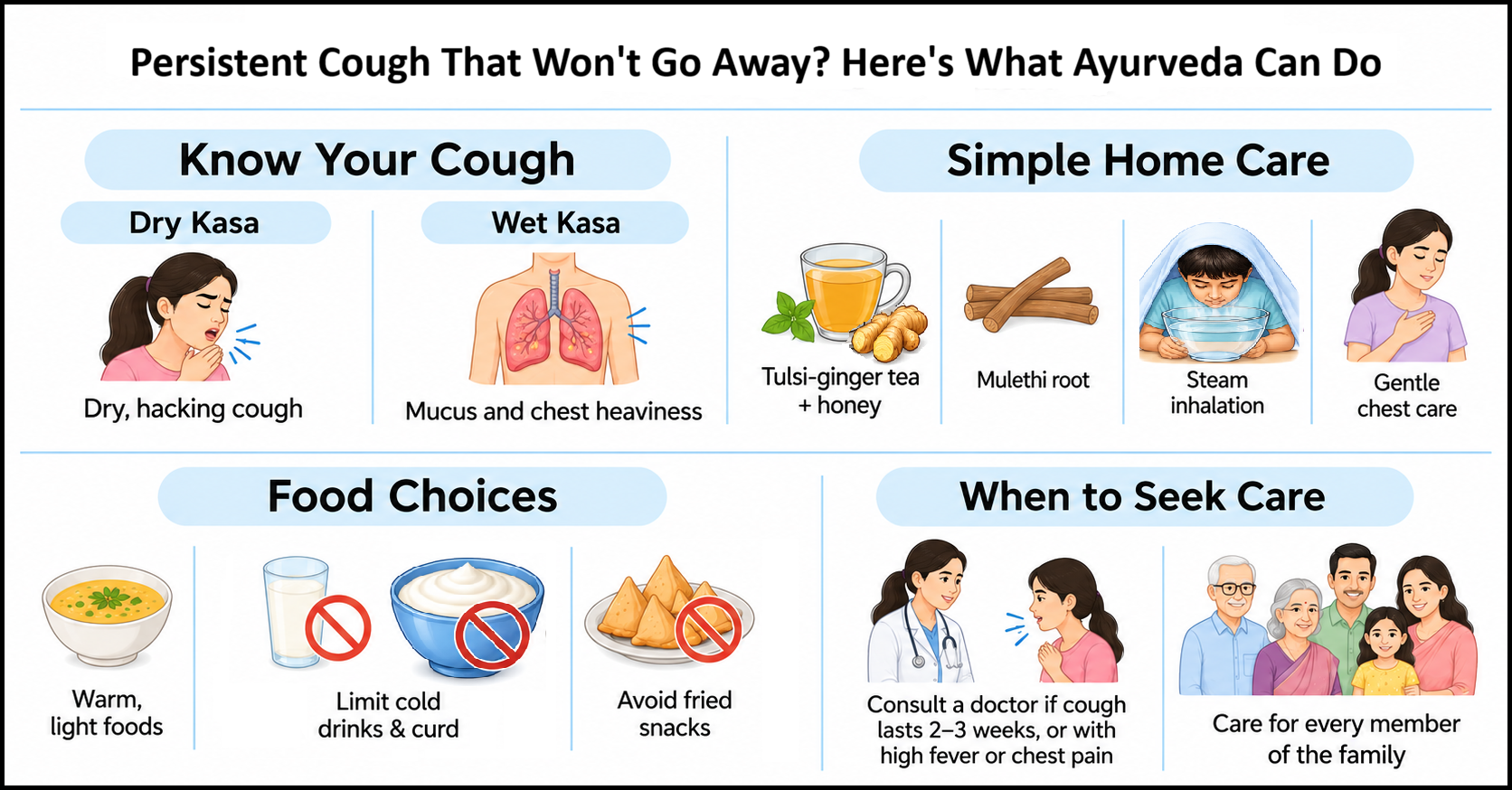
Vataja Kasa (Dry, Irritating Cough)
Characteristics: A dry, hacking, spasmodic cough with very little or no sputum.
Family impact: Typically associated with a dry throat, hoarse voice, sleep disturbance, and chest or head pain when coughing. Often precipitated or worsened by exposure to cold wind, dry air or environmental dust.
Kaphaja Kasa (Wet, Productive Cough)
Characteristics: A heavy cough with phlegm. In Ayurveda, this condition is understood to be due to an excess of Kapha.
Family impact: Thick, sticky white or clear mucus, a sense of chest heaviness, loss of appetite (Aruchi), a bit of lethargy and nasal discharge. As Kapha is the predominant dosha in ਬਚਪਨ (Balyavastha) children are very prone to this type of wet, congestive cough.
Gentle Home Remedies for the Family
When a seasonal cough hits the house, simple, tried and trusted kitchen remedies can provide instant relief and soothe irritated airways in both kids and adults.
Tulsi Ginger Decoction
Ayurvedic treatment for cough feels incomplete without tulsi. Tulsi for cough is a commonly searched term for people seeking relief from cough, cold and other respiratory infections. It’s a classic remedy with immunomodulatory, antimicrobial and respiratory soothing properties. Fresh ginger (ardraka) also helps calm the airways and aid digestion.
ਸਮੱਗਰੀ:
- 10–12 fresh Tulsi leaves
- 1-inch fresh ginger root (grated)
- 3–4 black peppercorns (Maricha, crushed)
- 2 cups pure water
- 1–2 teaspoons raw organic honey
ਤਿਆਰੀ ਦਾ ਤਰੀਕਾ:
- Combine the water, Tulsi, grated ginger and crushed black pepper in a small saucepan.
- Bring to a boil, then simmer on low for 8–10 minutes until reduced by half.
- Strain the warm liquid into cups.
- Allow to cool slightly, then stir in raw honey before serving.
Usage: Adults can have 1/2 cup twice a day; children over 3 years old can have 2–3 tsp twice a day.
Note: Never heat the honey directly or add it to scalding liquids, as heated honey is considered unwholesome in Ayurveda.
Mulethi (Licorice Root) for Throat Soothing
Mulethi for cough and voice hoarseness is another classic Ayurveda intervention. Mulethi (Glycyrrhiza glabra or Yashtimadhu) is a demulcent and expectorant. It coats the irritated throat tissue, thins the mucus and reduces the tickle reflex that leads to the constant cough.
How to use: Simply suck on a small piece of clean Mulethi root or mix 1/4 tsp of pure Mulethi powder with some warm water or milk to help soothe a dry, raw throat in adults and teens.
Herbal Steam Inhalation
Inhaling warm, moist herbal steam is a good way of loosening up the thick mucus in the nasal passages and bronchial tubes. Boiling water with a pinch of crushed Ajwain (carom seeds) or a few fresh Tulsi leaves is an effective, non-pharmaceutical way of decongesting the chest and sinuses for the family.
Proven Classical Ayurvedic Formulations
When you need a bit more support than home remedies, Ayurvedic treatment for cough with the following formulations will provide targeted relief by working on the underlying dosha imbalance.
ਸੀਤੋਪਲਦੀ ਚੂਰਨ
It is one of the most widely used and trusted polyherbal formulations for seasonal respiratory complaints. It’s made up of long pepper (Pippali), cardamom, cinnamon, rock candy,.,and other, and is a very good formulation for balancing both Kapha and Vata. It’s a very effective remedy for cough with phlegm. It will ease throat tickling, help with breathing difficulty, and give you a general sense of well-being as you recover.
Ayurvedic Cough Syrup
When you’re looking for an Ayurvedic syrup for cough (one that will work in both adults and children), there are a multitude of formulations available via a web search. A lot of them contain Vasa (Adhatoda vasica, a very potent natural bronchodilator and expectorant), long pepper (Pippali), wet and dry ginger (ardraka and shunti) and honey etc. These formulations will clear the chest congestion, reduce the duration and severity of the cough and also promote healing of the respiratory tissue. It is effective in treating Vataja, Pittaja and Kaphaja cough in both adult and paediatric age groups.
Pathya & Apathya
Ayurvedic medicine for cough alone won’t work if you don’t consume favourable food. Following basic dietary guidelines accelerates household recovery:
- What to favour (Pathya): Warm, freshly cooked, easily digestible food such as mung dal soup, warm rice gruel, light vegetable soups (with cumin, black pepper and turmeric), and warm water to drink throughout the day. Cover yourself with jackets or sweaters and wear ear protection when stepping out in winter.
- What to Avoid (Apathya): Ice-cold drinks, chilled leftovers, heavy or deep-fried food, very sweet or oily snacks, and cold yogurt/curd at night. Avoid exposure to cold wind, taking a bath in cold water and drinking room temperature or cold water.
When Home Remedies Aren't Enough: The Role of a Family Clinic
Mild seasonal coughs will usually respond quite well to home care. A cough that lasts longer than two or three weeks, one that’s associated with a high fever, one that’s causing chest pain or one that’s affecting an emaciated or elderly family member needs an expert assessment.
Rather than just self-medicating all the time or going down the route of multiple courses of antibiotics, to get a proper diagnosis of the underlying cause of the illness, you’d be far better off going to a proper medical facility for a structured, individualised Ayurvedic treatment for cough.
ਤੇ AyurVAID Family Clinic, experienced Ayurveda doctors will assess each family member’s individual Prakriti, age-related susceptibilities and specific dosha imbalance. We put together a complete family care plan with individualised herbal prescriptions, gentle external therapies and specific dietary advice to break the cycle of recurrent seasonal infections and support real, lasting health and immunity for the whole family.
Summary Checklist for Family Respiratory Wellness
- Identify the type of cough (is it a dry cough or a wet cough with phlegm)? Ayurveda can treat both with the right herbs.
- Start with Warm Kitchen Care: brew fresh tulsi for cough tea (with ginger and honey) or use mulethi for cough and sore throat.
- Use the classical remedies wisely: keep Ayurvedic cough syrup and other remedies in your family medicine chest.
- Consult a specialist clinic early on to get the appropriate Ayurvedic medicine for cough and the appropriate treatment if the symptoms persist.