تعارف
If you were recently diagnosed with Grade 1 or Grade 2 Non-Alcoholic Fatty Liver Disease (NAFLD) during a routine ultrasound, you may feel overwhelmed. Most health articles quickly turn to long lists of pharmaceutical medications or complex clinical therapies. But early-stage fatty liver is really a metabolic lifestyle condition—and Ayurveda considers your kitchen and diet your primary place of healing.
This blog offers an actionable fatty liver diet plan that focuses on reversing hepatic fat accumulation naturally through proper nutrition, دوشا balancing, and metabolic stimulation and not just through pill-based interventions.

Understanding the Fatty Liver in the Light of Ayurveda
In Ayurveda, the liver is called Yakrit, the main seat of which governs blood formation, cellular metabolism, and fat processing. The root cause of Non-Alcoholic Fatty Liver Disease (NAFLD or Kaphaja Yakrit Dalludara) lies in the Agnimandya (a slow digestive and metabolic fire).
In the case of a weak digestive fire (اگنی), the body producesAMA (incompletely digested metabolic waste). This Ama associates with vitiatedکفا دوشا۔ and gets deposited as excessمیڈا دھتو (fat tissue) in the liver cells. This fat buildup clogs the internal transport channels of the body over time, impacting liver function and resulting in low energy, abdominal fullness and slow digestion.
As early steatosis (infiltration of liver cells with fat) is completely reversible, following an appropriate diet for fatty liver helps rekindle Agni, remove Ama, and restore liver health. A holistic fatty liver treatment diet focuses on clearing these metabolic blockages at the root level.
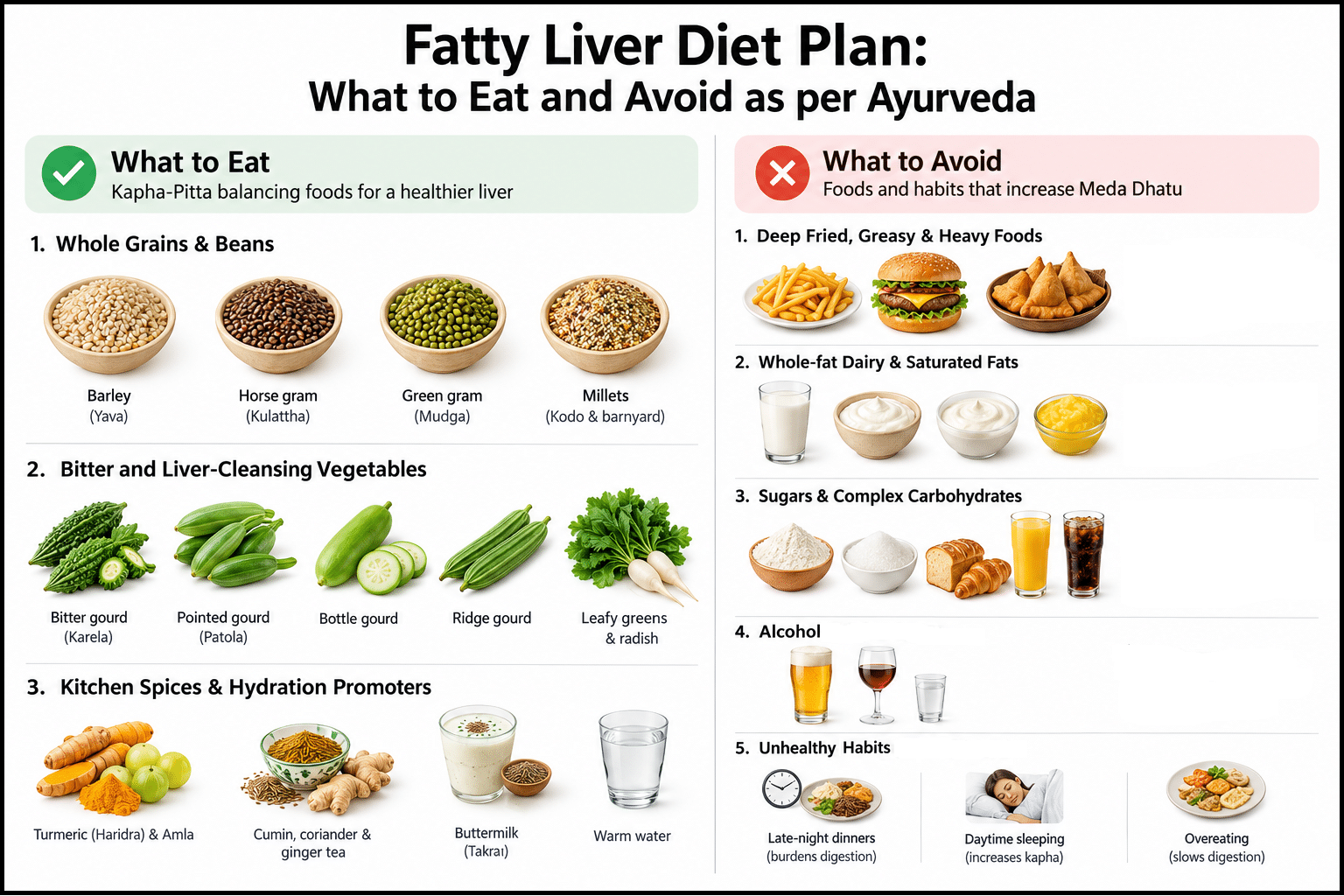
Foods to Eat: The Pitta-Kapha Balancing Plate
Managing this condition requires a focused Kapha-Pitta diet fatty liver approach. Kapha causes fat stagnation and blockages of channels, while Pitta controls metabolism in the liver and localised inflammation. So, your food choices should be made to emphasise Tikta (bitter), Kashaya (astringent) and Katu (pungent) tastes to scrape away accumulated fat tissue.
1. Whole Grains & Beans
- Barley (Yava): Traditional texts consider Old barley (Yava) to be light and dry. It actively reduces excess Kapha and Meda.
- Horse gram (Kulattha): This spice is known for its ability to scrape fats. It stimulates the metabolism and prevents the accumulation of lipids in the hepatic tissue.
- Green Gram (Mudga): An extremely lightweight food that is easily digested, Mudga Yusha provides satiety without placing a heavy digestive burden on the body.
- Millets: Kodo and barnyard millets have a lower glycaemic index and higher fibre content than rice.
2. Bitter and Liver-Cleansing Vegetables
- Bitter Gourd (Karela) & Pointed Gourd (Patola): These are natural cholagogues and stimulate the flow of bile and relieve congestion of the liver.
- Bottle Gourd & Ridge Gourd: Very light, cooling and easily digestible for a sluggish digestive system.
- Leafy Greens & Radish: Spinach, fenugreek leaves, and tender radish help with daily detox.
3. Kitchen Spices & Hydration Promoters
- Turmeric (Haridra) and Amla (Indian Gooseberry) – The combination of fresh Amla juice and turmeric acts as a great source of antioxidants and reduces fat deposition in the liver.
- Cumin, Coriander & Ginger Tea – Tea made from crushed cumin and coriander seeds along with fresh ginger stimulates digestion and purifies the body channels.
- Buttermilk (Takra) – Buttermilk that has been diluted and seasoned with roasted cumin seeds and rock salt. This drink is easy to digest.
- Warm Water – Consuming warm water during the day boosts metabolism.
These foods make up an optimal diet for managing a fatty liver naturally.
NOTE: Do not consume kitchen spices excessively as medicine for long durations. Moderation is the key and medically supervised consumption is advisable.
Foods to Avoid that Exacerbate Meda Dhatu
To prevent fatty liver from progressing, identify and avoid foods that contribute to its development. These are foods that directly cause excess Meda Dhatu, block your channels and smother your digestive fire.
1. Deep Fried, Greasy & Heavy Foods
Avoid heavy, unctuous and deep-fried dishes, fast food and ultra-processed snacks. These directly overwhelm the liver’s ability to process lipids.
2. Whole-fat dairy & saturated fats
Avoid thick whole milk, curds, heavy cream and excess ghee.
3. Sugars & Complex Carbohydrates
Avoid refined white flour (Maida), white sugar, bakery products, packaged juices and carbonated drinks with high fructose content.
4. Alcohol & Other Drugs
Strictly remove alcohol, as it is a direct hepatotoxin that significantly worsens liver fat and cell inflammation.
5. Unhealthy Habits
Late-Night Dinners: Having heavy meals at night burdens the digestive system leading to indigestion.
Daytime Sleeping: Sleeping during the day directly increases kapha and slows digestion.
Overeating: Eating food before your previous meal has fully digested is a main cause of non-alcoholic fatty liver.
Transitioning to a clean fatty liver diet means avoiding these harmful items and habits entirely
Sample 1-Day Ayurveda Meal Plan for Grade 1 & 2 Fatty Liver
Implementing an easy-to-follow diet chart for fatty liver ensures consistent, daily metabolic support
| Time / Meal | Meal Plan Menu | Ayurveda Principle |
| Early Morning (6:30 AM) | 1 cup warm water with 1 tsp soaked fenugreek seed water OR Cumin/Coriander warm infusion. | ہے Kindles اگنی (digestive fire) and initiates early-morning channel clearing. |
| Breakfast (8:00 AM) | Warm barley porridge cooked with water and a pinch of pepper, OR green gram chilla/pancake with vegetables. | Light, dry and کفھا-pacifying morning fuel. |
| Mid-Morning (11:00 AM) | 1 small glass of fresh Amla juice mixed with a pinch of turmeric powder. | Rich in natural antioxidants to support liver rejuvenation. |
| دوپہر کا کھانا (1:00 PM) | 2 dry barley or millet rotis, 1 bowl of Horse Gram soup and sautéed bitter gourd/bottle gourd along with 1 small cup of spiced buttermilk. | Balanced main meal featuring bitter and astringent tastes to scrape off accumulated fat. |
| Evening Tea (5:00 PM) | 1 cup warm ginger tea or warm water with a dash of lemon juice. | Prevents afternoon sluggishness and maintains metabolic momentum. |
| Dinner (7:00 PM – Early) | 1 bowl of warm Green Gram soup with steamed spinach/pointed gourd and 1 light barley roti. | Light, easily digestible dinner that allows the liver to rest and detoxify overnight. |
| Bedtime (9:30 PM) | Sip warm water | Promotes regular morning bowel movement and clears digestive waste. |
The Core Lifestyle Principles to protect the liver
Eat fresh cooked food warm and in moderation. While eating, keep one-third of the stomach empty to facilitate proper movement of air and digestion.
Do brisk walking, cycling or any form of physical activity for 30–45 minutes daily. The physical activity helps accelerate the elimination of fat from the liver.
Exercises detoxify the liver and lifestyle changes aid speedy recovery.