முக்கிய எடுத்துக்காட்டுகள்:
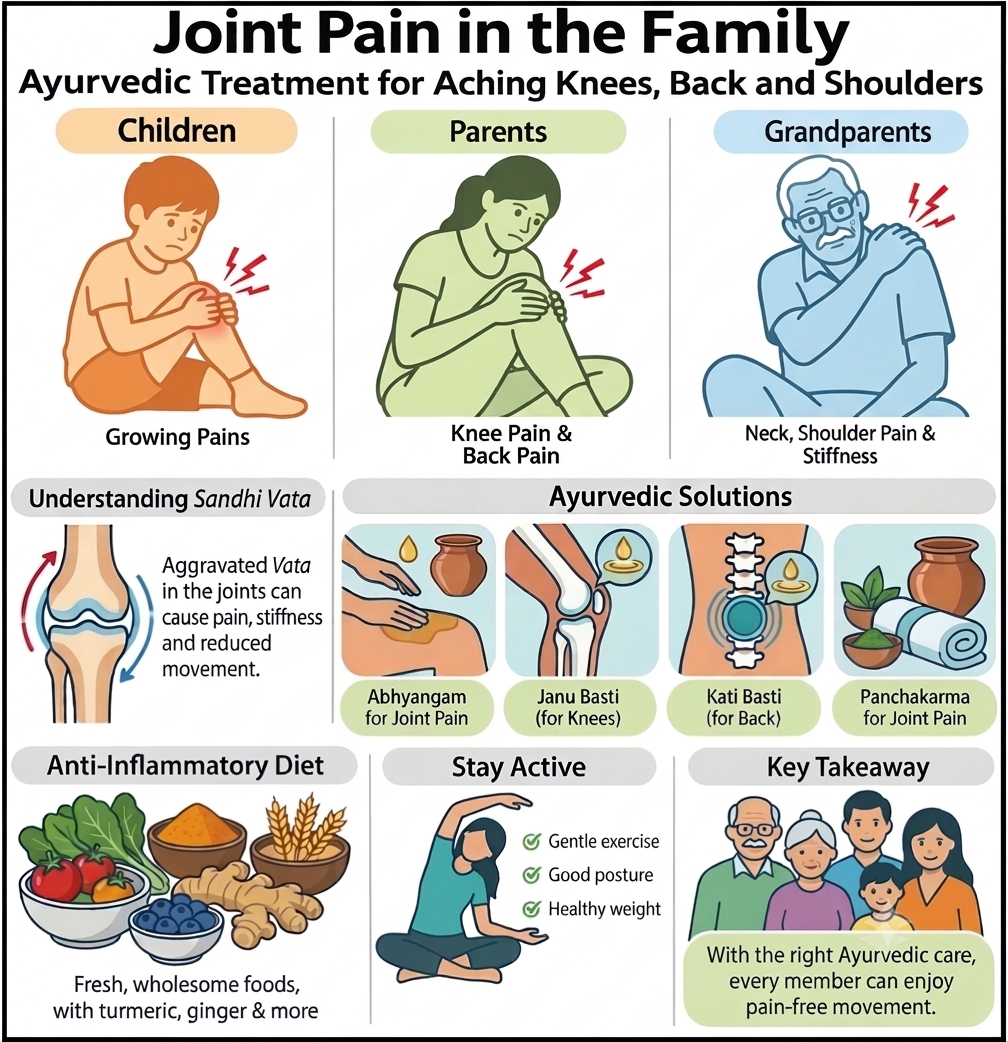
- Joint pain can affect children, adults and older people differently, and the underlying cause determines the care required.
- Persistent pain, swelling, morning stiffness or difficulty moving should not be dismissed as normal ageing or growing pains.
- Ayurveda relates osteoarthritis to Sandhigata Vata, where aggravated வாட்டாவை and depleted ஷ்லேஷக கபா are considered important in joint discomfort and restricted movement.
- Abhyanga, Janu Basti, Kati Basti மற்றும் தேர்ந்தெடுக்கப்பட்டது பஞ்சகர்மா procedures may form part of personalised Ayurveda care, depending on the diagnosis.
- Managing joint pain involves more than treatment: appropriate diet, regular movement, muscle strengthening and individualised care help support everyday mobility.
Your child may complain of aching legs after an active day. Your parent finds it difficult to climb stairs because of knee pain. Your grandparent wakes with a stiff neck and aching shoulders. Joint and muscle pain can affect several family members, but the causes—and the care each person needs—may differ.
Joint pain Ayurvedic treatment begins by identifying the cause, rather than assuming every ache is arthritis or giving everyone the same medicine or oil. The family-centred approach considers food and lifestyle as common factors, as triggers or pacifiers; thus following a customised diet and lifestyle is essential too.
Joint Pain Can Look Different at Every Age
- Children: What is commonly called growing pains usually affects both legs in the evening or at night and settles by morning. It is often muscular discomfort, not a problem caused by bones growing. They may suffer from sports injuries or pain caused by overuse. Pain in one joint, morning pain, swelling, fever, persistent symptoms or limping needs medical assessment as these symptoms may suggest சிறுபான்மை இடியோபாட்டிக் கீல்வாதம் (JIA), Viral or septic arthritis, etc.
- Adults and parents: Knee pain may be related to கீல்வாதம், முடக்கு வாதம், spondylitis, previous injury, excess body weight, repetitive strain or reduced muscle strength. Pain while climbing stairs, stiffness after sitting and difficulty squatting may warrant an assessment. Back or shoulder pain may also arise from posture, muscle strain, frozen shoulder or spinal conditions.
- Older adults and grandparents: Age-related changes in the neck and spine, including cervical spondylosis, may cause neck stiffness, shoulder pain and sometimes tingling or pain travelling into the arms. New weakness, balance problems or difficulty walking need prompt evaluation.
The same symptom can have different causes. Examination and investigations, when needed, help distinguish osteoarthritis from inflammatory arthritis, injury, nerve compression and other conditions.
Understanding Sandhigata Vata in Ayurveda
In Ayurveda, osteoarthritis is commonly understood in relation to Sandhigata Vata. Sandhi means joint, while வாட்டாவை is associated with movement. Ayurveda describes aggravated Vata affecting the joints, along with depletion of Shleshaka கபம், traditionally associated with joint lubrication. This is linked with dryness, stiffness, pain and restricted movement. Digestive imbalance (அக்னி) மற்றும் உன are also considered during Ayurveda assessment.
This is an Ayurveda framework, not a substitute for modern diagnosis. Not every form of arthritis is Sandhigata Vata. Rheumatoid arthritis, for example, is an inflammatory autoimmune condition and requires its own medical assessment and care plan.
How Can Ayurveda Support Joint Health?
At Apollo AyurVAID குடும்ப மருத்துவமனை, joint pain, muscle aches, back pain and body stiffness are addressed as common health concerns affecting children, adults and older family members. Through Precision Ayurveda, qualified Ayurveda physicians assess individual concerns and provide personalised care tailored to each family member, making everyday healthcare accessible to every generation.
We have an individualised, protocol-driven approach to care. The physician considers the site and duration of pain, stiffness, swelling, movement, age, body weight, digestion, sleep, activity, existing illnesses, medicines and relevant reports. Treatment may combine internal medicines, external therapies, selected Panchakarma procedures, diet and functional rehabilitation after the initial assessment at the family clinic at Apollo AyurVAID.
Abhyangam for joint pain
Abhyanga is a therapeutic massage using an appropriate medicated oil. When suitable, it may help ease muscular tightness and stiffness and support comfortable movement. The choice of Ayurvedic oil for joint pain depends on the person and condition; no single oil suits every knee, back or shoulder complaint.
Avoid massage over a hot, red, acutely swollen or very tender joint unless a clinician advises it. Deep massage may be unsuitable for some injuries and inflammatory conditions.
Local Therapies: Janu Basti and Kati Basti
- Janu Basti is considered for selected knee complaints. Warm medicated oil is retained over the knee within a dough boundary for a prescribed period. It may be included in knee pain Ayurveda care after the cause of pain has been assessed.
- Kati Basti involves retaining warm medicated oil over the lower back. It may be part of a plan for selected cases of chronic lower-back pain and stiffness. It is not suitable for every cause of back pain, particularly when urgent spinal or nerve-related conditions are suspected.
For neck and shoulder symptoms, the doctor may consider other local therapies and exercises depending on whether the pain comes from the neck, shoulder joint or surrounding muscles.
Panchakarma for joint pain
பஞ்சகர்மா is not a standard ‘detox’ package for everyone. Depending on the diagnosis, age, strength and associated conditions, a physician may select preparatory oleation and sudation, Basti or other procedures. The aim is to address individual clinical needs, ease symptoms and support function—not to promise that worn cartilage can be restored.
An Ayurvedic medicine for joint pain should be prescribed only after assessment. Do not self-medicate, combine multiple oils or supplements, or stop prescribed arthritis medicines without consulting your treating doctor.
A Practical, Anti-Inflammatory Eating Pattern
A balanced diet can support joint health, digestion and overall wellbeing. The following foods are recommended based on Apollo AyurVAID’s dietary guidelines for rheumatoid arthritis:
- Include: red rice, barley, horse gram, green gram, seasonal vegetables and adequate protein.
- Use: Ginger, garlic, turmeric, cumin and coriander in everyday cooking.
- Prefer: Freshly prepared, warm, easily digestible meals with moderate portions.
- Limit: Deep-fried and processed foods, refined carbohydrates, excess sugar, red meat and excessive salt.
- Stay hydrated: Drink adequate clean water throughout the day.
- Personalise your diet: Pay attention to your individual food sensitivities and avoid unnecessary dietary restrictions.
Dietary changes should complement, not replace, prescribed arthritis treatment.
Keep Moving—and Know When to Seek Help
Prolonged rest can increase stiffness and weaken the muscles that support joints. Gentle walking, mobility work, appropriate strengthening, physiotherapy and posture changes can help maintain function. Activity should match the diagnosis and pain level; do not push through severe pain or an acutely swollen joint.
Seek prompt medical care for a hot, swollen joint with fever or feeling unwell, severe pain after injury, inability to bear weight, new weakness or loss of balance. A child who limps, has persistent or one-sided pain, or develops swelling or fever should be assessed rather than assumed to have growing pains.
The goal of family joint care is not simply to reduce pain for a day. It is to help each person move, sleep and participate in daily life with greater comfort. Whether the concern is back pain Ayurveda, knee pain Ayurveda, shoulder stiffness or diagnosed arthritis Ayurveda, start with an accurate diagnosis and a personalised care plan.
குறிப்புகள்