Introduction
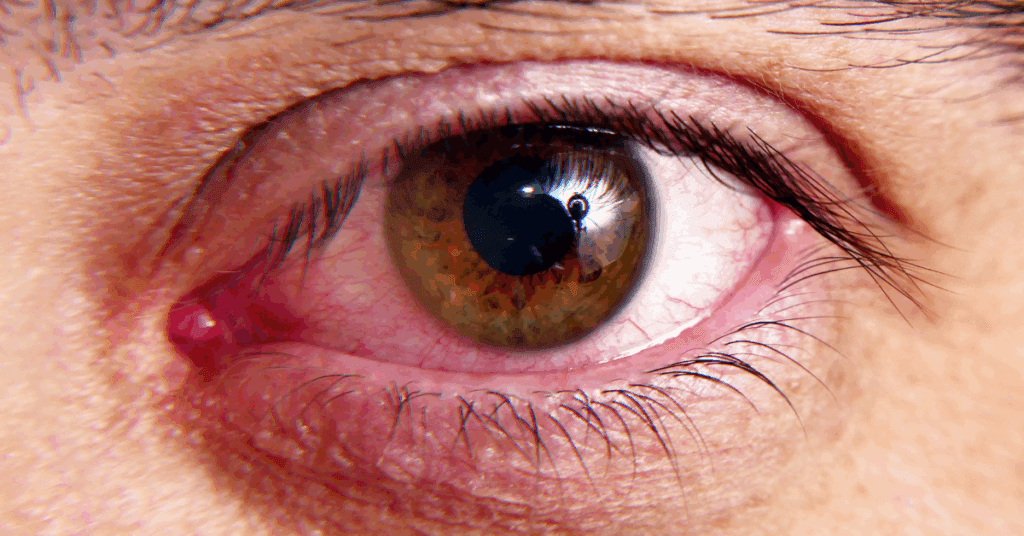
Red eye, also known as bloodshot eyes, is a common concern that can affect one or both eyes. Red eye occurs when the small blood vessels on the surface of the eye become dilated due to irritation, dryness, or some underlying disorder. In many cases, the condition is usually benign and will often resolve itself with home care or rest; however, persistent redness, accompanied by symptoms such as pain, discharge, or visual changes, may indicate a more serious disorder that requires medical intervention.
Ayurveda describes several types of eye disorders that may cause redness classified as Shuklagata Rogas (involving the sclera or white part of the eye), Krishnagata Rogas (involving the iris or pigmented part of the eye), and Sarvagata Rogas (disorders of the whole eye like conjunctivitis). This blog will explore red eye, causes, symptoms and Ayurvedic treatment for red eye.
What are the causes of Red Eye?
A red eye might have several causes. Sometimes something as simple as wearing your contact lenses for too long or staring at screens will lead to red eyes. Understanding the reason for eyes redness is crucial, as it helps determine whether simple care is enough or if prompt medical attention is needed. Other causes may include:
- Injury or a foreign body in the eyes
- Allergies can cause swelling in the conjunctiva.
- Corneal ulcers, which are caused due to infection or inflammation
- Inflammation like Conjunctivitis or Pink eye, Blepharitis, Keratitis, Scleritis, Uveitis, Iritis, or Episcleritis
- Infections like Eyelid styes, Corneal herpes infection, and Orbital cellulitis
- Glaucoma results from a buildup of fluid in the eyes, resulting in optic nerve damage and redness of the eye
In Ayurveda, red eye is the result of an imbalance of Pitta and Vata dosha along with the involvement of Rakta dhathu.
What are the symptoms of Red Eye?
Along with redness of one or both eyes, you might experience:
- Pain, burning sensation, and itching
- Watering of the eyes and eye discharge
- Vision disturbances
- Discomfort to bright lights (photophobia)
| Ayurveda Term |
English / Modern Equivalent |
Key Features / Symptoms |
| Prastari Arma |
Pterygium |
Spreading red or blue structure in the sclera. |
| Lohita Arma |
Conjunctival vascular growth |
Overgrowth of red tissue resembling a red lotus. |
| Arjuna |
Subconjunctival hemorrhage |
A shining red spot on the sclera. |
| Shirajaala |
Episcleritis / Scleritis |
Thick veins forming a red net-like pattern. |
| Shira Pidika |
Deep Scleritis / Phlyctenular conjunctivitis |
Small nodules near iris with surrounding veins. |
| Svarna Shukra |
Corneal ulcer |
Deep ulcer, warm tears, intense pain, poor vision. |
| Ajkajata |
Anterior staphyloma / Adherent leucoma |
Painful red structure with sticky discharge. |
| Rakta Abhishyanda |
Conjunctivitis |
Redness, discharge, copper-colored tears, burning. |
| Pitta Adhimantha |
Acute angle closure glaucoma |
Deep copper eyes, swelling, burning, severe pain. |
| Rakta Adhimantha |
Scleritis / Haemorrhagic inflammation |
Hibiscus-red eyes, pricking pain, bloody discharge. |
| Shopha Yukta Akshipaka |
Endophthalmitis / Panophthalmitis |
Swelling, sticky discharge, heaviness, copper hue. |
| Amladhyushita |
Chemosis / Irritant conjunctivitis |
Redness & swelling caused by sour/irritant foods. |
| Shiro-Utpata |
Scleritis / Vascular congestion |
Copper-colored lines spreading on eye surface. |
| Nayana Abhighata |
Traumatic red eye |
Swelling, redness, pain post injury. |
A detailed physical examination helps to determine more about the causes of red eyes. Understanding the symptoms, duration, type, and amount of discharge, changes in vision, level of pain severity, presence of photophobia, presence of allergies or systemic disease and if the patient uses contacts will further the ability to establish a diagnosis.
Ayurvedic treatment for Red Eyes
Ayurveda has specialised therapies for improving eye health, including Tarpana (a procedure in which the medicated ghee is kept in the eye for a specific time), Putapaka (a medicine extracted from herbs is kept in the eyes), Aschyotana (medicated eye drops), Netraprakshalana (eye wash with medicines like Triphala choornam boiled in water), Anjana (a medicine applied in the muco-cutaneous junction), Seka (a thin stream of medicine poured on the closed eye), etc. Other treatments like Nasya, Virechana, Mukhalepa (that can have an effect on the trigeminal nerve), Gandusha, and Kavala ( gargling of medicated liquids or oils), might also be prescribed according to the condition. Ayurveda also focuses on diet and lifestyle changes. Foods that are Chakshushya or beneficial for eye health include red rice (Shali & Shashtika), Snake gourd (Patola), bitter gourd (Karavella), flat beans (Nishpava), kodo millet (Kodrava), and green gram (Mugdha) with ghee. Favour foods that are sweet and bitter as they balance Pitta. Avoid Amla Rasa (sour), Lavana (salt), Kshara (alkali), Katu Rasa (pungent) , Masha (horse gram), and Tambula (Betel leaf). Wash eyes with cold water, Padabhyanga (application of medicated oil on feet), Usha jalapana (water intake early in the morning), shiro abhyanga (application of oil on the head) and eye exercises are recommended for overall eye health. Yogasanas like Matsyasana are also beneficial.
Home Remedies for Red Eyes
- Use a cold compress to reduce inflammation
- Wash your hands before and after touching your eyes to reduce the chances of infection
- Reduce screen time to avoid eye strain.
- Avoid external irritants like smoke and dust
- Don’t use makeup or contact lenses until redness subsides
- Stay hydrated
When to Seek the Doctors
If the redness lasts for 2 or more days or has any associated symptoms with pain, fever, nausea, vomiting, swelling, light sensitivity, or change of vision such as blurriness or rings of white around lights, it is better to get in touch with your doctor. If the redness is due to trauma, chemical exposure, or injury, it is advisable to contact a doctor without delay.
Conclusion
Red eye can be annoying, uncomfortable, or sometimes alarming. It may be simply due to too much time in front of a screen or simply rubbing your eyes, or may even be a sign of something more that may need investigating. Ayurveda can help in more ways than providing symptomatic relief by treating the root cause of symptoms through balancing the Doshas and nourishing Rakta or blood for healthy eyes from the inside out. Together with conventional treatment protocols, a combination of herbal therapies, special eye treatments, a mindful diet, and small daily changes can help reduce redness and relieve inflammation while supporting the health of your eyes overall.