Foot Drop

Table of Contents

Introduction

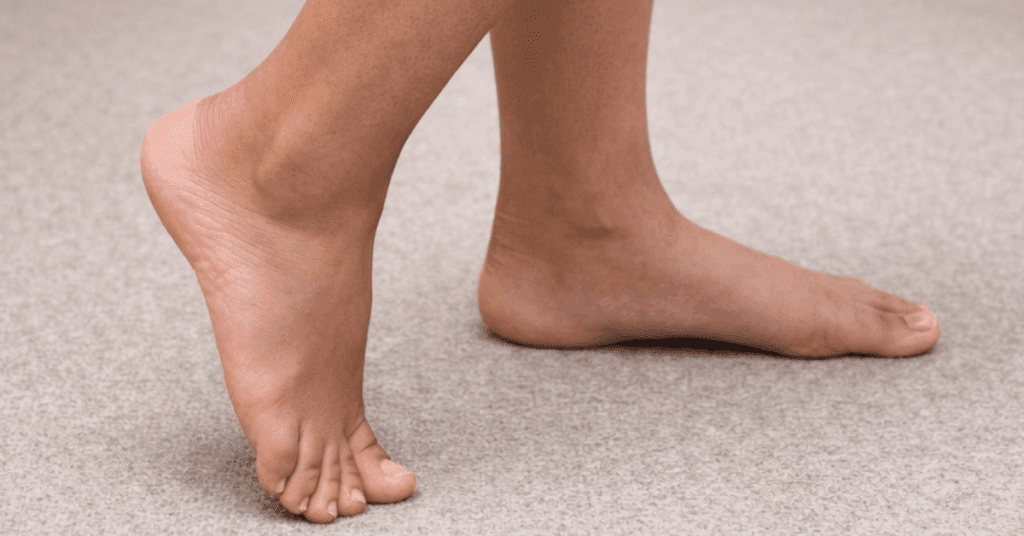
Walking is such a simple, taken-for-granted act — until it isn’t. ‘Foot drop’ is the name we give to the difficulty of lifting the front part of the foot while walking. People often describe it as the toes “dragging” or a need to lift the knee higher than usual to avoid tripping. While the symptom can feel alarming, understanding the foot drop causes and the available paths to treatment can bring clarity and hope.

What exactly is foot drop?
Technically, foot drop is the loss of ankle dorsiflexion — your ability to lift the foot toward the shin. Functionally, it increases the risk of trips and falls and makes walking tiring and awkward. Importantly, foot drop is a sign, not a disease by itself: it tells us that somewhere along the pathway that controls the foot—the brain, spinal cord, nerve roots, peripheral nerves, or the muscles—something is not working well. Finding the reason for foot drop is the first step toward targeted therapy.
In Ayurveda, a foot drop is understood chiefly as a Vata-dominant Vatavyadhi—a disturbance of the body’s movement principle—often made worse when Kapha blocks normal nerve flow.

Classical patterns such as Pangu and Mamsagata Vata describe the weakness, muscle wasting (mamsa kshaya) and loss of strength (bala kshaya) you feel, while Kaphavruta Vyana Vata explains how a “blocking” quality can interfere with the nerve impulses that lift the foot.

Causes can include injury to vital points, inherited traits, or exposure to toxins, and the Ayurveda plan aims to calm Vata, clear Kapha blockages, and support nerve and muscle health. With early, gentle, and consistent care—combined when needed with modern diagnosis and rehab—Ayurveda aims to restore function, reduce falls, and bring back confidence in walking.

What Are the Causes of Foot Drop?

There are many possible reasons for foot drop. Common foot drop causes can be grouped into three broad categories to keep things simple.

  1. Peripheral nerve problems: The most frequent cause is injury or compression of the common peroneal nerve near the fibular head (the outer knee area). Even prolonged leg crossing, tight casts, or pressure during sleep can injure this nerve.
  2. Spinal/nerve-root problems: Pressure on the L5 nerve root from a slipped disc or spinal stenosis can produce the same difficulty lifting the foot.
  3. Central neurological causes and systemic illnesses: Stroke, certain brain or spinal cord lesions, neuromuscular disorders (for example, Charcot–Marie–Tooth), diabetes-related neuropathy, or toxin exposures can all present with foot drop.

Identify the underlying cause, and the treatment becomes focused and effective.

What Are the Symptoms of Foot Drop?

You may notice toes catching on the ground or a “slapping” sound when the foot lands.

  • People adopt a high-stepping or “steppage” gait to avoid dragging the toes.
  • There may be weakness in the front of the lower leg, muscle wasting over time, numbness, or pins-and-needles in the foot.

If the problem comes on suddenly or is accompanied by severe pain, numbness, or bowel/bladder changes, it needs urgent attention.

Insurance Backed

Precision Ayurveda
Medical Care

A clear history and a focused neurological and musculoskeletal exam tell us a lot. To pinpoint the exact location of the problem, your clinician may recommend:

  • Nerve conduction studies (NCS) and electromyography (EMG) to assess the health of nerves and muscles,
  • Imaging such as MRI of the spine or the brain when central causes are suspected, and
  • Ultrasound or targeted scans around the knee if peroneal nerve compression is suspected.

These investigations help answer the crucial question: what is the reason for foot drop, so we can choose the right therapy.

Ayurvedic Treatments for Foot Drop

Integrative treatment

Treatment is guided by the cause, duration, and severity. Combining safe, evidence-based modern rehab with Ayurveda supportive care promotes recovery, reduces symptoms, and improves quality of life.

  • Physiotherapy and walking training to support strengthening of the dorsiflexors
  • Ankle-foot orthosis (AFO) for foot support during walking, which prevents falling
  • Functional electrical stimulation (as an individual case) to stimulate the dorsiflexor muscles
  • Nerve release, tendon transfer, or repair surgery is performed in cases where there is a compression lesion or irreversible nerve damage.

Ayurvedic Treatments for Foot Drop

  • Panchakarma and Vasti (Medicated Enema): Modalities like Rajayapana or Yapana Vasti help alleviate Vata dosha and strengthen the nerves.
  • Medicated warm oil massage (Abhyanga), Kati Vasti (in cases where the lumbar origin is suspected), and shashtika shali pinda sweda are helpful modalities to improve circulation and reduce stiffness.
  • Internal rasayana and balancing medications: Tonics with Balya (strengthening) and Brimhana (nourishing) properties, according to the constitution, can also be prescribed.

Clinical experience and case reports suggest that, along with targeted physical rehabilitation, following these Ayurveda remedies has shown positive effects on walking, pain, and functional ability, especially in the initial treatment phase.

Home Remedies for Foot Drop

The following home-based strategies aim to improve strength, gait, balance, and function; they work best when guided by experts.

  • Gait training – practising safe walking and steps (practising a normal walking pattern using therapist-led drills).
  • Strength exercises – gentle progressive exercises of ankle dorsiflexors and evertors. Start with assisted exercises, then switch to elastic bands when strength improves.
  • Stretching – involves exercising to strengthen, reduce tightness, and maintain flexibility of the calf and anterior leg muscles.
  • Weight-bearing exercises – These exercises, such as controlled standing and step activities, enhance functional strength for walking.
  • Balance training – improves muscle strength and bone density, while exercises like walking and dancing help increase fitness and agility.

Important note: all plans need to be individualised – your therapist will adapt exercises based on your cause, severity, and comfort level.

A small, consistent effort each day helps. Protect your foot while you retrain it, and reach out to your rehab team whenever you need adjustments.

When to Seek the Doctors

If foot drop is sudden in appearance, progressive, occurs post-trauma or post-surgery, or is painful, or if there is fever, numbness, or bladder or bowel changes, then one should have his/her condition checked immediately.

Conclusion

If you or a loved one has experienced foot drop, it can be reassuring to know that a combination of proper diagnosis, therapy, and holistic healing methods can often result in a successful recovery. While this varies according to both the source and timeliness of treatment, a holistic approach to diagnosis and Integrative treatment can often result in the successful restoration and maintenance of function and confidence.

FAQs

Is skin thickening always abnormal?
Not always. A little thickening here and there can be normal, but if it sticks around or keeps getting worse, it’s worth getting checked.
Can skin thickening be reversed?
In many cases, yes. Once we figure out what’s causing it and take appropriate treatment, the skin often softens and starts looking more normal again.
Does Ayurveda treat only the skin?
Not at all. Ayurveda looks at your whole body—the skin is just the outside sign of what’s happening inside.
How long does treatment take?
It really depends. Some people see changes in a few weeks, but if the skin has been thickened for a long time, it can take a couple of months to make noticeable improvements.
Can skin thickening come back?
It can, if the underlying reason isn’t addressed. That’s why treatment should focus on both the cause and the skin itself, not just one or the other.

REFERENCES

Kafaja S, Clements P. Management of Widespread Skin Thickening in Diffuse Systemic Sclerosis. Curr Treatm Opt Rheumatol. 2016 Mar;2(1):49–60. external link

Yan BX, Chen XY, Ye LR, Chen JQ, Zheng M, Man XY. Cutaneous and Systemic Psoriasis: Classifications and Classification for the Distinction. Front Med (Lausanne). 2021;8:649408. external link
Kim J, Nadella P, Kim DJ, Brodmerkel C, Correa da Rosa J, Krueger JG, et al. Histological Stratification of Thick and Thin Plaque Psoriasis Explores Molecular Phenotypes with Clinical Implications. PLoS ONE. 2015;10(7):e0132454. external link
Wyss A, Jordan S, Graf N, Carreira P, Distler J, Cerinic M, et al. Does regression of skin thickening predict improvement of internal organ involvement and survival in patients with diffuse cutaneous systemic sclerosis? A EUSTAR analysis. Arthritis Research & Therapy. 2024;26. external link
Farci F, Mahabal GD. Hyperkeratosis. StatPearls [Internet]. Treasure Island (FL): StatPearls Publishing; 2025. external link
Did the information meet your needs?

As we work hard to improve our services, your feedback is important to us. Please take a moment to help us serve you better.

Stay Connected to Health and Wellness

Subscribe to our hospital newsletter for the latest health tips, updates on services, patient stories, and community events. Sign up today and stay informed!

Homepage B RCB

Please fill out the form below to Request a call back

Patient details

Select Preferred Center

Last updated on:

Do you have concerns with the content?

Report Problem

Table of Contents

Last updated on:

Do you have concerns with the content?

Report Problem

Popular Searches: DiseasesTreatmentsDoctorsHospitalsWhole person careRefer a patientInsurance

Hours of Operation:
8am – 8pm (Mon-Sat)
8am – 5pm (Sun)

Follow Apollo AyurVAID hospitals

We’d Love to Hear from You!

Feedback form(disease page)

Can we help?

Something wrong with our medical content?
 
Report Problem form