Ama

Table of Contents

What is Ama in Ayurveda?

When we speak of Ama in Ayurveda, we are describing something that is both simple and important: it is the sticky, undigested residue that forms when your body’s digestive fire—Agni—fails to fully process food and experiences. Imagine food left half-cooked on the stove: it begins to sour, smell unpleasant, and clump together. In the same way, undigested food and faulty metabolic byproducts become a heavy, clinging substance inside the body. Classical Ayurveda calls this ‘Ama’ and describes it as the root cause of many illnesses.
This term is not just an ancient metaphor. Today’s research shows a similar concept: oxidative stress, mitochondrial slowdown, endotoxins from the gut and abnormal metabolic byproducts — all of which behave like sticky debris in tissues and circulation. In patient language: Ama is what makes you feel heavy, slow, and unwell over time.

Why Ama matters

आहारस्य रसः शेषो यो अनपक्वो अग्नि लाघवात्। समूल सर्व रोगाणाम् आम इति अभिधीयते ॥ मधुकोष ||
The remainder of the food essence, which is undigested because of weak Agni—that is the root of all diseases and is called Ama.
The knowledge of ama enables us to do root cause focus – Rather than only treating symptoms, Ayurveda asks whether ama is present — if so, clearing ama and strengthening agni is essential for lasting recovery.

How Ama forms – The Role of Agni

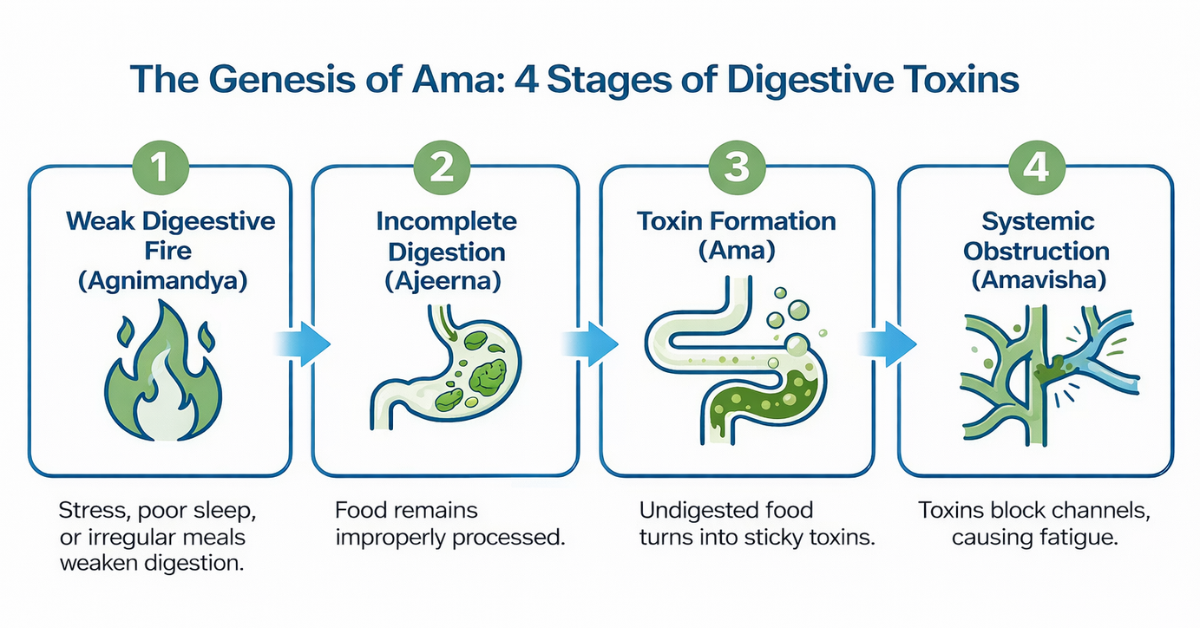
Ama is formed in the following steps:

  1. Weak digestive fire (Agnimandya) – Overeating, irregular meals, emotional stress, poor sleep or frequent processed foods can weaken digestion.
  2. Incomplete digestion (Ajeerna) – Food isn’t transformed into nutritive essence; it remains “unripe” or improperly processed.
  3. Fermentation and toxin formation (Ama) – This partly digested material ferments in the gut and becomes foul and sticky — classical Ama.
  4. Obstruction (Amavisha) – Ama is absorbed and spreads through the body, blocking tiny channels (Srotas) and impairing nutrition and clearance.

This cycle—impaired Agni → Ama → obstruction—accounts for the fact that the symptoms of illness are often nonspecific in the early stages (heaviness, fatigue, and slight pains) but may become chronic if untreated. When the agni becomes sluggish (Mandagni), Ama is produced at that specific level—either in the gut or deep within the tissues. 
What this looks like in today’s terms

Modern medicine notices very similar problems under different names: reactive oxygen species (free radicals), oxidised lipids, advanced glycation end products, endotoxins from a disturbed gut microbiome, and cellular debris that cells cannot clear. All these are biochemical forms of “sticky” material that cause inflammation and damage. If you are wondering what is inflammation in the body, think of inflammation as the immune system’s response when it encounters these irritating, damaging substances. It’s the body’s alarm system — useful in the short term, but harmful when it stays switched on.
Insurance Backed

Precision Ayurveda
Medical Care

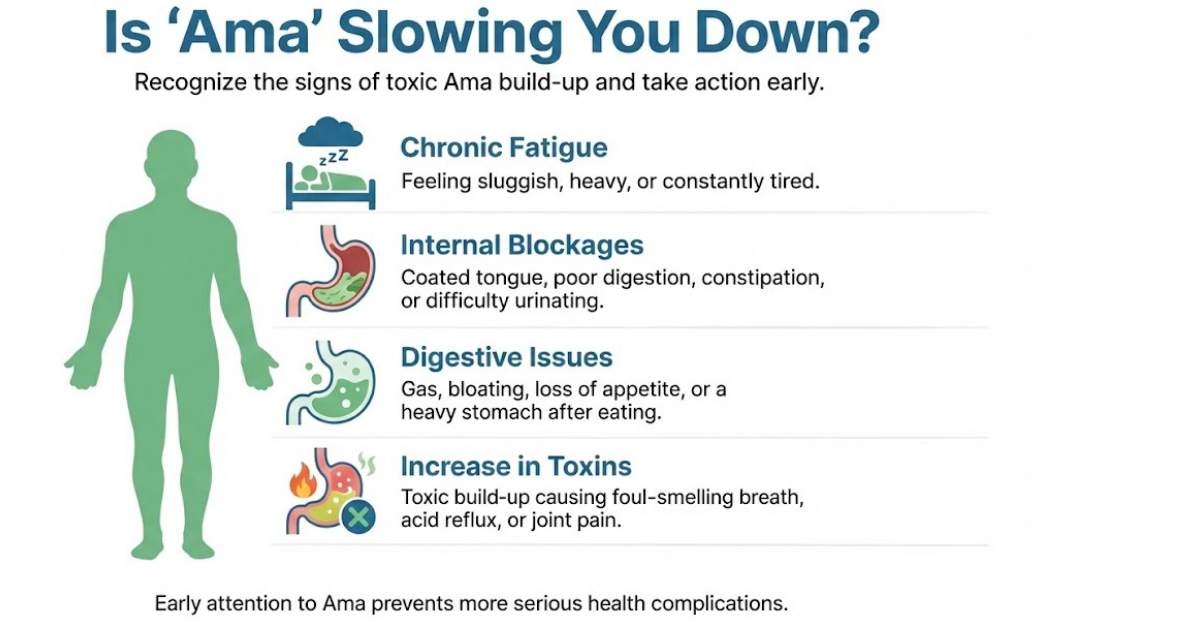
Common symptoms you may experience if you have Ama include:

  • Channel obstruction (Srotorodha): The obstruction of the small channels in your body that are responsible for the passage of nutrients and waste products (intestines, capillaries).
  • Loss of strength (Balabhransha): weakness in your body, and even simple tasks become tiring.
  • Heaviness (Gaurava): heaviness in your body, as if everything is weighed down.
  • Fatigue (Alasya): You may experience fatigue and feel sleepy or slow during the day.
  • Trapped gas/bloating (Anila Mudhata): The inability to pass gas or the sensation that gas is trapped in your abdomen.
  • Indigestion (Apakti): The food is not properly digested, and it sits heavy in your stomach, accompanied by belching.
  • Excessive spitting (Nishthivana): Excess saliva, a foul taste in the mouth, or a coating on the tongue can lead to excessive spitting.
  • Difficulty with bowel or urine flow (Mala Sanga): constipation, difficulty in urination, or difficulty in passing natural waste.
  • Loss of appetite (Aruchi): Reduced desire to eat or food no longer tastes appealing.
  • Lethargy (Klama): General weariness — moving, concentrating, or working feels harder than normal.

When Ama combines with the Doshas (Vata, Pitta, and Kapha), it creates Sama Dosha states — conditions that are harder to treat than simple Dosha imbalances alone. This is why early attention matters.
  • Sama Vata: Leads to abdominal distension, constipation, and aching pains that worsen in cloudy weather.
  • Sama Pitta: Causes foul-smelling acid reflux, a green/blackish tinge to the skin, and a heavy burning sensation in the throat.
  • Sama Kapha: Results in thick, sticky mucus that clogs the throat and diminishes the sense of taste and hunger.

Why clearing Ama matters for inflammation and long-term health

When Ama circulates, it provokes an immune response: inflammatory molecules such as TNF-α and IL-6 rise, and clinical measures like CRP or hsCRP may be elevated. Over time, this persistent, low-grade inflammation contributes to metabolic disorders, joint diseases, and faster ageing. This bridge between classical Ayurveda and modern biology makes the goal clear: reduce Ama to reduce inflammation and restore healthy metabolism.
Note on Scope: It is important to realise that while all free radicals can be considered Ama, the Ayurveda concept of Ama is broader; it encompasses everything from undigested food and heavy metals to microbial toxins and even psychosomatic metabolic byproducts.
If you are searching for how to reduce inflammation in the body or even how to reduce inflammation in the body fast, the answer is not a single pill. It’s a stepwise plan that restores digestive function and gently clears the body.

A practical approach from Ayurveda to reduce Ama

Apatarpana is Ayurveda’s gentle answer for how to remove toxins from body. It “lightens” the body by removing excess Kapha, Meda (fat) and Ama (metabolic toxins). In everyday terms, it helps your digestion wake up, clears sticky residues, and reopens the body’s microchannels so nourishment and waste can move freely again.

The ten Apatarpana approaches —

  1. Langhana (Fasting) — Short, gentle food restriction to create lightness and relieve heaviness.
  2. Pachana (Digestives) — Use of Deepana–Pachana herbs (like ginger and trikatu) to “cook” existing Ama so the body can clear it.
  3. Kshudha (Voluntary Fasting) — Structured hunger periods to strengthen Jatharagni and reduce excess fat; always individualised.
  4. Trut (Thirst / Fluid Restriction) — Controlled, short-term fluid limitation reduces interstitial congestion in Kapha states (used carefully).
  5. Vyayama (Exercise) — Systematic, moderate exercise (walking, yoga) to mobilise fat and enhance circulation.
  6. Atapa Sevaka (Sun Exposure) — Moderate sun exposure to activate metabolism, typically accompanied by oil and Swedana (sudation/steam) therapy to fluidise and mobilise Ama.
  7. Maruta Sevaka (Air Exposure) — Fresh air and mild wind to activate circulation and alleviate stagnation.
  8. Vamana (Emesis) — Clinic-based emesis to eliminate excess Kapha and upper-GI Ama as needed.
  9. Virechana (Purgation) — Clinic-based purgation to eliminate Pitta and lower-GI Ama as needed.
  10. Raktamokshana (Bloodletting) — Selective elimination of blood in specific Pitta/Rakta disorders to alleviate systemic toxins.

The apatarpana can be broadly categorised as follows, which can be determined based on the extent of the ama spread:

  1. Deepana — kindle the digestive fire
  • Start meals with a warm beverage (a small cup of warm water or ginger tea).
  • Eat at regular times; avoid constant snacking or eating when emotionally upset.
  • Use simple kitchen spices: fresh ginger, black pepper, and cumin — they stimulate digestion.

These steps make your digestive system ready to process food again.

  1. Pachana — digest existing Ama
  • Short, guided courses of herbal pachana formulations can help “cook” Ama into a form the body can remove. Do this under a physician’s direction.
  • Prefer light, easy-to-digest meals for a short period: kichadi (rice + mung dal), steamed vegetables, and light soups.
  • Avoid heavy, fried, very sweet or refrigerated foods while you are working on digestion.
  1. Shodhana — purification when needed
  • If Ama is deep or persistent, supervised cleansing procedures (Panchakarma: Virechana for Pitta-related Ama, or Vamana in specific Kapha-dominant conditions) may be advised.
  • These procedures should only be done in a qualified clinic by trained therapists.

A simple plan to begin

Start with Deepana–Pachana, light meals and mild exercise; add Swedana if advised. If Ama persists, seek an Ayurveda physician for guided Panchakarma (Vamana/Virechana) or other targeted Apatarpana. Individualisation matters — your Prakruti, age and strength decide what’s safe and effective.

Everyday habits to reduce Ama

You may be wondering how to remove toxins from body naturally — the truth is, gentle, consistent daily habits work best:

  • Eat only when you are truly hungry — avoid Adhyashana (eating a second time before digestion completes).
  • Avoid cold drinks with meals; choose warm or room-temperature fluids.
  • Sleep well; adequate rest supports metabolic recovery.
  • Reduce processed sugars and deep-fried foods; these promote Ama.
  • Include simple spices and digestive herbs in cooking.

When to seek medical help

If you notice persistent unexplained fatigue, significant weight change, severe reflux, ongoing bloating, or abnormal lab markers — see a clinician. Integrative care that includes both Ayurveda assessment and appropriate biomedical testing offers the safest path.

By understanding ama in Ayurveda and taking small but consistent steps to correct digestion, you can reduce toxins in body, lower inflammation, and restore vitality. Simple, patient-friendly actions—done regularly—are often the most powerful medicine.

FAQs
What is the meaning of inflammation?
In simple terms, it is the body’s response to damage or irritating substances (like Ama). It involves swelling, heat, pain, or biochemical markers that show the immune system's activity.
What is inflammation in the body?
It’s a complex cascade of immune reactions that start to repair damage, but when prolonged, it harms tissues and causes chronic disease.
How to reduce inflammation in the body fast?
Short-term steps that help quickly: reduce inflammatory foods (sugar, refined carbs, and trans fats), increase warm, nourishing meals, hydrate, rest, and use gentle digestive aids (ginger tea). For persistent or severe inflammation, seek medical evaluation.
What is Ama in Ayurveda?
The term Ama in Ayurveda refers to toxic, undigested metabolic byproducts formed when the digestive fire is too weak to process food. It is considered a "metabolic poison" that clogs the body's channels and serves as the root cause of chronic disease.
What are the symptoms of Ama in the body?
General symptoms include a persistent feeling of heaviness, lack of appetite, lethargy, and foul-smelling breath or sweat. You may also experience toxins in body manifesting as a coated tongue, constipation, and a general lack of mental clarity or enthusiasm.
What are the two types of Ama?
The two main types are Jatharagni-mandajanya Ama, which happens because of poor digestion in the gut, and Dhatvagni-mandajanya Ama, which occurs due to problems with how tissue-level metabolism works. Both types significantly contribute to inflammation in the body by disrupting cellular functions.
How to remove Ama from joints?
To remove Ama from the joints—a condition known as Amavata—Ayurveda uses Pachana herbs and Langhana (fasting) to digest the sticky toxins.
How to remove toxins from body naturally?
You can learn how to remove toxins from body naturally by practising Langhana (light dieting or fasting) to allow your Agni to rest and process accumulated residues. Additionally, incorporating warm water and Deepana spices like cumin and ginger helps how to reduce inflammation in the body fast by rekindling metabolic efficiency.
How to remove toxins from body?
Restore digestion (Deepana), digest Ama (Pachana), and consider supervised purification (Shodhana) for deeper accumulations. Combine this with the lifestyle shifts above.
Did the information meet your needs?

As we work hard to improve our services, your feedback is important to us. Please take a moment to help us serve you better.

Stay Connected to Health and Wellness

Subscribe to our hospital newsletter for the latest health tips, updates on services, patient stories, and community events. Sign up today and stay informed!

Homepage B RCB

Please fill out the form below to Request a call back

Patient details

Select Preferred Center

Content Details

We update our articles as new material becomes available, and our specialists keep a close eye on the health and wellness industry.

Written by
Dr Shobitha Madhur
Share this article on
Last updated on:
Do you have concerns with the content?

Report Problem

Table of Contents

Last updated on:

Report Problem

Do you have concerns with the content?

We’d Love to Hear from You!

Feedback form(disease page)

Can we help?

Something wrong with our medical content?
 
Report Problem form

Popular Searches: DiseasesTreatmentsDoctorsHospitalsWhole person careRefer a patientInsurance

Hours of Operation:
8am – 8pm (Mon-Sat)
8am – 5pm (Sun)

Follow Apollo AyurVAID hospitals