- AyurVAID Pharmacy
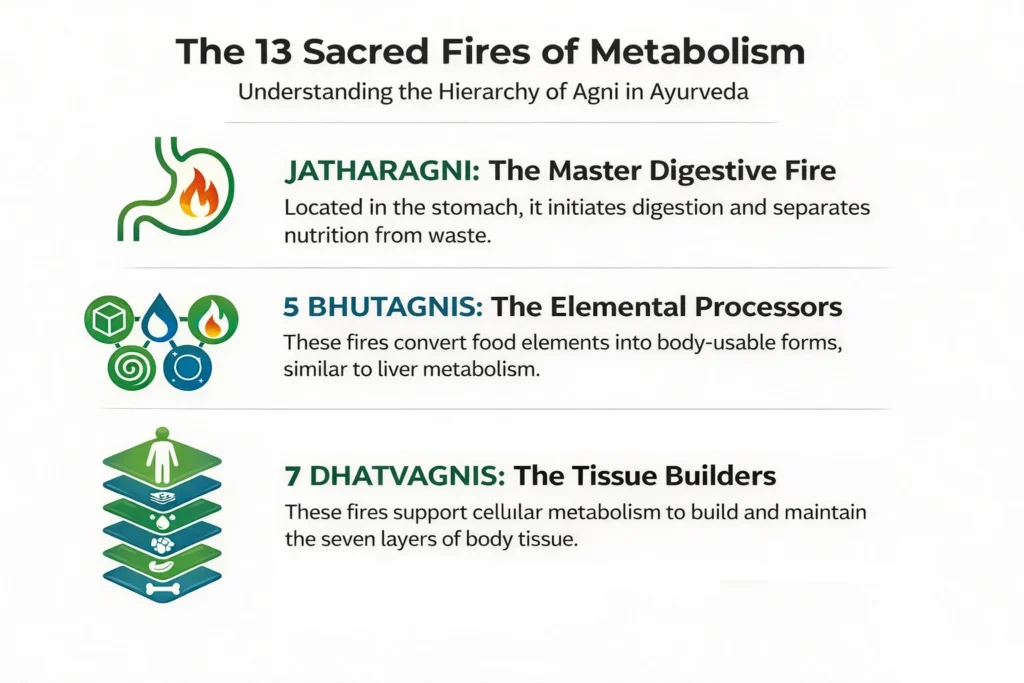
| Element | Agni Name | Target Body Element |
| Earth | Parthiva | Solid structures & minerals |
| Water | Apya | Fluids, plasma & cohesion |
| Fire | Tejas | Temperature & metabolic light |
| Air | Vayavya | Movement & gas exchange |
| Space | Nabhasa | Cellular pores & channels |

Dhatvagni | Primary Function |
Rasa Agni | Transforms nutrients into Plasma (Rasa Dhatu) |
Rakta Agni | Governs formation of Blood (Rakta Dhatu) |
Mamsa Agni | Builds and repairs Muscle tissue (Mamsa Dhatu) |
Meda Agni | Regulates Fat & adipose metabolism (Meda Dhatu) |
Asthi Agni | Metabolises minerals into Bone (Asthi Dhatu) |
Majja Agni | Nourishes Bone marrow & nervous tissue (Majja Dhatu) |
Shukra Agni | Refines essence for Reproductive tissue (Shukra Dhatu) |
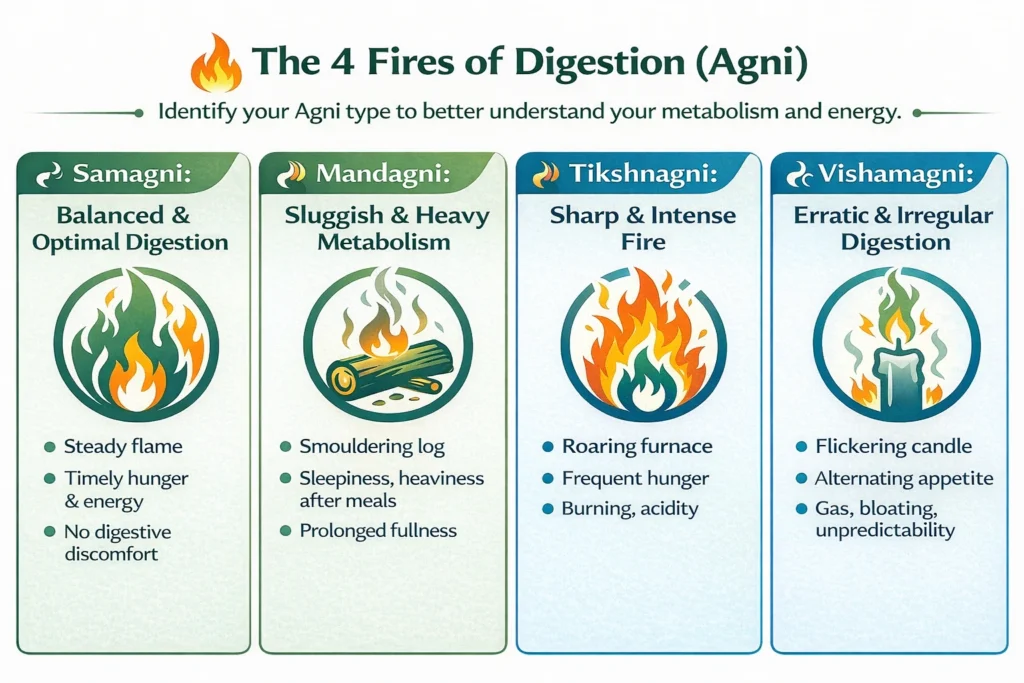
Ayurveda teaches that our inner digestive fire (Agni) can take different forms. Below are four common digestive patterns that you can recognise in your own digestion.
1. Samagni (Balanced Fire)
This is the ideal and healthy condition when the tridoshas (three doshas) are balanced. The food is digested completely and on time, without fluctuations.
2. Mandagni (Sluggish Fire)
Linked with Kapha predominance, this Agni is weak and dull. It struggles to digest even small amounts well.
3. Tikshnagni (Sharp Fire)
Seen in those with Pitta predominance, this fire is intense and fast. It digests food very quickly.
4. Vishamagni (Erratic Fire)
Associated with Vata imbalance, Vishamagni is unpredictable and fluctuating. Digestion can be strong one day and poor the next.
Agni is not fixed; it changes across life and with circumstances. The main influences are:
Bhasmak Roga behaves like Tikshnagni (sharp fire) — you’ll notice intense hunger and very fast digestion. In medicine, this pattern frequently manifests as diabetes (polyphagia) or hyperthyroidism. While a person with regular Tikshnagni can mean robust digestion and immunity, the pathological form causes Dhatu Kshaya (tissue depletion) and burning sensations.
By contrast, Mandagni (sluggish fire) slows metabolism and favours Sthaulya (obesity) and hypothyroidism. The slow, weak Agni causes the body to store too much fat and creates Ama (toxic metabolic residue), along with blocked channels.
If you are noticing pattern changes in your digestion, like heaviness after small meals, sudden acidity, erratic hunger, or persistent bloating, these are signals from your Agni asking for attention. Gentle, individualised changes in diet and routine (and guidance from an Ayurveda practitioner when needed) can help bring your fire back to balance.
When Agni is weak (Mandagni) or erratic (Vishamagni), food is not fully “cooked.” The result is Ama— a foul, sticky metabolic residue. Ama clogs the body’s channels and blocks nutrient delivery and waste removal. This obstruction creates local inflammation (Ama visha) and can progress to systemic illness.
How Ayurveda restores and protects Agni
Ayurveda treatment aims to bring Agni back to Samagni (balanced digestion) using progressive, practical steps:
As we work hard to improve our services, your feedback is important to us. Please take a moment to help us serve you better.
Subscribe to our hospital newsletter for the latest health tips, updates on services, patient stories, and community events. Sign up today and stay informed!

Report Problem
Popular Searches: DiseasesTreatmentsDoctorsHospitalsWhole person careRefer a patientInsurance

