- AyurVAID Pharmacy
Ayurveda looks at food in a deeply holistic way. A proper diet does not merely produce energy, it supports the whole person.
When food is suitable and properly digested, it helps to build
What we eat influences not only the body but also mood, concentration, and overall emotional stability. In that sense, diet becomes a quiet but powerful force shaping daily health.

Ayurveda makes an important point: we are not just what we eat but what we digest. Food must be transformed by Agni, the digestive fire, before it can nourish the body.
This change occurs through the action of 13 different Agnis. They are:
When the process of digestion is normal, the food is transformed into Prasada, the essence which provides nutrition to the body. When digestion is weak, undigested material may turn into Ama, a toxic, heavy, poorly processed substance that contributes to disease.
Ayurveda classifies food in several useful ways.
1. Based on how it is taken
2. Based on mental quality (Triguna)
The freshness and quality of food influence not only digestion but also your mental state.
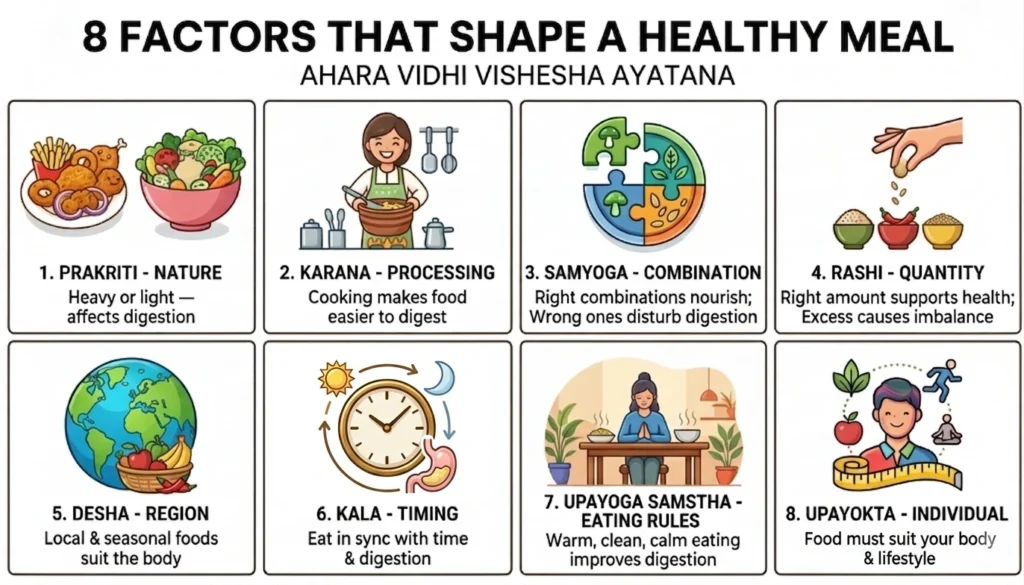
Ayurveda says that before eating, we should consider eight important factors known as Ahara Vidhi Vishesha Ayatana.
Prakriti: Every food has a natural quality. Some are heavy, some are light, and each one affects digestion differently.
Karana: The way food is processed can change its effect. Cooking, boiling, roasting, or churning may make it easier to digest.
Samyoga: Food combinations matter. Some are nourishing, while others may disturb digestion and should be avoided.
Rashi: Quantity is important. Even healthy food can become harmful if eaten in excess.
Desha: Food should suit the region, climate, and season. Local and seasonal foods usually support a better balance.
Kala: Timing matters. Eating in sync with the time of day, season, and digestion helps maintain health.
Upayoga Samstha: Food should be eaten warm, clean, and in a calm setting, with proper eating habits.
Upayokta: The person matters too. Age, constitution, digestion, and lifestyle decide what food suits best.
This is one of Ayurveda’s strengths. It never gives a one-size-fits-all diet. Food is always assessed in relation to the individual, the season, and the state of digestion.
Karana, also called Samskara, refers to the transformation of food through processing. Ayurveda recognises that the way food is prepared can change how it behaves in the body.
For example, raw rice may be heavy and harder to digest, but after cooking, it becomes lighter and more suitable for digestion. Similarly, washing, soaking, churning, heating, fermenting, or storing food in certain ways can alter its qualities.
Sometimes the food itself is not the issue; the method of preparation makes the difference.
Ayurveda provides ten important guidelines for eating, known as Ahara Vidhi Vidhana.
Food should be:
One of the most important ideas is Matravat Ashniyat—eat in proper quantity. Ayurveda often uses the practical guidance of dividing the stomach roughly into three parts: one part for solid food, one part for liquids, and one part left empty for movement and digestion.
This space is necessary. Digestion needs room to work.
Another key principle is Jirne Ashniyat—eat only after the previous meal is digested. A healthy meal should create lightness, clarity, and a natural sense of hunger at the right time. If we eat again too soon, the digestive fire becomes overloaded.
One of the most important concepts in diet in Ayurveda is Viruddha Ahara, or incompatible food combinations.
This does not mean bad food. It means food combinations, food habits, or food preparations that disrupt the body’s balance and cause strain in the body. This can, over time, weaken digestion, produce ama, and eventually lead to disease.
Some of these combinations include hot and cold, or those that confuse the digestive system.
The concern is not only immediate discomfort. Such repeated intakes of incompatible foods can cause disturbances in the tissues, weaken Agni, and increase the susceptibility of the body.
From a contemporary perspective, this concept can be related to the understanding that poor food combinations and unhealthy cooking styles can cause inflammation in the body.
According to Ayurveda, there are several signs of the digestion of food consumed in the previous meal. They are called Jeerna Ahara Lakshanas.
They include:
These signs are very useful in daily life. Instead of eating by the clock alone, Ayurveda encourages listening to the body. Hunger, lightness, and clarity are better guides than habit or emotional impulse.
According to Ayurveda, drinking water during meals is not strictly prohibited. The correct amount, temperature, and time should be followed to optimise the effect.
समस्थूलकृशा भुक्तमध्यान्तप्रथमाम्बुपाः ।
(Ashtanga Hrudaya)
Before Meals (Bhuktadau)
Excessive intake of water before a meal is said to weaken the digestive fire, resulting in improper digestion. This practice, if followed over time, will result in improper nourishment and weakening of the body.
During Meals (Madhye)
Taking small amounts of water with food is always advantageous. This helps in the proper digestion of food, along with the maintenance of proper balance in the stomach.
After Meals (Bhuktopari)
Excessive intake of water immediately after food is said to dampen the Agni, resulting in improper digestion and the formation of Ama. This practice will result in weight gain and obesity over time.
Warm water is generally preferred because it supports Agni. Cold water, especially during meals, may dull digestive activity in people with weak digestion.
A healthy person is usually best served by choosing a drink that supports digestion rather than suppressing it.
Ayurveda also provides guidance on the sequence of eating.
A common traditional sequence is:
The digestive strength is strongest at the beginning of the meal, so heavier items are better tolerated early. Lighter and more cleansing tastes are better toward the end. Ayurveda always tries to support the natural rhythm of the body.
Your Prakriti is determined at conception and remains essentially constant throughout life. Understanding it helps you choose foods that support your balance rather than disturb it.
Along with Prakriti, Ayurveda asks us to observe our digestive strength, our tolerance to different foods, our lifestyle, and the season. This process is called Atmanam Abhisamikshya—careful self-observation.
That is the heart of Ayurveda. It teaches us to become intelligent participants in our health.
As we work hard to improve our services, your feedback is important to us. Please take a moment to help us serve you better.
Subscribe to our hospital newsletter for the latest health tips, updates on services, patient stories, and community events. Sign up today and stay informed!

Report Problem
Popular Searches: DiseasesTreatmentsDoctorsHospitalsWhole person careRefer a patientInsurance

