- AyurVAID Pharmacy
Ayurveda describes the body through the framework of Sapta Dhatus. These seven tissues maintain the structure and stability of the body. Each dhatu develops from the nourishment of the previous one, forming a chain of tissue formation that continues throughout life. Asthi Dhatu appears fifth in this sequence. It develops after Meda Dhatu and represents the skeletal tissue of the body.
In simple terms, ‘asthi’ means ‘bone’. Bones provide the body its frame. They support muscles, protect delicate organs and allow joints to function during movement. In practice, bone health is rarely the first complaint patients bring. What they describe are small things—nails becoming brittle, occasional cracking sounds in the joints, and dental sensitivity. Only later do we start thinking about the state of Asthi Dhatu.
Ayurveda explains tissue formation through sequential nourishment. After digestion, food is converted into ahara rasa, the primary nutritive essence. This substance circulates through the body and gradually transforms into different tissues through the action of dhatvagni (tissue metabolism).
Asthi Dhatu develops from Meda Dhatu. The metabolic factor responsible for this transformation is known as Asthi Dhatvagni. When tissue metabolism remains stable, skeletal tissue maintains its density and strength. If this metabolic process becomes weak, the nourishment of bone tissue gradually declines, leading to signs like brittle nails, excessive hair fall, and dental issues. These sometimes appear before patients notice anything related to the bones themselves.

Each dhatu produces secondary tissues (upadhatu) and metabolic by-products (mala).
For Asthi Dhatu, the classical descriptions include the following:
| Component | Description |
| Upadhatu | Danta (teeth) |
| Mala | Kesha (Scalp Hair), Loma ( body hair) and Nakha (Nails) |
Because of this relationship, disturbances in Asthi Dhatu often appear through these structures.
For example, persistent nail brittleness sometimes reflects a deeper tissue imbalance rather than a purely cosmetic issue.
Ayurveda describes tissue excellence through the concept of Sara. Individuals with well-developed bone tissue are referred to as Asthi Sara Purusha.
These individuals typically show:
Their bones appear naturally strong.
The body frame may look slightly lean because the joints and bony prominences are more visible. Despite this, their skeletal strength and tolerance to physical strain are usually good.
In clinical observation, this type of constitution is quite distinctive.
Asthi Dhatu has a close relationship with Vata Dosha. In Ayurveda physiology, bone tissue is considered the ashraya (seat) of Vata. When Vata becomes aggravated, Asthi Dhatu tends to decline.
This relationship becomes clearer when we consider the qualities involved. Vata is light and dry, while bone tissue requires density and stability. When dryness dominates the body for long periods, skeletal strength gradually weakens. This pattern appears frequently in degenerative bone conditions.
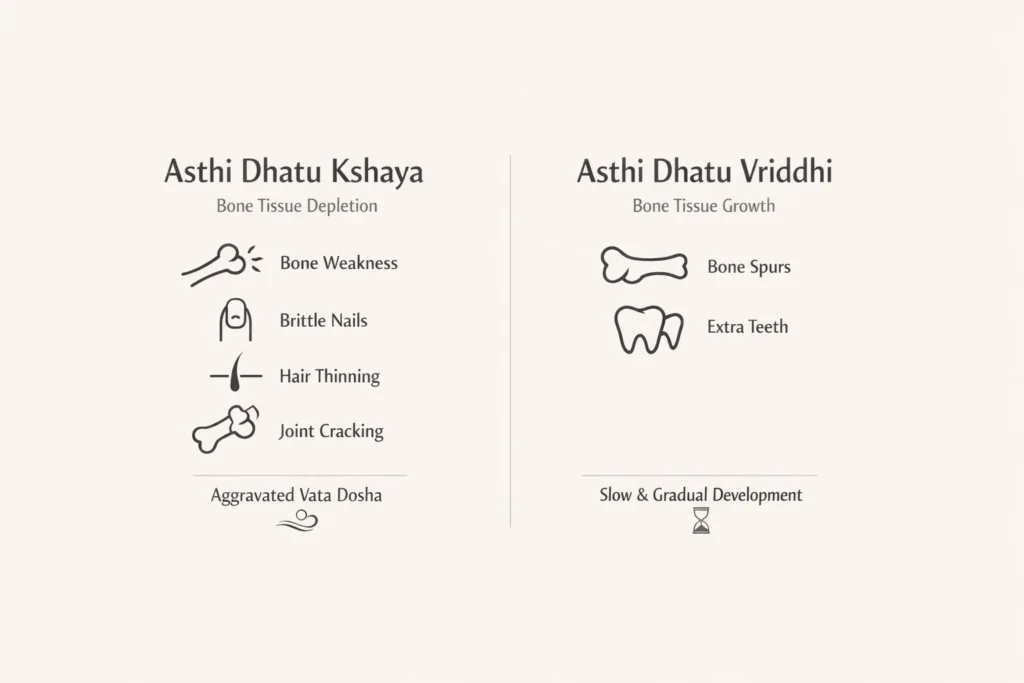
Reduction of bone tissue is described as Asthi Dhatu Kshaya. Patients may initially notice vague bone discomfort or a sense that their joints feel less stable than before. Nails may become brittle. Hair may thin. Teeth sometimes lose firmness.
Joint cracking is another complaint that appears fairly often. Often, Vata Dosha is involved. Ageing, nutritional deficiencies, chronic illnesses, and excessive physical strain can gradually aggravate Vata and weaken bone tissue. Sometimes patients describe a general sense of skeletal weakness without obvious pain. These subtle complaints should not be ignored.
Management focuses on restoring the proper nourishment of bone tissue while correcting an underlying dosha imbalance.
When depletion of Asthi Dhatu is present, treatment emphasises Brimhana— measures that support tissue building. Adequate nutrition, stable digestion and proper rest are all important.
When Vata Dosha is significantly aggravated, therapies such as snehana and vasti may be considered depending on the clinical situation.
Lifestyle also plays a role. Irregular meals, excessive physical strain, chronic sleep deprivation and prolonged stress gradually aggravate Vata. Over time, such stress can influence skeletal tissue.
Moderate exercise and regular daily routines, therefore, become supportive measures.
In clinical practice, disturbances of Asthi Dhatu often reveal themselves through structures related to bone tissue rather than the bones themselves. Changes in nails, teeth, or hair may be noticed first. Patients sometimes report brittle nails, increased hair fall, or a feeling that their teeth have become more sensitive.
These observations may seem unrelated to bone health at first. However, Ayurveda considers them useful indicators while assessing the condition of skeletal tissue. Paying attention to such signs can help identify an imbalance in Asthi Dhatu before more significant skeletal problems develop.
As we work hard to improve our services, your feedback is important to us. Please take a moment to help us serve you better.
Subscribe to our hospital newsletter for the latest health tips, updates on services, patient stories, and community events. Sign up today and stay informed!

Report Problem
Popular Searches: DiseasesTreatmentsDoctorsHospitalsWhole person careRefer a patientInsurance

