- AyurVAID Pharmacy
In Ayurveda, health is not only the absence of disease but the harmonious functioning of a beautifully ordered inner world. One of the central pillars of that inner order is the system of seven tissues, the Sapta Dhatus. Among these, Rakta Dhatu—blood—is often called an “enlivener.” Furthermore, it is classified as one of the ten vital dwellings of life (Dasha Pranayatana), meaning any significant injury to this tissue can lead to disability or death. This blog explains what Rakta Dhatu is, why it matters, how it connects with Pitta, and what you can do in everyday life to keep your blood healthy.
The Sanskrit root behind Rakta is Ranj (रञ्ज्), which means “to colour”, “to delight”, or “to give lustre”. In Ayurveda, Rakta Dhatu (रक्त) is the refined tissue that gives the body its red colour, nourishes the next tissue (Mamsa Dhatu), and sustains life itself. In classical words:
“रक्तं वर्णप्रसादनं मांसपुष्टिं जीवयति च” —meaning healthy blood brightens the complexion, nourishes muscle, and enlivens the body.
Though Ayurveda describes Rakta as a living tissue with qualities and functions, its practical correlation with modern haematology is clear: Rakta includes red blood cells, haemoglobin-rich blood, plasma elements that carry nutrients and oxygen, and the physiological roles that support vitality.
According to Ayurveda, tissues are formed sequentially from the food we eat. The first refined essence to be produced after digestion is Rasa Dhatu. This is comparable to the circulating nutrient plasma in modern physiology.
The Rasa is then refined through various metabolic processes mediated by Pitta, particularly Ranjaka Pitta. These processes take place mainly in the liver and spleen.
During these processes:
In modern understanding, this transformation loosely parallels the formation and maturation of red blood cells and haemoglobin within the body’s haematological system.
Thus, the health of digestion, liver function, and Pitta balance directly influences the quality of Rakta produced in the body.

In Ayurveda, every tissue is transported through specialised channels called Srotas. The channels responsible for carrying Rakta are known as Raktavaha Srotas.
Classical texts identify the liver (Yakrit) and spleen (pleeha) as the principal roots of these channels.
Healthy Raktavaha Srotas ensure that:
When these channels are disturbed, symptoms such as inflammation, skin disorders, bleeding tendencies, or circulatory problems may arise.
Rakta and Pitta share many qualities: heat (ushna), liquidity (drava), sharpness (teekshna), and a subtle unctuousness. Ayurveda often calls Pitta the “resident” (ashrayi) within Rakta — they are intimately connected. In classical terms, Pitta functions as a metabolic by-product (mala) of Rakta, and because the liver is the principal site where both blood and Pitta are processed, the state of your liver directly shapes the quality of your blood.
When Pitta is balanced, it aids correct blood formation; when Pitta is aggravated, it “heats” the blood, causing inflammation, rashes, bleeding tendencies, or other disorders that Ayurveda groups as Raktapradoshaja Vikara. Clinically, you will often see this as skin and inflammatory problems, bleeding tendencies, or signs of liver stress. Common presentations include:
In practice, this means that protecting liver function and pacifying Pitta are central to restoring healthy Rakta.
Rakta Dhatu is the body’s vital life support—its primary role is Jeevana, literally “sustaining life.”. Beyond basic survival, healthy Rakta performs several quietly powerful tasks.
In Ayurveda, the ideal state is Dhatusamya—balanced tissues. When Rakta is in harmony, you tend to feel light-hearted, digest well, and enjoy sharp, clear senses.
A person with excellent Rakta, called Rakta Sara, often shows:
If you notice these signs, they often correlate with robust blood indices in modern tests: healthy haemoglobin, adequate RBCs (red blood cells), and good PCV (packed cell volume), MCV (mean corpuscular volume), and MCH (mean corpuscular haemoglobin) values.

Ayurveda describes two main problematic states:
Classical texts also describe that if a disease resists predictable treatments, one should suspect blood vitiation — making Rakta a useful diagnostic litmus.
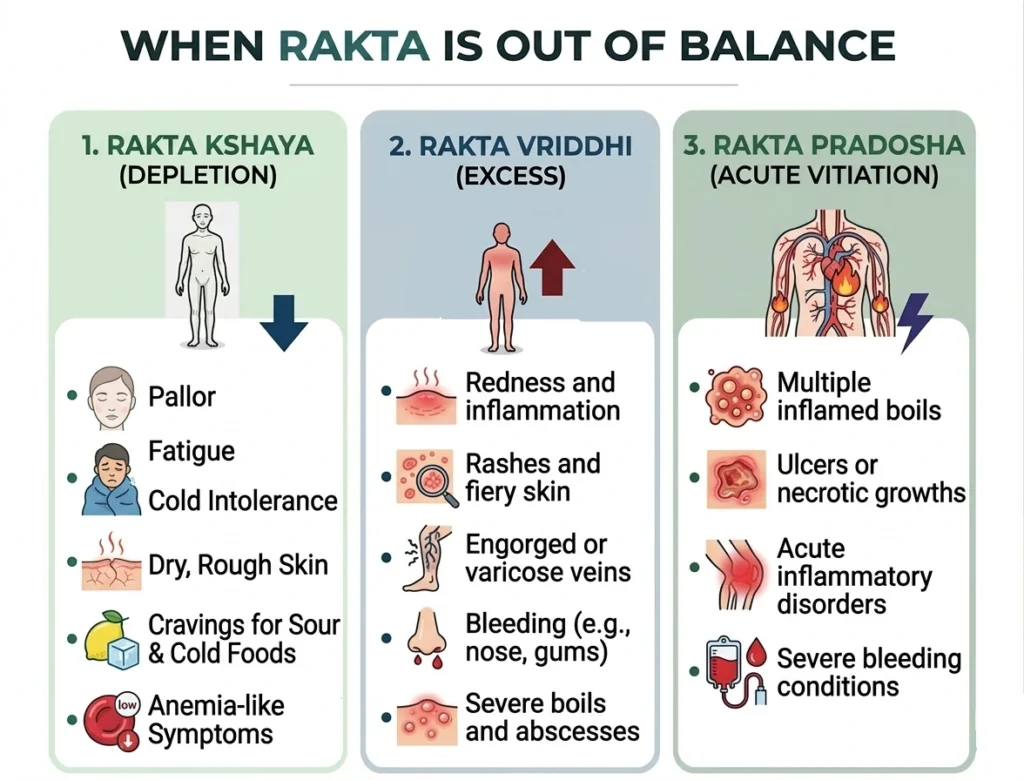
Because Rakta and Pitta influence each other, the practical plan either soothes overheated blood or gently builds depleted blood cells. Here are evidence-informed suggestions that fit the Ayurveda framework:
Foods and tastes
Lifestyle
Therapeutics
In clinical settings, procedures such as Virechana (purgation) and raktamokshana (bloodletting therapy) are considered effective for clearing excess Pitta and cleansing the blood. These should only be done under professional supervision.
Ayurveda sees blood as closely tied to temperament. Balanced Rakta supports cheerfulness, clarity, and compassion. When Rakta is vitiated, irritability, anger, confusion, and mental dullness can follow. Thus, emotional self-care (managing anger, getting restorative sleep, and gentle meditation) is as important as diet.
As we work hard to improve our services, your feedback is important to us. Please take a moment to help us serve you better.
Subscribe to our hospital newsletter for the latest health tips, updates on services, patient stories, and community events. Sign up today and stay informed!

Report Problem
Popular Searches: DiseasesTreatmentsDoctorsHospitalsWhole person careRefer a patientInsurance

