- AyurVAID Pharmacy
In today’s world of processed foods, long screen hours and chronic stress, metabolic disorders are rising quickly. Nearly 1 in 9 adults now live with diabetes, and rates of metabolic syndrome and obesity remain high across regions – a public-health burden that is growing, expensive and often silent.
Ayurveda’s ancient idea of Jatharagni, the “master fire” of digestion, speaks directly to this crisis: the health of yourdigestive system determines how food becomes fuel or becomes harmful.
Modern research links changes in gut microbes and gut barrier breakdowns to obesity, insulin resistance, and other metabolic disorders.
Emerging clinical data also show altered digestive enzymes(lower serum amylase/lipase) and diet-driven “leaky gut” patterns in people with metabolic dysfunction— suggesting impaireddigestive system function is both a marker and a mechanism in disease.
This blog explores how strengthening digestion and supporting the human digestive system, the modern correlate ofagni, can be a practical, evidence-informed strategy to prevent and manage metabolic disorders.
Jatharagni is the digestive fire that carries out the chemical and metabolic work of the digestive system. It is generally called as agni. In modern terms, you can think of it as the combined action of gastric acid, bile, pancreatic secretions and digestive enzymes — but Ayurveda names this whole transforming principle Jatharagni because it is the central spark that nourishes every tissue.
Two classical slokas make the importance clear:
शान्ते अग्नौ म्रियते युक्ते चिरं जीवयति अनामयः। रोगी स्यात् विकृते मूलम् अग्निः तस्मात् निरुच्यते॥
— Charaka Samhita, Chikitsa Sthana 15/3–4
रोगाः सर्वे अपि मन्दे अग्नौ सुतराम् उदराणि तु।
— Ashtanga Hridaya, Nidana Sthana 12/1
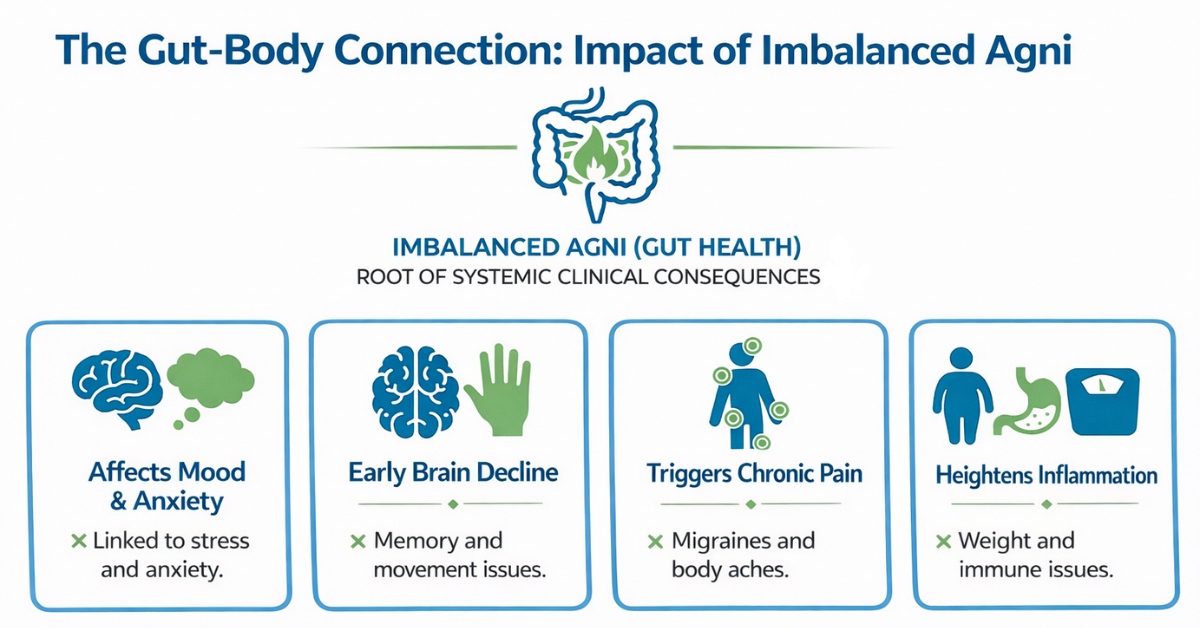
When Agni is balanced, life and health continue; when Agni is disturbed or weak, disease arises. A sluggish Agni (Mandagni) produces Ama (undigested, sticky metabolic residue), which is the root of many chronic problems.
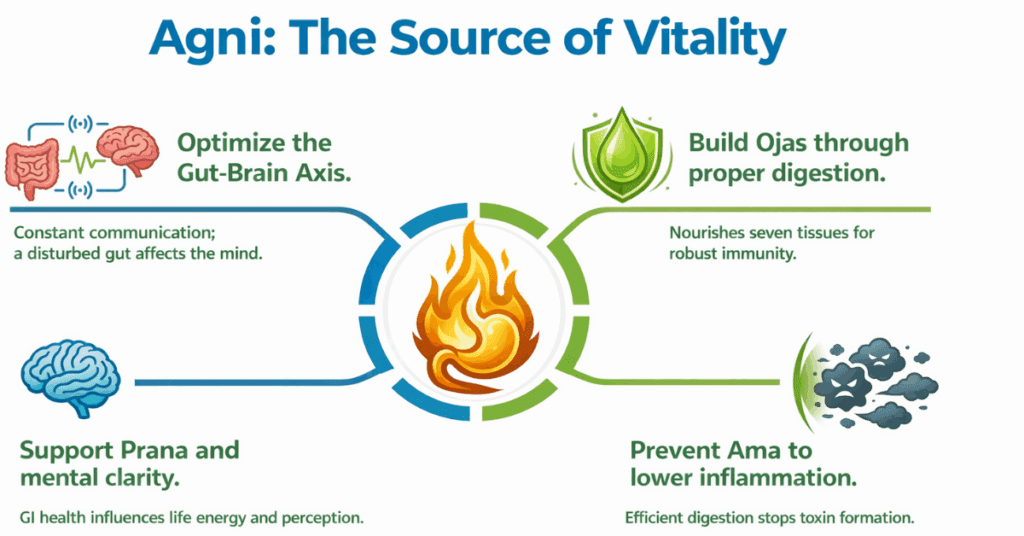
A balanced agni (Samagni) digests food properly into nutrients that build the seven tissues (dhatus) and ultimately create Ojas — the essence of immunity and vitality. This is the foundation of robust digestive system function.
Good digestion prevents Ama from forming. Reduced Ama = lower systemic inflammation and improved immunity.
Proper digestion supports Prana (life energy) and clear perception, because gastrointestinal health influences energy availability to the brain and tissues.
The gut-brain axis communicates constantly through nerves (like the vagus), hormones, immune signals, and substances made by gut microbes. If the gut is disturbed, the brain is affected — and vice versa.

| State of Agni | Ayurveda Description | Modern Physiological Equivalent | Clinical Expression / Result |
|---|---|---|---|
| Samagni (3 doshas balanced) | Balanced, steady digestion | Optimal gastric acid, well-timed digestive enzyme release, coordinated gut motility, healthy microbiome | Good energy, regular appetite, efficient nutrient absorption, well-nourished tissues |
| Mandagni (Kapha aggravated) | Slow or weak digestive system function | Low gastric acid, reduced enzyme secretion, sluggish gut motility, dysbiosis | Ama formation, post-meal heaviness, lethargy, weight gain, higher chronic disease risk |
| Tikshnagni (Pitta aggravated) | Very sharp or intense digestion | Excess gastric acid, rapid enzyme action, accelerated gastric emptying | Hyperacidity, heartburn, burning sensation, tissue depletion, irritability |
| Vishamagni (Vata aggravated) | Irregular, unpredictable digestion | Dysregulated gut–brain signaling, erratic motility, inconsistent enzyme release | Bloating, gas, alternating appetite and bowel habits, digestive instability |
| Ayurveda Component | Classical Role in Agni | Modern Physiological Equivalent |
|---|---|---|
| Samana Vata | Regulates the movement and coordination of Agni in the gut | Gut motility, gastric emptying, intestinal peristalsis, enteric nervous system regulation |
| Pachaka Pitta | Core digestive fire responsible for food breakdown | Gastric acid (HCl), bile secretion, pancreatic digestive enzymes (amylase, lipase, proteases) contributing to metabolic heat |
| Kledaka Kapha | Protects and stabilizes Agni by providing moisture and cushioning | Gastric mucus, bicarbonate secretion, epithelial hydration, tight-junction and mucosal barrier integrity |
Practical note: People rarely stay purely in one state. A patient may present with Mandagni in the monsoon and Tikshnagni in late summer. Treatment targets the individual’s current pattern.
Jatharagni performs two core tasks essential for the human digestive system:
When this engine runs well you maximize energy and minimize waste (Ama). When it falters, Ama accumulates and the downstream digestive system function and tissue metabolism (the dhatvagni) are impaired.
| Fire Type | Number | Location | Function |
|---|---|---|---|
| Jatharagni | 1 | Stomach / Duodenum | Primary digestion of food |
| Bhutagni | 5 | Liver / Cells | Processing the 5 basic elements (Earth, Water, Fire, Air, Space) found in food |
| Dhatvagni | 7 | Specific Tissues | Tissue-level metabolism (formation of blood, muscle, bone, etc.) |
When agni is sluggish (Mandagni), the human digestive system cannot fully process food. Undigested residues (Ama) form and circulate, clogging channels and provoking low-grade inflammation.
Clinically, Ama behaves like persistent metabolic waste that reduces immunity, impairs repair mechanisms and predisposes to chronic diseases (metabolic syndrome, autoimmune tendencies, recurrent infections). Protecting agni is therefore central to both digestion and immunity.
Agni is not always the same. Your digestive fire goes up and down with the seasons and the time of day, just like nature does. When we know these rhythms, we can work with our bodies instead of against them.
One of the easiest and most effective ways to keep your digestive and metabolic health in good shape for a long time is to eat at the right times and choose the right foods.
As we work hard to improve our services, your feedback is important to us. Please take a moment to help us serve you better.
Subscribe to our hospital newsletter for the latest health tips, updates on services, patient stories, and community events. Sign up today and stay informed!

Report Problem
Popular Searches: DiseasesTreatmentsDoctorsHospitalsWhole person careRefer a patientInsurance

