- AyurVAID Pharmacy
When we speak of Ama in Ayurveda, we are describing something that is both simple and important: it is the sticky, undigested residue that forms when your body’s digestive fire—Agni—fails to fully process food and experiences. Imagine food left half-cooked on the stove: it begins to sour, smell unpleasant, and clump together. In the same way, undigested food and faulty metabolic byproducts become a heavy, clinging substance inside the body. Classical Ayurveda calls this ‘Ama’ and describes it as the root cause of many illnesses.
This term is not just an ancient metaphor. Today’s research shows a similar concept: oxidative stress, mitochondrial slowdown, endotoxins from the gut and abnormal metabolic byproducts — all of which behave like sticky debris in tissues and circulation. In patient language: Ama is what makes you feel heavy, slow, and unwell over time.
आहारस्य रसः शेषो यो अनपक्वो अग्नि लाघवात्। समूल सर्व रोगाणाम् आम इति अभिधीयते ॥ मधुकोष ||
The remainder of the food essence, which is undigested because of weak Agni—that is the root of all diseases and is called Ama.
The knowledge of ama enables us to do root cause focus – Rather than only treating symptoms, Ayurveda asks whether ama is present — if so, clearing ama and strengthening agni is essential for lasting recovery.
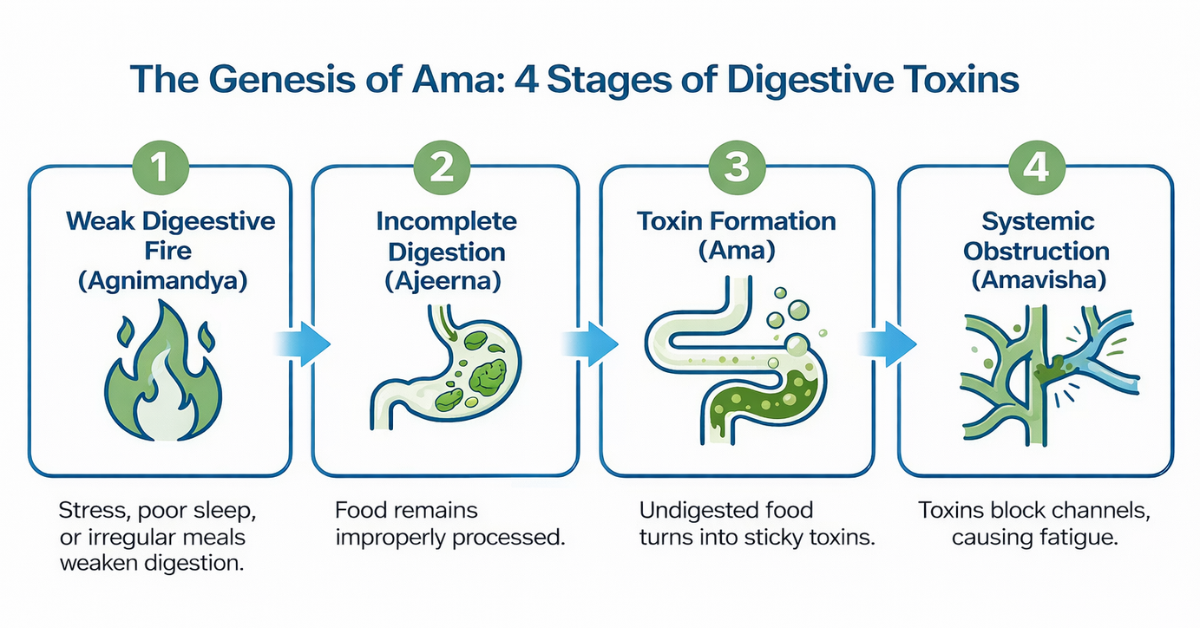
Ama is formed in the following steps:
This cycle—impaired Agni → Ama → obstruction—accounts for the fact that the symptoms of illness are often nonspecific in the early stages (heaviness, fatigue, and slight pains) but may become chronic if untreated. When the agni becomes sluggish (Mandagni), Ama is produced at that specific level—either in the gut or deep within the tissues.

When Ama combines with the Doshas (Vata, Pitta, and Kapha), it creates Sama Dosha states — conditions that are harder to treat than simple Dosha imbalances alone. This is why early attention matters.
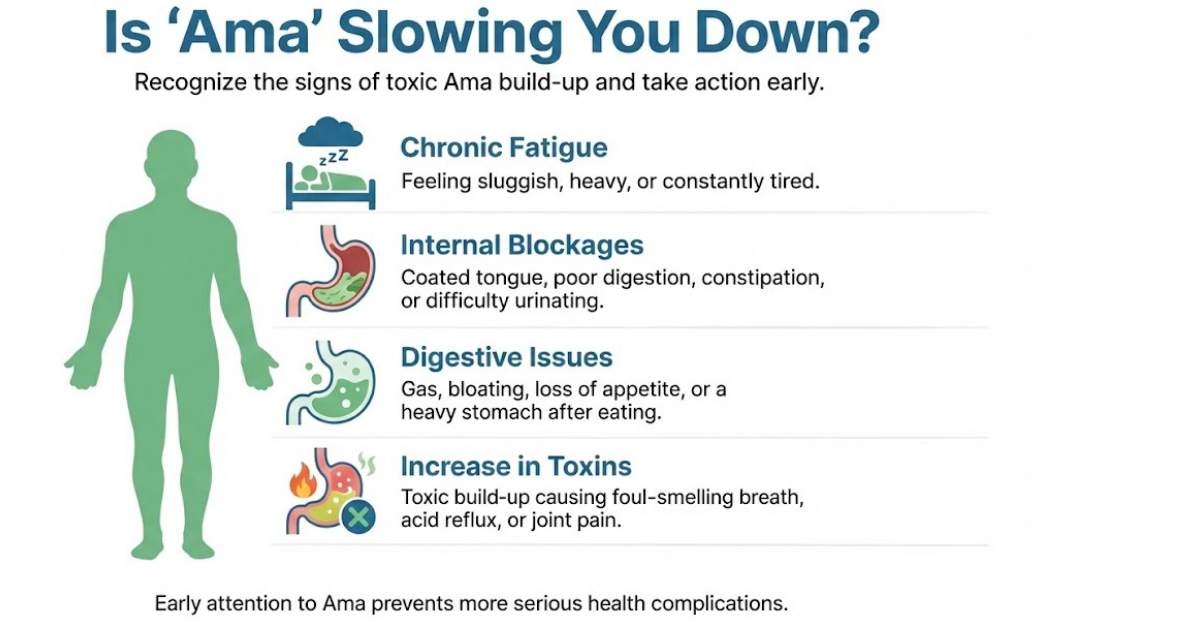
When Ama circulates, it provokes an immune response: inflammatory molecules such as TNF-α and IL-6 rise, and clinical measures like CRP or hsCRP may be elevated. Over time, this persistent, low-grade inflammation contributes to metabolic disorders, joint diseases, and faster ageing. This bridge between classical Ayurveda and modern biology makes the goal clear: reduce Ama to reduce inflammation and restore healthy metabolism.
Note on Scope: It is important to realise that while all free radicals can be considered Ama, the Ayurveda concept of Ama is broader; it encompasses everything from undigested food and heavy metals to microbial toxins and even psychosomatic metabolic byproducts.
If you are searching for how to reduce inflammation in the body or even how to reduce inflammation in the body fast, the answer is not a single pill. It’s a stepwise plan that restores digestive function and gently clears the body.
Apatarpana is Ayurveda’s gentle answer for how to remove toxins from body. It “lightens” the body by removing excess Kapha, Meda (fat) and Ama (metabolic toxins). In everyday terms, it helps your digestion wake up, clears sticky residues, and reopens the body’s microchannels so nourishment and waste can move freely again.
The ten Apatarpana approaches —
The apatarpana can be broadly categorised as follows, which can be determined based on the extent of the ama spread:
These steps make your digestive system ready to process food again.
You may be wondering how to remove toxins from body naturally — the truth is, gentle, consistent daily habits work best:
If you notice persistent unexplained fatigue, significant weight change, severe reflux, ongoing bloating, or abnormal lab markers — see a clinician. Integrative care that includes both Ayurveda assessment and appropriate biomedical testing offers the safest path.
By understanding ama in Ayurveda and taking small but consistent steps to correct digestion, you can reduce toxins in body, lower inflammation, and restore vitality. Simple, patient-friendly actions—done regularly—are often the most powerful medicine.
As we work hard to improve our services, your feedback is important to us. Please take a moment to help us serve you better.
Subscribe to our hospital newsletter for the latest health tips, updates on services, patient stories, and community events. Sign up today and stay informed!

Report Problem
Popular Searches: DiseasesTreatmentsDoctorsHospitalsWhole person careRefer a patientInsurance

