- AyurVAID Pharmacy
Have you ever woken up feeling heavy, sluggish, and a little foggy-headed even after a full night’s sleep? Maybe your tongue looks coated, your appetite feels dull, or you’re dealing with low energy that won’t lift, no matter how much rest you get. In the Ayurveda tradition, these are not just random irritations but are actually common presentations of Ama (undigested metabolic byproduct). When Ama is allowed to accumulate and ferment, it can become Ama Visha (toxic Ama) – a more serious and toxic condition that is like a sludge in the body, irritating tissues and quietly fuelling chronic disease.
Below, I explain what Ama and Ama Visha are, why they form, how they affect your health, and gentle, practical ways to help your body clear them.
The Sanskrit word Ama literally means “unripe” or “uncooked.”. Imagine food left half-cooked on the stove — instead of becoming nourishing, it turns sticky, sour, and unpleasant. That’s how Ama behaves inside the body: undigested or improperly processed material that is heavy, sticky, and prone to cause trouble. When Ama remains for a long time, it ferments and becomes more poisonous in quality; that stage is called Ama Visha (toxic Ama). Rather than merely blocking digestion, Ama Visha can spread, create inflammation, and disturb the normal functioning of tissues.
Everything in Ayurveda revolves around Agni (digestive fire)—the inner heat that digests food, fuels cells, and transforms what we eat into useful energy. When Agni is strong, food becomes nourishment; when Agni weakens (Agnimandya), food stays undigested and becomes Ama.
Common things that weaken Agni:

Ama shows as everyday discomforts:
When Ama mixes with a particular Dosha, symptoms change: Sama Vata may present with bloating and joint pain that worsens with damp weather. Sama Pitta can show as acid reflux or a burning, heavy sensation.
Though modern medicine doesn’t use the word Ama, similar ideas exist in biological terms:
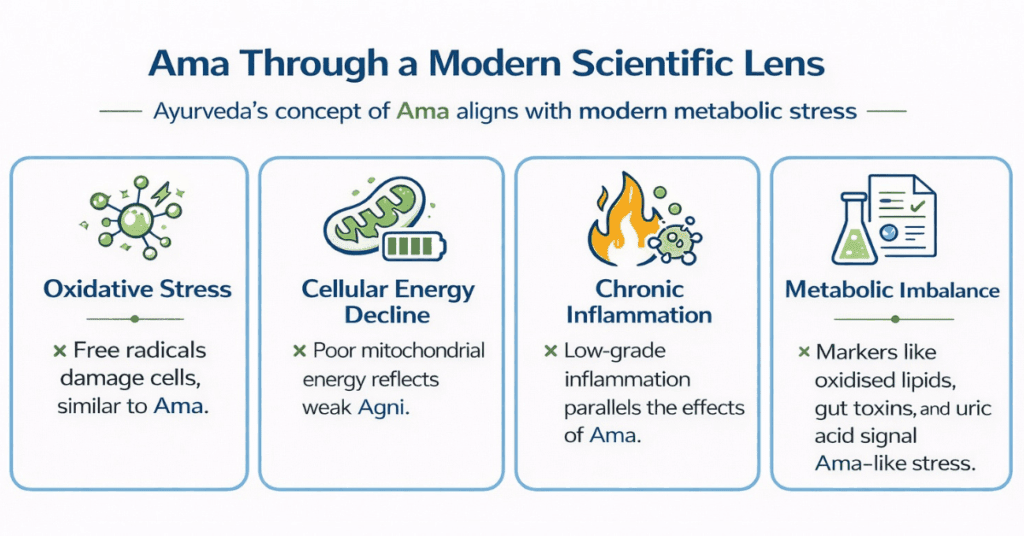
The aim is not to “fight” the body but to strengthen Agni so your body can naturally digest and clear Ama. Ayurveda often follows a three-part strategy called Apatarpana (lightening therapy):
Phase 1 — Deepana (kindling the fire)
Small, steady practices to wake up digestion:
Phase 2 — Pachana (digesting the toxins)
Once digestion is encouraged, focus on easy-to-digest foods and gentle measures:
Phase 3 — Shodhana when needed
If Ama is deep-seated and symptoms persist, supervised cleansing (Panchakarma) under a trained physician may be recommended. Procedures such as Virechana (therapeutic purgation) or Vamana (therapeutic emesis) are specific, medical interventions meant to remove deeply lodged toxins — but they must be done by an experienced practitioner after careful assessment.
As we work hard to improve our services, your feedback is important to us. Please take a moment to help us serve you better.
Subscribe to our hospital newsletter for the latest health tips, updates on services, patient stories, and community events. Sign up today and stay informed!

Report Problem
Popular Searches: DiseasesTreatmentsDoctorsHospitalsWhole person careRefer a patientInsurance

