- AyurVAID Pharmacy
In modern health conversations, metabolism is often reduced to a number on a weighing scale or the speed at which we “burn calories.” Ayurveda offers a deeper, more useful picture. Here, the idea of what is metabolism expands beyond calories — it becomes the story of your inner fire, Agni, which governs every transformation in the body: digestion of food, conversion of nutrients into tissue, and even the subtle energy that powers thinking and immunity. When your Agni is steady, you feel energised, your skin glows, and your mind is clear. When it falters, you begin a slow slide toward metabolic disorders.
Ayurveda teaches that metabolism is the work of several “fires”:
These fires together determine your basal metabolic rate — in Ayurveda terms, how strongly your body performs its day-to-day transformations.
If these fires are too weak (called Mandagni), digestion is slow, food turns into sticky, toxic residue (Ama), and weight, fatigue, and other problems follow. If the fire is too sharp (Teekshnagni), digestion happens too fast and can “burn” tissues, producing inflammation. When it is erratic (Vishamagni), digestion and appetite swing unpredictably. These patterns can be seen physiologically in prakritis (the agni pattern will be the same throughout life) or due to pathological changes in Agni’s function.
आयुः वर्णो बलं स्वास्थ्यं उत्साह उपचयौ प्रभा। ओजः तेजो अग्नयः प्राणाः … देह अग्नि हेतुकाः
(Charaka Samhita, Chikitsa Sthana 15/3-4)
This classical Ayurveda verse reminds us that longevity, complexion, strength, vitality, lustre (teja), ojas (vital essence), and life force (prana) all depend on the state of Agni. If the inner fire functions well, the whole body thrives. If it fails, disease follows. This phenomenon is why Ayurveda states, “रोगाः सर्वेऽपि मन्देऽग्नौ ” — most diseases begin with weak or disturbed Agni.
When Agni weakens, digestion becomes incomplete, and Ama forms. It clogs channels (srotorodha), prevents nutrients from reaching tissues, and allows metabolic waste to accumulate. Over time, these blockages and toxins set the stage for common modern conditions such as obesity, insulin resistance, fatty liver, hypothyroid-like states, and the cluster of problems we call metabolic syndrome.
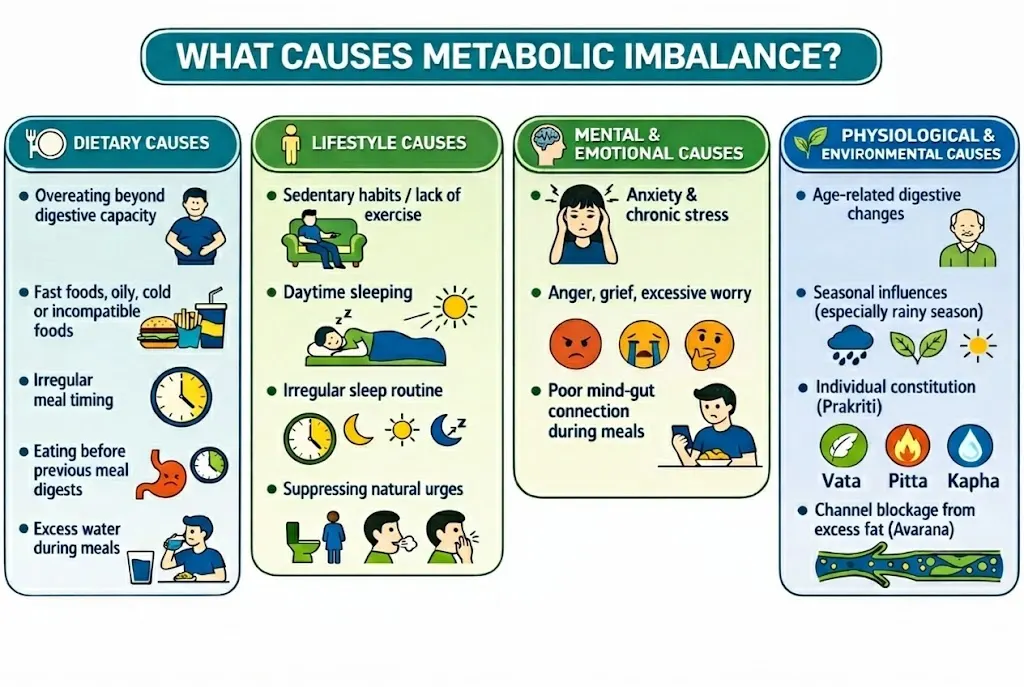
Ayurveda groups focus on diet, lifestyle, mental-emotional factors, and physiological/environmental influences.
Dietary causes
Lifestyle causes
Mental and emotional causes
Physiological & environmental causes

Ayurveda maps modern conditions to patterns of Agni and dhatu disturbance:
Ayurveda suggests simple self-observations to assess metabolic strength:
Also watch for signs of Ama: coated tongue, heaviness, poor appetite, sluggish bowel movements, and poor energy.
If you are asking how to increase metabolism, Ayurveda offers a gentle, holistic plan rather than quick fixes:
Ayurveda self-assessment is practical and often correlates with lab findings: people with weak Agni commonly show lipid abnormalities, insulin resistance, or inflammation markers. Use both Ayurveda observation and appropriate medical tests to guide care.
As we work hard to improve our services, your feedback is important to us. Please take a moment to help us serve you better.
Subscribe to our hospital newsletter for the latest health tips, updates on services, patient stories, and community events. Sign up today and stay informed!

Report Problem
Popular Searches: DiseasesTreatmentsDoctorsHospitalsWhole person careRefer a patientInsurance

