- AyurVAID Pharmacy
Ritucharya is derived from two Sanskrit words: ऋतु (Ritu) and चर्या (Charya).
ऋच्छतीति ऋतुः
In other words, the term ‘Ritu’ derives from ‘Ru’, meaning ‘movement’ or ‘go’. It represents the cyclic movement of time and seasonal change in an orderly fashion.
ऋतूनां चर्या ऋतुचर्या
Ritu is synonymous with Kala (time). Hence, Ritucharya means the regimen that should be followed according to the changing seasons and the flow of time.

The aim of Ritucharya is preventive healthcare. Ayurveda does not wait for disease to appear; it emphasises timely adjustments so that the body remains in balance.
The principle is based on yat pinde tat brahmande, which means the human body is a replica of the universe. With a changing external environment, one’s body condition changes. Observing seasonal practices helps maintain health, specifically Bala (strength), Varna (complexion), digestion, and immunity.
According to Ayurveda, the year is classified into two primary six-month periods, called Ayanas, depending on the movement of the sun:

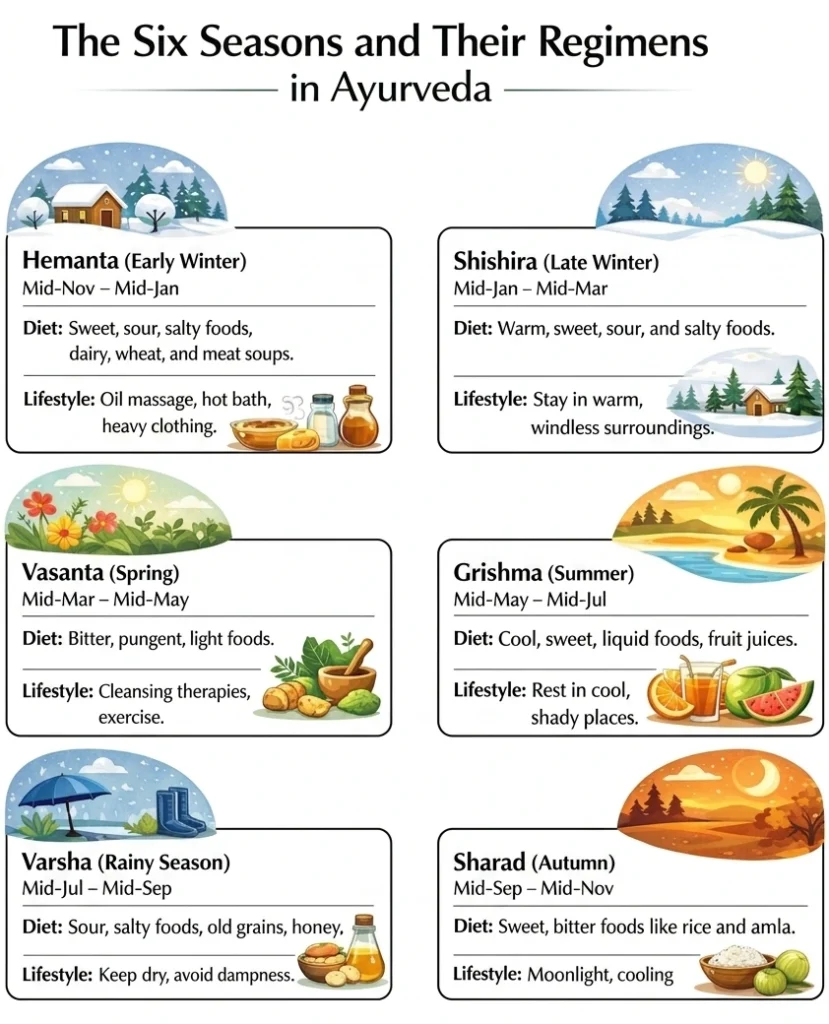
1. Hemanta (Early Winter: Mid-November – Mid-January)
During Hemanta, the external cold forces the digestive fire (Agni) inward, thereby strengthening it.
Diet:Have sweet, sour, and salty-tasting food items. Consume nutritious foods, including milk items, sugarcane, fresh rice, wheat, and soups made of meats, along with fats, which are good to have.
Not to do:
Eat light, cold, and dry foods, which can cause disturbances in Vata dosha.
Routine:Take daily oleation treatment (Abhyanga) with emphasis on head massage, hot bath, body building exercises, wearing of heavy clothing, and living in a warm place.
2. Shishira (Late Winter: Mid-January to Mid-March)
It is very much like Hemanta, but the degree of cold and dryness is higher in this season.
Diet:Consume similar food as mentioned in Hemanta, but emphasise warm food.
Lifestyle:Stay in windless, warm surroundings. Continue oil massage and warm clothing. Cold exposure, daytime sleep, and excessive wind should be avoided.
3. Vasanta (Spring: Mid-March – Mid-May)
With an increase in warmth, Kapha, formed during the previous season, starts melting. This results in poor digestion, making one feel heavy and congested.
Diet:Prefer bitter, pungent, and astringent tastes. Light foods such as old barley, wheat, honey, and roasted meats are suitable.
Avoid:Heavy, sweet, sour, oily, cold foods, and new grains.
Lifestyle:Vamana (emesis) and Nasya (nasal medication) may be advised as cleansing measures. Exercise, dry massage, and the use of sandalwood or camphor paste are helpful. Day sleep should be strictly avoided.
4. Grishma (Summer: Mid-May – Mid-July)
This period is the season when the heat is intense and bodily strength tends to decline gradually. Vata increases, while Kapha becomes reduced.
Diet:Choose sweet, light, unctuous, and liquid foods. Fruit juices, coconut water, cold milk with sugar, and meat soups from animals of dry regions are beneficial.
Avoid:Excessively salty, pungent, and sour foods, overexertion and alcohol.
Lifestyle:
Stay in cool, shaded places, near water or in soothing surroundings. Day sleep is permitted in this season.
5. Varsha (Rainy Season: Mid-July – Mid-September)
During this season, digestion becomes weak because of humidity and environmental instability. Agni is at its lowest.
Diet:Prefer sour, salty, and unctuous foods. Old grains such as wheat, rice, and barley are suitable. Honey and properly boiled, cooled water are recommended.
Avoid:River water, excessive fluids, and heavy meals that are difficult to digest.
Lifestyle:
Vasti (enema) is often beneficial in regulating Vata. Keep the body dry, wear shoes, and avoid getting drenched. Exercise, daytime sleep, and exposure to dampness should be limited.
6. Sharad (Autumn: Mid-September – Mid-November)
In the autumn, the strong sun can suddenly aggravate Pitta.
Diet:Choose sweet, bitter, and astringent tastes to pacify Pitta. Rice, green gram, sugar candy, amla, and honey are beneficial.
Avoid:Fats, oils, curds, hot foods, sour foods, and pungent foods.
Lifestyle:
Hamsodaka — water purified by the sun and moon is recommended for drinking and bathing. Moonlight in the evenings, sandalwood paste, Virechana and Raktamokshana are recommended to those having excess Pitta upon assessing their eligibility.
The last seven days of a particular season and the initial seven days of another season make the Ritusandhi. It is a very sensitive period.
In this period, the old regimen must be slowly tapered off, and the new regimen for the season must be slowly adopted. Sudden changes can disturb the body and trigger disease.
This term refers to seasonal disturbance or irregularity, where the expected qualities of a season are either missing or replaced by abnormal patterns. For instance, there could be an absence of rain during the rainy season or rain during the winter season. Ayurveda identifies such seasonal anomalies in three different ways, which are known as Atiyoga (over-expression), Ayoga (under-expression), and Mithya Yoga (distorted expression).
In today’s era, this notion holds great significance, given climate change and global warming trends. The seasonal patterns that have been prevalent for years now seem to be altering.
When the environment is imbalanced, the body loses its equilibrium. It becomes susceptible to infections, allergies, and diseases like metabolic syndromes. At this point, the concept of Ritucharya becomes more relevant. It will enable us to know the state of the Doshas and Panchamahabhutas and change our behaviour and dietary habits accordingly.
A day could be considered an illustration of the six seasons:
The three Doshas — Vata, Pitta, and Kapha — do not remain static. They move through a natural seasonal rhythm of Sanchaya (accumulation), Prakopa (aggravation), and Prashama (pacification) across the six seasons.
| Dosha | Sanchaya (Accumulation) | Prakopa (Aggravation) | Prashama (Pacification) |
| Vata | Grishma (Summer) | Varsha (Rainy Season) | Sharad (Autumn) |
| Pitta | Varsha (Rainy Season) | Sharad (Autumn) | Hemanta (Early Winter) |
| Kapha | Shishira (Late Winter) | Vasanta (Spring) | Grishma (Summer) |
Understanding and following the appropriate Ritucharya for each season is essential because these natural shifts are not meant to be ignored.
If the Prakopa stage is not managed properly, the disturbed Doshas may move deeper into the tissues and gradually give rise to chronic illness. This is why seasonal discipline is not merely a traditional concept — it is a practical and preventive approach to long-term health.
Everyone can benefit from Ritucharya. The general principles apply to all, while the details can be adapted according to individual Prakriti (constitution) for better results.
Takeaways on Ritucharya
As we work hard to improve our services, your feedback is important to us. Please take a moment to help us serve you better.
Subscribe to our hospital newsletter for the latest health tips, updates on services, patient stories, and community events. Sign up today and stay informed!

Report Problem
Popular Searches: DiseasesTreatmentsDoctorsHospitalsWhole person careRefer a patientInsurance

