It’s high summer — the sun sharp, the days long, and our bodies quietly losing water. In this season, knowing What is dehydration, recognising dehydration symptoms, and understanding how to prevent dehydration, can dehydration cause headaches are everyday survival skills. In this blog, I will explain how tridosha dynamics and Udakavaha Srotas relate to heat stress and offer practical, time-tested measures, including dehydration treatment options.
Dehydration concept in Ayurveda
What is dehydration?
The answer is straightforward – a loss of body fluids and electrolytes that impairs temperature regulation and circulation.
Ayurveda describes the same process through the language of channels and elements. Jala (water) sustains the body’s tissues, and Udakavaha Srotas are the subtle channels that carry and balance those fluids. When the drying quality of Vata and the heating quality of Pitta increase — often under the influence of external heat in Vasantha and Greeshma Ritu—these channels become vitiated, and thirst (Trishna) follows. This is why dehydration in Ayurveda is considered not only a lack of water but a disturbance of fluid homeostasis at the level of dhatus like Rasa and Rakta.
How to spot it early — signs of dehydration
- Dry mouth, cracked tongue and reduced saliva (Mukhashosha)
- Reduced urine output and dark, concentrated urine.
- Rapid pulse, light-headedness, and shallow breathing.
- Sunken eyes, reduced skin turgor (dry skin), and general weakness.
- Mental confusion, irritability, and difficulty concentrating.

Vasanta Rutu: The transition Phase
Vasanta Rutu, the spring transition (mid-March to mid-May), gently shifts the body from cold to heat and plays an important role in fluid balance. As the sun climbs north during the Adana Kala, the environment grows drier: the predominant tastes of the season — Tikta, Kashaya, and Katu — carry drying qualities that begin to sap the body’s moisture. During spring, Kapha that accumulated in winter becomes liquefied and vulnerable to the increasing solar heat. Although full-blown Trishna (pathological thirst) tends to appear in Greeshma, the drying process starts now: early signs such as Mukhashosha (dry mouth), Talu and Kantha Shosha (dry palate and throat), and persistent Pipasa (thirst) should alert us to act.
Practically, spring calls for a gradual dietary and lifestyle shift — introduce cool, sweet, and liquid-rich foods and reduce pungent, astringent, or excessively drying items so the body is prepared for the upcoming summer heat.
Seasonal routine (Ritucharya) to avoid fluid loss
Ayurveda’s strength is prevention. During this season, adopt habits that pacify Pitta and Vata and preserve Jala:
- Favour foods that are liquid in nature, cooked white rice, khichadi, well-cooked lentils, and juicy seasonal fruits such as watermelon, muskmelon, and grapes.
- Avoid or limit Katu (pungent), Amla (sour) and Lavana (salty) foods that increase internal heat and fluid loss.
- Dress in light, cotton clothing; use hats or umbrellas; and minimise outdoor exposure between 12:00 pm to 3:00 pm when solar intensity peaks.
- Short midday rest (Divaswapna) conserves strength and moisture. Avoid it soon after lunch.
- Practise gentle cooling pranayama, such as Sheetali and Chandra Bhedi, to reduce internal heat without inducing perspiration.
Cooling beverages and foods
Cool, lightly salted and sweetened drinks help restore fluids and electrolytes while soothing the digestive tract. Use these for mild dehydration or heat stress; seek medical care for severe symptoms.
- Tender coconut water — natural electrolytes, easy on the stomach. Diabetic and patients with kidney issues should seek guidance from a physician before consuming it
- Fresh panakas (ripe mango, lemon)— diluted, mildly sweetened, and salted fruit sherbets (aam panna) cool Pitta and replenish fluids.
- Fresh buttermilk — light, probiotic, and electrolyte-friendly. Add a pinch of salt and drink (avoid it if it is very sour).
- Diluted fruit juices (amla, pomegranate, grape, papaya, watermelon) should be prepared as half juice and half water to avoid excessive sugar while still gaining vitamins and mild astringency.
- Laja manda (parched rice water) — thin, starchy rice water provides gentle carbohydrates and supports sodium–glucose transport; especially useful as an adjunct in diarrhoeal losses.
- Milk is nourishing, cooling rejuvenators that strengthen the body and gently restoring fluids and nutrients during convalescence or heat stress. However, Ayurveda warns about viruddha ahara (incompatible combinations) — for example, mixing milk with sour fruits (milkshakes).
- Apollo AyurVAID’s biohydration drinks act as a multi-purpose solution for dehydration, skin and hair-related issues.
Sip small amounts frequently rather than large gulps. Avoid carbonated sugary drinks as primary rehydrants.
Traditional remedies
These are time-tested Ayurveda adjuncts for heat, thirst and mild fluid loss. They calm the heat, reduce intestinal secretion, or provide sustained moisture— use them judiciously and stop if symptoms worsen.
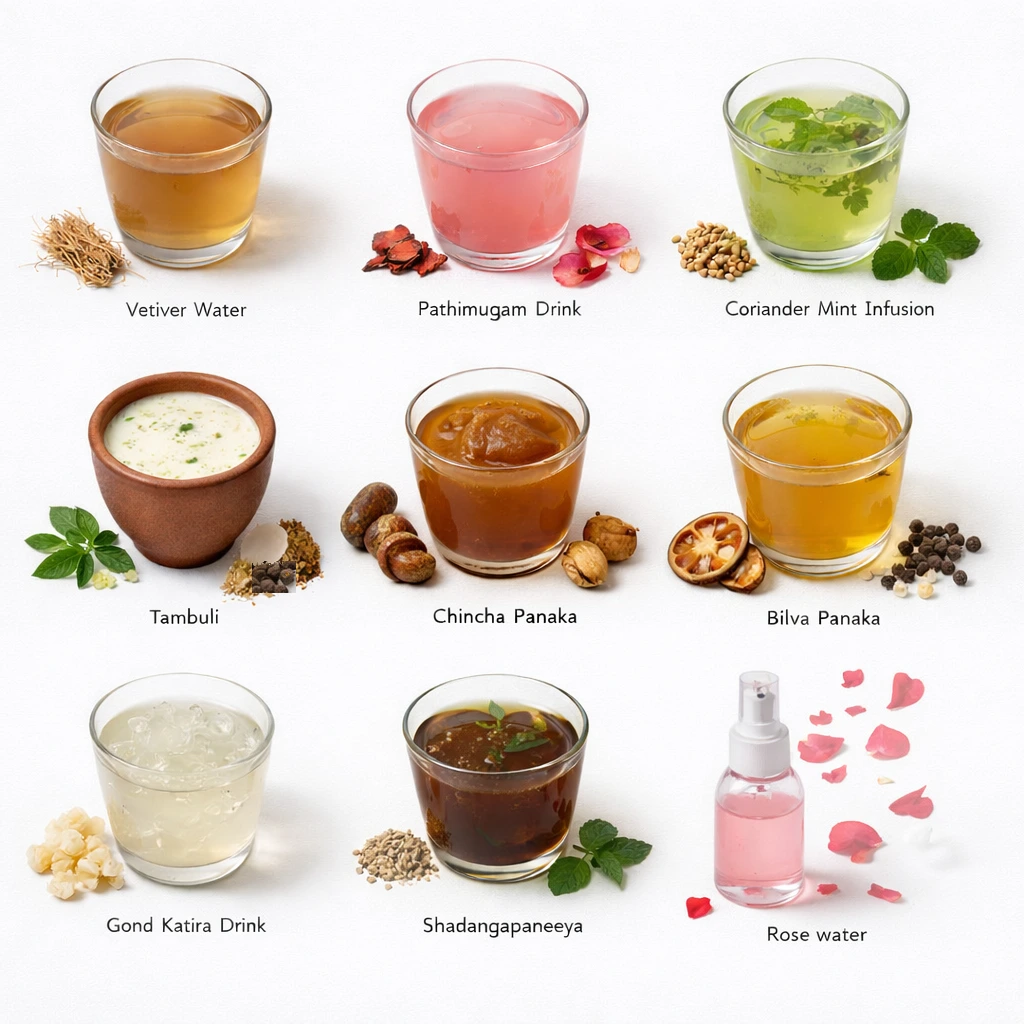
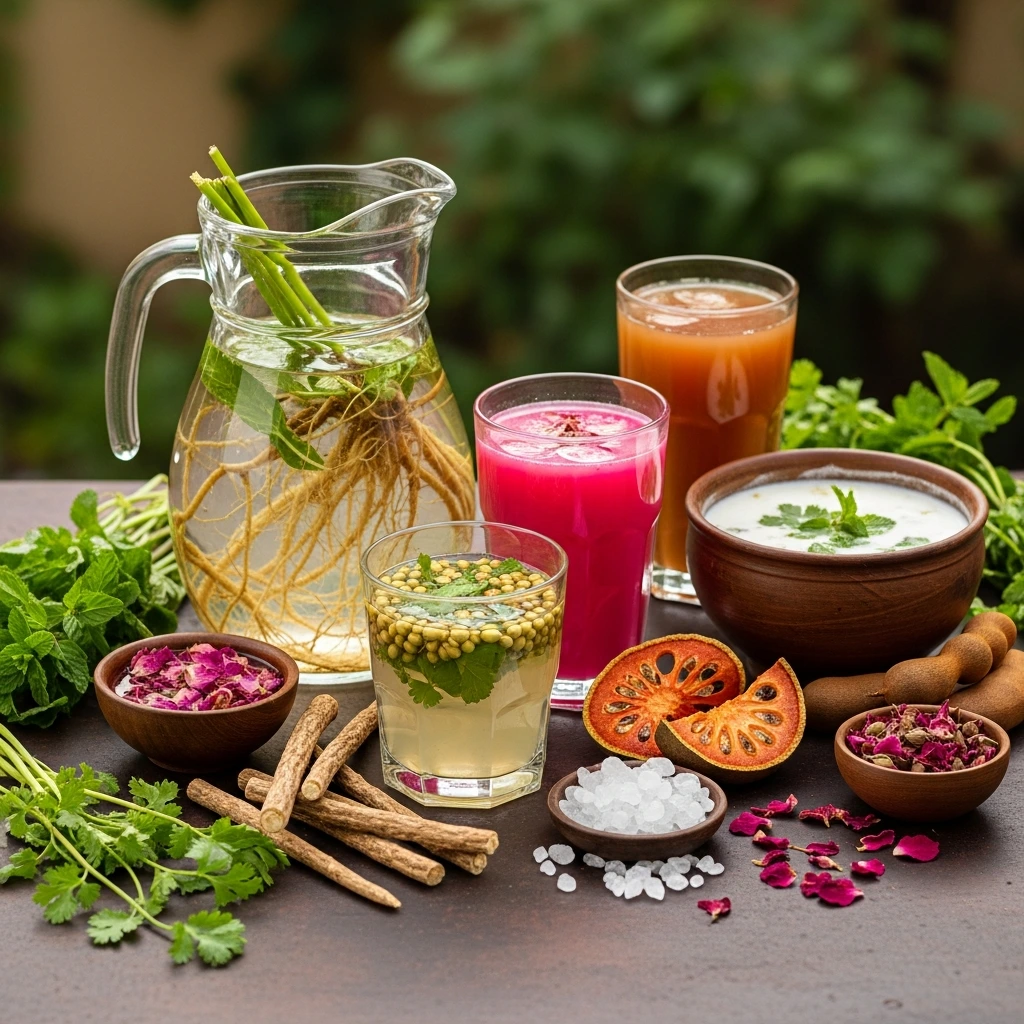
- Vetiver (Usheera / Khus) water: Soak 6–8 clean vetiver strands in 1 L of water (earthen pot preferred) for 2–4 hours or overnight; drink in small sips
- Padmaka (wild Himalayan cherry): Popularly known as ‘pathimugam’ in Kerala, this is used as a gentle cooling decoction or combined with Chandana (sandalwood) to reduce heat-related inflammation.
- Coriander and mint infusion (with optional fennel): A light morning infusion of coriander seeds (dhanyaka) and fresh mint (add a pinch of fennel if desired) soothes digestion, pacifies Pitta and quickly reduces internal warmth.
- Rose water (Shatapatri jala): Best used externally — spritz or apply to soothe heat rashes, calm inflamed skin and maintain surface hydration.
- Bilva Panaka (bael drink) — cooled decoction or strained pulp syrup from Aegle marmelos (unripe bael); mildly astringent and antidiarrhoeal, useful in diarrhoea with fluid loss. Can add salt and spices like cumin, pepper for taste.
- Shadangapaneeya (six-herb medicated water) — a cooling, aromatic decoction classically used for intense thirst, fever and burning sensations; taken in small sips to relieve excess thirst and heat.
- Tambuli ( flavoured buttermilk) —A well-known drink in the Karnataka region. Any one of fresh seasonal fruits and vegetables like amla, curry leaves, cucumber, pudina leaves, coriander leaves, or nutmeg—take in small quantity and grind it with ghee, roasted cumin, pepper and grated coconut (1 teaspoon each). Mix into diluted buttermilk. It naturally cools, supplies electrolytes, and supports thermoregulation during heat exposure.
- Chincha Panaka – a cooling drink made from soaked tamarind pulp blended with water, jaggery (or sugar), a pinch of saindhava lavana (rock salt), cumin and a little black pepper. Drink 50–100 ml as needed. It soothes pitta, eases low appetite and mild constipation, aids digestion, and acts as a gentle rehydrant.
Quick prep: soak tamarind, extract the pulp, dilute with water, sweeten, add salt and spices, strain and sip. - Gond Katira (tragacanth gum) — soaked to form a soothing gel; added to drinks to retain moisture and provide slow hydration in prolonged heat.
Precautions: avoid strong, concentrated herbal decoctions without guidance; check for allergies (e.g., sandalwood sensitivity); limit jaggery/sugar in diabetics. Avoid refrigerated and carbonated drinks.
When home measures are not enough — dehydration treatment
Practical daily checklist
- Carry a bottle and sip every 15–20 minutes during the heat.
- Choose light, liquid-rich meals and hydrating snacks (cucumber, citrus, melon).
- Avoid alcohol and excessive caffeine during heat waves.
- Use cooling pastes like sandalwood or vetiver on the forehead and chest for symptomatic relief.
- Monitor urine colour — pale straw is good; dark yellow is an early warning.
Conclusion
References
- Pansare K, Sonawane G, Patil C, Sonawane D. Gond Katira: A Natural Remedy for Summer Heat and Hydration. Res J Pharmacol Pharmacodyn. 2025;17(2):95-101.
- Shah S, Patil A, Chapte RD. Ayurvedic literature on trishna. Int J Multidiscip Health Sci. 2022;8(3):3-10.
- Saini G. Prevention and management of heat stroke (anshughat) in Ayurveda: A review. Int Ayurvedic Med J. 2018;6(9):2146-2152.
- Ambulgekar S, Kannolli GN, Sajjenshetty MR. Concept of Greeshma Rutucharya w.s.r. to Sarvanga Sundara and Ayurveda Rasayana Teekas of Ashtang Hrudayam. J Ayurveda Integr Med Sci. 2020;6:283-289.
- Mankar DA, Mankar AS, Masule A, Kadam A. Lifestyle and Dietary Guidelines in Summer season: An Ayurvedic Review. J Adv Future Res. 2024.