There are days when your period doesn’t just show up—it takes over. The ache settles deep, the cramps tighten without warning, and suddenly everything feels heavier than it should. Sitting still hurts. Moving hurts. Existing feels like effort. Yeah… that’s dysmenorrhea talking. And if you’ve ever groaned at your desk, curled up on the couch, or ended up hiding under a blanket wishing the world would just pause for your period, you are not alone. Honestly, you’re not weak, you’re not overreacting, and your cramps are not “just in your head”. They’re very real.
Some months, it’s a dull ache you can ignore. Other months? It’s like your uterus decided to host a wrestling match. The fatigue—the kind that makes scrolling on your phone feel impossible—is also part of it. But here’s the thing: your pain matters. And you deserve to know why it happens, what’s normal, what’s not, and how to take care of yourself without guilt.
So, What Is Dysmenorrhea?
In simple words, dysmenorrhea is painful periods. But it’s not just about cramps. Dysmenorrhea symptoms can include:
- Lower back and abdominal pain
- Nausea or stomach upset
- Headaches
- Fatigue that drains you
- Mood swings that make you snap at the smallest thing
Some of these are mild. Some of these will make you hide under your blankets with your favourite tea, groaning softly, wishing it would all just stop. And that’s okay. Recognising what’s happening to your body is the first step toward actually helping it. If something feels sudden, severe, or “off” compared to your usual cycle, don’t wait. Check in with a professional. Your pain is a message, not an inconvenience.
Causes – Why does it hurt so much?
- Stress, irregular sleep, and a chaotic schedule
- Digestive issues—Ayurveda says your agni (digestive fire) matters. If it’s weak, and ama (toxins) build up, cramps can intensify.
- Underlying conditions like endometriosis or fibroids
Types of Dysmenorrhea
There are basically two:
- Primary dysmenorrhea – Pain that comes with ovulation cycles that can’t be linked to any impairment of the reproductive system.
- Secondary dysmenorrhea – Pain caused by another condition, like endometriosis, adenomyosis, uterine myoma, endometrial polyps, obstructive malformations of the genital tract, chronic pelvic inflammatory disease, pelvic adhesions, Irritable bowelsyndrome, or interstitial cystitis. The sudden onset of dysmenorrhea may be due to pelvic inflammatory disease, an unrecognised ectopic pregnancy or spontaneous abortion.
Knowing which one you have can help guide how you treat it. Sometimes lifestyle changes are enough; sometimes you need a little extra support.
Dysmenorrhea Ayurveda Treatment
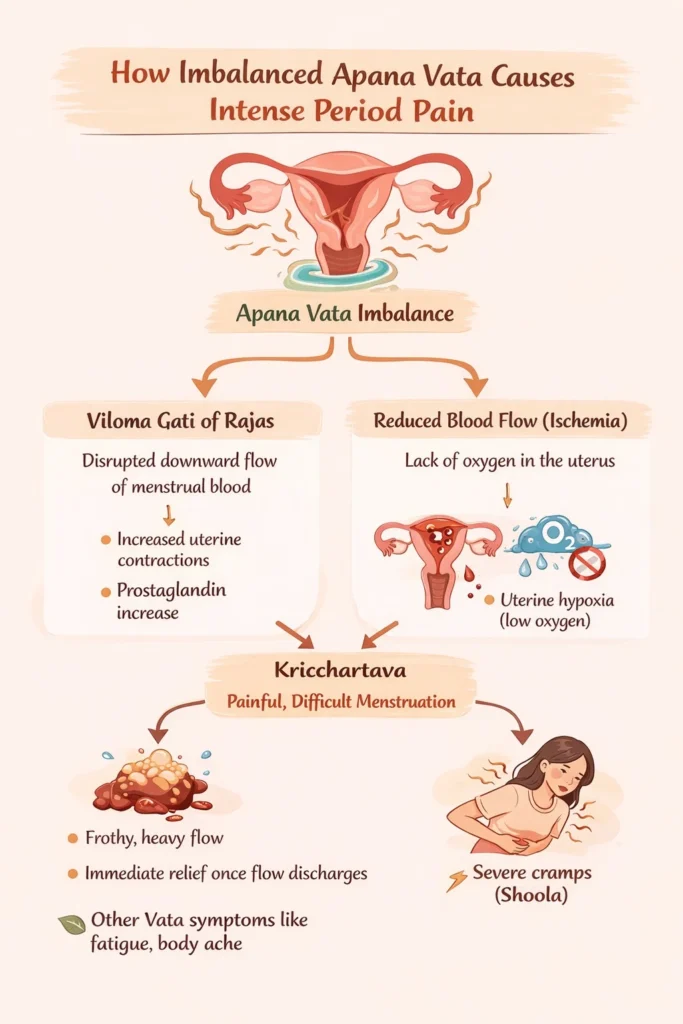
In Ayurveda, painful periods—orKashtartava—are usually linked to an imbalance of Vata.Vata governs movement in the body, including menstrual flow. When it becomes disturbed, especiallyApana Vayu (the type responsible for downward movement), the flow may feel strained or obstructed. That’s when cramps, tightness, irregular cycles, or bloating can happen. Treatment isn’t about shutting down the pain temporarily. It’s about bringing the body back into balance.
- Vata Shamana– Because Vata is associated with dryness and constriction, the approach leans toward warmth and nourishment. Warm, freshly cooked meals. Adequate rest. Oil-based therapies (Snehana).Maintaining consistent habits. Over time, these reduce the tendency toward spasmodic pain.
- Agni Deepana– Digestion is also considered important. Weak agni (digestive fire) can lead to the formation of ama, which may block channels and aggravate discomfort. Simple food, eaten at regular times, supports better digestion and smoother cycles.
- Srotoshodhana– If menstrual flow feels obstructed (Sanga), therapies are used to gently restore proper movement rather than suppress symptoms. And the daily routine—Dinacharya—plays a steady role. Sleeping and eating at consistent times, moderate exercise, and stress management all help stabilise Vata.
Some Ayurveda tools for relief:
- Snehana – Internal and external oleation therapies relax muscles, calm Vata, and improve circulation.
- Anuvasana or Matra Vasti – Therapeutic enema done by a trained practitioner, supporting pelvic health.
- Uttaravasti – A specialised Panchakarma therapy in Ayurveda where medicated oil or herbal decoction is administered into the uterus (in women) by a trained Ayurveda practitioner under sterile conditions.
- Garbhashaya Balya Aushadhi: Herbs that support balance and reduce inflammation.
The goal is not masking pain but nurturing the body.
Small, Everyday Ways to Help
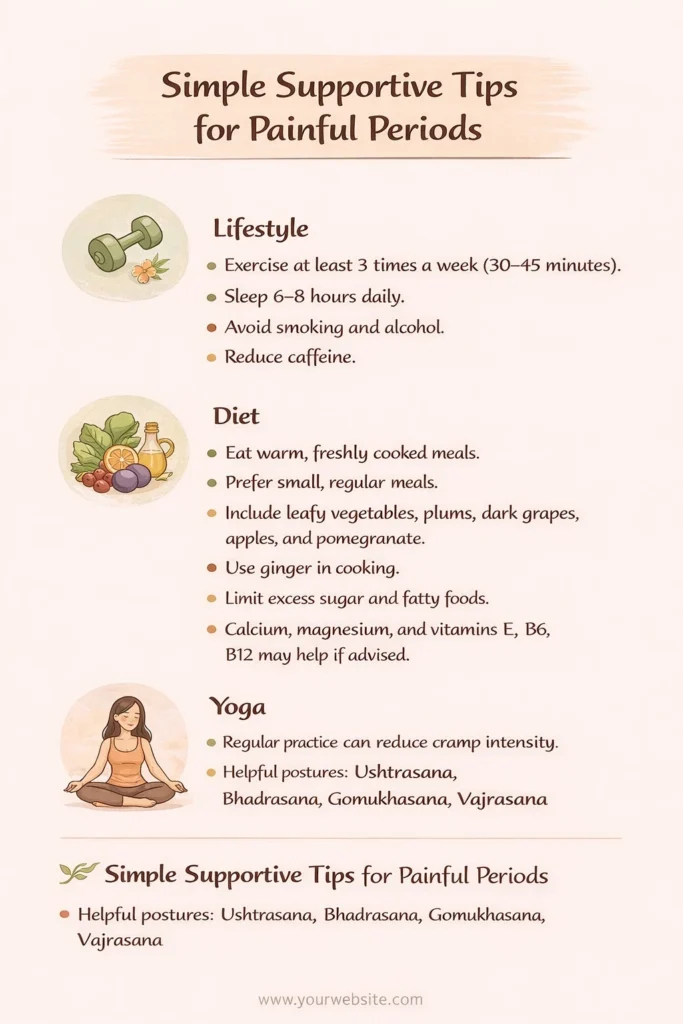

Lifestyle Modifications
- Exercise regularly. Aim for at least three sessions a week, around 30–45 minutes each. It doesn’t have to be intense — a brisk walk, some light strength work, or even stretching counts.
- Sleep matters more than we think. Try to get 6–8 hours. When sleep is off, pain often feels worse.
- Avoid smoking and alcohol. Cut down on caffeine too, especially close to your period.
Diet Guidelines
- Eat warm, freshly cooked food when possible. Very cold or heavy meals don’t help.
- Instead of three or four large meals, try smaller ones spaced throughout the day. It’s easier on digestion.
- Add fruits like plums, dark grapes, apples, papayas, pineapples, and pomegranates. Leafy vegetables are useful — keep them regular in your meals.
- Use ginger, cumin, coriander and fennel seeds, asafoetida, dill leaves, horse gram, and sesame seeds in everyday cooking. Simple, but helpful.
- Limit very oily, sugary, and processed foods. They tend to worsen bloating and discomfort.
- Some people benefit from supplements like calcium, magnesium, or vitamins E, B6, and B12—but only if needed.
Yoga for Menstrual Comfort
Final Thoughts
References