Sometimes, a parent comes in and says quietly, “I think something’s off… but maybe I’m imagining it.” Maybe you’ve noticed your child avoids eye contact, repeats the same motion, or lines up toys instead of playing with others. These are small things, but they can be symptoms of autism in children—things that show differences in how your child interacts, communicates, or explores the world. Recognising them early doesn’t label your child; it gives you a chance to help, support, and guide them in the right way.
Noticing these things early is actually a good thing. It helps you get the right support. At Apollo AyurVAID, we look at both the body and the mind—modern assessments, plus Precision Ayurveda understanding. It’s not about labels; it’s about helping children grow in their own way.
Signs and Symptoms of Autism in Children
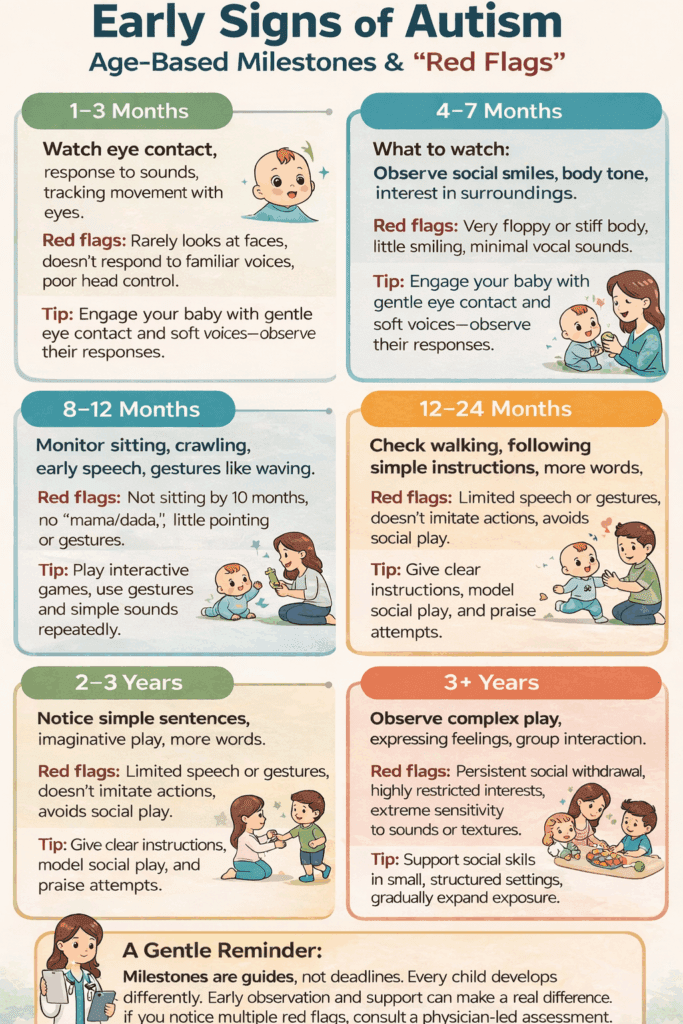
The early signs of autism in children can be tricky. They’re subtle. You might see:
- Little eye contact, seems to prefer being alone
- Delayed speech, or only a few words
- Repetitive movements—hand flapping, rocking, spinning toys
- Upset if routines change
- Hyper-focus on one activity for long stretches
It can feel confusing. Sometimes, it’s dismissed as shyness or personality. But patterns that continue over months matter. Children with neurodevelopmental disorders may also have differences in learning, memory, motor skills, orbehaviour. These differences are about the brain developing differently—not about parenting.
Social Interaction and Communication
Some children seem to live in their own little world. They may play alone, ignore other children, or not respond when spoken to. You might feel a little sad watching them, and that’s normal.
Repetitive Behaviors and Routines
Observation and Diagnosis
Diagnosis often begins with careful observation. Clinicians look for signs and symptoms of autism in children across social interactions, communication, and behaviour. Sometimes, structured tools or scales are used to assess severity.
- Mild: Some differences, able to function in most social situations
- Moderate: Noticeable differences; may need extra support
- Severe: Significant challenges, consistent support needed
Early diagnosis is important—not to label, but to guide interventions. Small steps in understanding and therapy can make a big difference in development, confidence, and daily functioning.
Causes of Autism in Children
Many parents ask, quietly, “Did I cause this?” No. Autism isn’t caused by anything a parent does. It comes from how the brain develops, and sometimes genes play a role. Other factors can include:
- Differences in brain areas, such as the prefrontal cortex, basal ganglia, and limbic system
- Neurotransmitter imbalances affecting social interaction and repetitive behaviors
- Chronic inflammation or immune system dysregulation
- Gut-brain axis disruptions, where gut microbiota can influence behavior and cognition
Autism and ADHD share some pathways in the brain, especially attention and social behaviour. It’s just how the nervous system works for your child.

Ayurveda and Early Signs
- Vata imbalance, affecting the nervous system and mental coordination
- Beeja Dosha, hereditary factors influencing development
- Agnimandya, weak digestion causing buildup of Ama
- Dhatugata Ama, affecting tissue development and the brain
- Srotorodha, blockages in energy and nutrient flow
Practical Tips for Parents
You don’t need fancy equipment or complex routines. Small steps help:
- Follow your child’s interests. If they like cars, use cars to encourage interaction.
- Use short, repetitive words and gestures. Keep it simple.
- Allow repetitive behaviours safely, and gently guide towards functional play.
- Introduce small changes slowly. Visual schedules help.
- Encourage motor skills with play—blocks, soft balls, and stacking.
- Keep meal and sleep routines consistent.
- Offer calm spaces during anxiety or frustration.
Early Signs and Tips
| Early Sign | What You Might See | Tips for Parents |
|---|---|---|
| Social Interaction | Avoids eye contact, prefers to play alone | Follow your child’s interests. Celebrate tiny interactions—even a smile counts. Don’t force it. |
| Communication | Delayed speech, limited responses, inconsistent reactions | Keep words short and simple. Repeat often. Pair gestures with words. Remember, they hear more than they show. |
| Repetitive Behaviors | Hand flapping, lining up toys, spinning objects | These help them process the world. Let it happen safely, then gently guide it toward purposeful play. No rush. |
| Routines | Upset with change, anxious about new activities | Introduce changes slowly. Use visual cues or pictures. Small steps, small wins. |
| Focus & Attention | Hyper-focused on one toy, difficulty switching tasks | Give short instructions. Break activities into tiny steps. Praise every small attempt at flexibility. |
| Motor Skills | Awkward movements, delayed coordination | Encourage playful activities—stacking blocks, tossing soft balls, simple games. Keep it fun, not forced. |
| Gut / Digestion | Sensitive tummy, irregular eating or bowel habits | Maintain regular meals and simple routines. Supporting digestion can improve mood, energy, and focus. |
Conclusion
References