Women with menorrhagia often suffer from more than a heavy period. It drains energy, disrupts work and sleep, and causes constant worry about leaks and low iron.
What is menorrhagia? Medically, it’s excessive menstrual bleeding (commonly >~80 mL per cycle or lasting >7 days), but clinically, we weigh it by how much it interferes with life.
Common menorrhagia symptoms are very heavy flow or frequent soaked pads, large clots, bleeding longer than usual or between cycles, tiredness, dizziness or breathlessness from possible iron deficiency. Menorrhagia causes include structural problems, lifestyle, stress, and digestive or metabolic factors that worsen bleeding.
Menorrhagia is common, often undertreated, and can have real physical and emotional consequences. If you’re struggling with it, this blog is for you to find the cause and a treatment plan that addresses both symptoms and underlying factors.
What is menorrhagia?
To effectively manage health, one must first understand what is menorrhagia. The modern menorrhagia definition describes it as cyclic menstrual bleeding that is excessive in either amount, exceeding 80 ml per cycle, or duration, lasting more than seven days. It is primarily attributed to conditions affecting the uterus, such as structural abnormalities (fibroids or polyps) or hormonal imbalances like oestrogen dominance.
Ayurveda uses the term Asrugdara (or Raktapradara) to describe excessive menstrual bleeding. Instead of only measuring blood loss, Ayurveda emphasises digestive and metabolic forces that are out of balance, as well as doshas (primarily Pitta and Vata) and tissues (especially Rakta, the blood) that are disturbed. Ayurveda also pays close attention to the role of Apana Vata — the downward-moving energy that helps regulate menstruation — and to the quality of digestion (Agni) and the presence of metabolic toxins (Ama).
Common symptoms to watch for
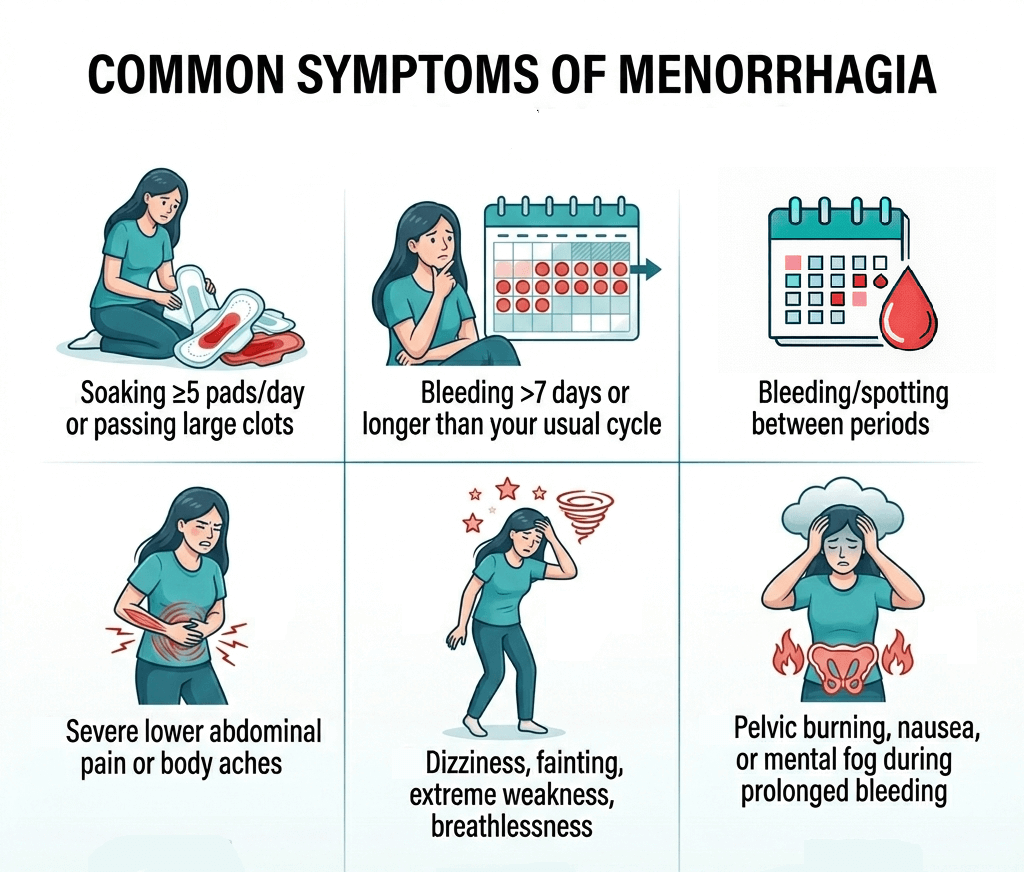
Beyond the obvious sign of very heavy flow, there are other clues that the bleeding is more than just “a bad period”. The menorrhagia symptoms include:
- Passing large clots or very frequent soaking of pads/tampons (for example, needing 5 or more pads per day).
- Bleeding that lasts longer than your usual 3–5 days and extends beyond a week.
- Bleeding between cycles (spotting or heavier bleeding unexpectedly).
- Systemic symptoms such as severe lower abdominal pain, body aches, dizziness, fainting spells, extreme weakness, or breathlessness — signs that anaemia may be developing.
- Pelvic burning sensations, nausea, or mental confusion when bleeding is prolonged.
If you experience any of these, please see a clinician for proper evaluation. Heavy bleeding can lead to anaemia and other complications if not addressed.
Why heavy bleeding happens: common causes
The menorrhagia causes span several areas:
- Structural and hormonal: Fibroids, polyps, hormonal imbalances (like oestrogen excess), infections, or bleeding disorders can cause heavy menstrual flow.
- Dietary and digestive: Overly salty, sour, spicy, or hot foods, as well as incompatible combinations, can create ama (undigested metabolic residue) and disturb Pitta and Rakta. Consuming food before the previous meal has been digested can also weaken Agni, leading to abnormal bleeding.
- Lifestyle: Excessive physical exertion, too much travelling, excessive sexual activity, and irregular sleep can disturb Apana Vata and cause excessive bleeding.
- Psychological: Chronic grief, anger, and anxiety can directly impact the doshas, especially Vata and Pitta, which can disturb the menstrual cycle.
- Others: Pregnancy complications, abortion, injuries, and digestive problems can cause heavy bleeding.
In Ayurveda, the way these causes express themselves depends on which dosha predominates, so treatment is tailored to that presentation.
Types of Asrugdara
Menorrhagia of different types is described in Ayurveda to enable specific treatment:
- Vataja: In this case, the blood is irregular, thin, dark coloured, and frothy. Painful sensations of sharp, aching types in the pelvic and back areas occur. The imbalanced Vata is responsible for the unpredictable nature of the bleeding.
- Pittaja: The bleeding is usually hot, bright red, and even yellowish in colour, with little clotting, and the woman experiences burning sensations, itching, and inflammation. The Pitta dosha is responsible for the rapid rates of all processes and the fluidity of blood.
- Kaphaja: The bleeding is thick, pale, and unctuous with fleshy clots and mild pain along with nausea and sluggish digestion. The Kapha dosha is responsible for stagnation and accumulation.
- Sannipataja: This condition is the state where all three doshas are vitiated along with foul-smelling discharge and illness.
Impact on daily life

Ayurveda management
- Raktastambhaka — immediate haemostatic measures to control bleeding.
- Pachana — remove ama first so medicines act safely.
- Kashaya & Tikta herbs — internal astringent/bitter agents to reduce bleeding and calm pitta.
- Virechana — corrective purgation when excess pitta is causal.
- Vasti (including matra basti) — pacify Vata, especially apana vata.
- Uttar Vasti — local uterine/vaginal instillations after menses when indicated.
- Vamana — for kapha-dominant, thick or slimy bleeding.
- Yonidhavana / Yonipichu — local washes or medicated tampons for symptomatic relief.
- Raktavardhaka — diet and tonics to correct anaemia and rebuild blood.
How we treat Menorrhagia
| Patient | Age | Before Treatment (Key Symptoms / Metric) | Treatments Given | After Treatment (Key Outcomes / Metric) |
|---|---|---|---|---|
| Mrs K | 25 yrs. | Heavy, prolonged bleeding with large clots; lower abdominal pain; marked fatigue. PBAC – 15 on admission. | The treatment included targeted internal stambhana medicines, local therapies such as sthanika abhyanga, nadi sweda, and matra vasti. | Rapid improvement: PBAC fell to 1 by discharge; fatigue and abdominal tenderness markedly reduced (fatigue score dropped from 11 to 2.77). Overall clinical status: excellent. |
| Mrs T R | 47 yrs. | History of post-COVID menorrhagia for 2–3 years with anaemia, generalised weakness, palpitations, and body pain (Pain VAS 4/10 at baseline). | Integrative plan addressing menstrual control and correction of anaemia and systemic weakness: OP Ayurveda therapies (e.g., sarvanga dhanyamlakizhi) plus oral supportive medicines. | Marked reduction in pain (VAS 4→1/10), fatigue and palpitations decreased, musculoskeletal/function scores improved; anaemia and systemic strength supported with oral medicines. Condition: discharged stable. |
To Conclude
Key Takeaways
- Menorrhagia is more than heavy bleeding – look for duration, size of clots, and systemic symptoms (weakness, dizziness).
- Ayurveda considers it a dosha imbalance, specifically a combination of Vata-Pitta, affecting Rakta Dhatu and Apana Vata, with Agni (digestion) and Ama (toxins) having a large impact.
- There are many causes, including anatomical, hormonal, dietary, lifestyle, mental, and traumatic factors.
- Treatment varies from individual to individual. Ayurveda offers cleansing (in some cases), palliative care with herbal remedies, and changes in diet and lifestyle that are specifically tailored for your current imbalance.
- Ayurveda can offer holistic care. Emergency treatment is needed if there are symptoms of heavy bleeding, dizziness, fainting, and severe anaemia.
References
- Mule K, Kerle N. A critical review of Asrugdar. Int J Res Ayurveda Pharm. 2020 Apr;11(2):133–7. DOI: 10.7897/2277-4343.110246.
- Karache S A, Mehere S. Complete review of Ayurvedic management of Raktapradar w.s.r. to Brihatrayi and Laghutrayi. Int J Ayurveda Pharma Res. 2021 Oct;9(9):51–8. DOI: 10.47070/ijapr.v9i9.2075.
- Rajput S, Mata S, Saxena U, Ota S, Gupta B. Ayurveda Management of Menorrhagia (Raktapradara): Protocol for a Randomized Controlled Trial. JMIR Res Protoc. 2025 Mar 31;14:e60801. DOI: 10.2196/60801.
- Malik N, Swathi C, Chaturvedi A. Ayurvedic approach for management of Asrigdara: a case study. Int J Res Ayurveda Pharm. 2022;13(6):5–8. DOI: 10.7897/2277-4343.1306146.
- Dharshini priya G, Chitra devi K, Crossia A W F, Bhuvaneswari S. Efficacy of Saraca Asoca in the treatment of gynecological disorders in herbal medicinal system. Afr J Biomed Res. 2025 Jan;28(1s):1220–2. DOI: 10.53555/AJBR.v28i1S.6399.