For many women, the days before menstruation bring a predictable, yet unwelcome, cluster of changes – mood shifts, bloating, breast tenderness, cramps and fatigue. These period symptoms are often shrugged off as part of being female, but when they become intense enough to disrupt work, relationships or daily functioning, they cross the line to premenstrual syndrome. The cluster of PMS symptoms, i.e., premenstrual syndrome symptoms — mood swings, bloating, breast tenderness, cramps and fatigue — are predictable symptoms before period that reflect an imbalance in the system during the late luteal phase.
Distinguishing ordinary early signs of period from pathological patterns means listening for severity and disruption: mild signs of period are common, but when these period symptoms recur and impair work or relationships, we must look deeper. In Ayurveda, common PMS causes are traced to an improper diet and lifestyle, chronic stress, and dosha obstruction of Vata, Pitta, or Kapha. It not only explains why these changes happen, but it also points to long-term measures that restore rhythm rather than merely mask discomfort.
A different way of seeing the cycle
The root of the problem: PMS causes
Ayurveda traces the origins of disruptive premenstrual states to specific lifestyle and dietary errors (Mithya Ahara and Mithya Vihara) as well as the mental-emotional terrain (Manodosha). Key drivers seen in practice are:
- Improper Diet — excess spicy, salty or dry foods and frequent packaged or processed items that disturb tissue metabolism.
- Mental stress — chronic anxiety and relentless “workaholic” rhythms that vitiate Manodosha.
- Disturbance of biological rhythm – late nights, skipping of meals, and lack of physical activity leading to an imbalance in digestion and circulation.
- Dosha Obstruction – traditionally defined as Pitta Avrita Vyana Vata, whereby the intensity of Pitta causes pain, irritability, and dysfunctionality of the downward flow of Vata.
These mechanisms translate directly into the familiar clinical picture of PMS symptoms—mood swings, cramps, headaches, acne flare-ups, bloating, and water retention. They also explain why symptoms differ between women.
How period symptoms show up by dosha
Recognising the dominant dosha pattern helps choose targeted care. Typical presentations are:
- Vata-type: prominent anxiety, scattered thoughts, insomnia, severe colicky abdominal pain, lower backaches, and constipation.
- Pitta-type: heightened irritability or anger, heat sensations, facial flushing, acidity and sometimes skin rashes. Appetite changes and hyperacidity are common premenstrual syndrome symptoms here.
- Kapha-type: a heavy, dull quality of pain. Fluid retention, breast tenderness, lethargy and a desire to withdraw socially. Weight gain and persistent sleepiness are frequent early signs of period in this group.
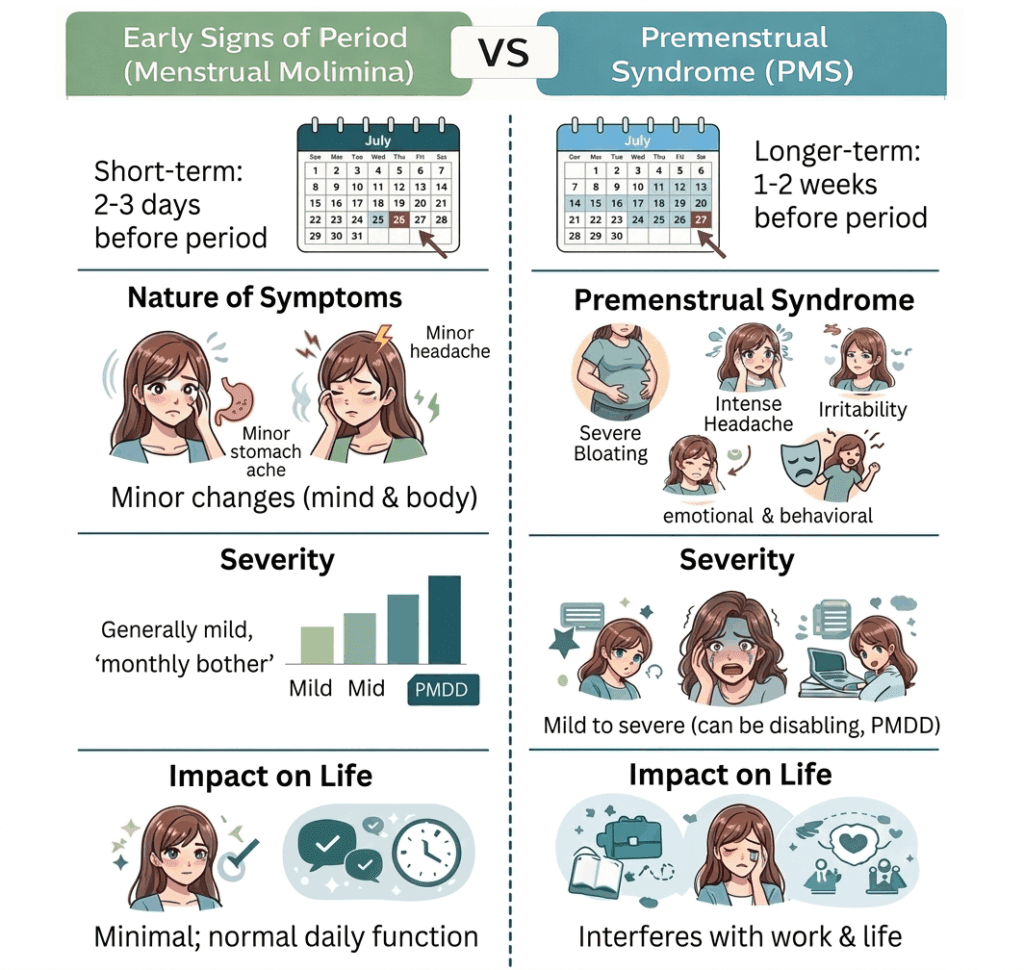
These variations help distinguish ordinary early signs of period (menstrual molimina) from pathological premenstrual syndrome. The former are mild, predictable, and go with the flow. The latter recur each cycle and interfere with life.
Early signs vs. PMS
Both occur in the luteal window but differ in timing and impact. Early signs of period usually appear a few days before bleeding and are tolerated without loss of function. Premenstrual syndrome, by contrast, often begins 1–2 weeks before menses and can range from disruptive to disabling (as in Premenstrual Dysphoric Disorder (PMDD)). The key clinical question is: do symptoms remit with the onset of bleeding, and do they impair daily life? If the answer is yes to impairment, the management must move beyond symptomatic analgesia toward systemic rebalancing, which may include lifestyle changes, dietary adjustments, and herbal remedies as part of a comprehensive treatment plan.
Ayurveda management
- Vasti: a foundational therapy for Vata-predominant pain and constipation. For severe cases, Matra Vasti may be considered under careful supervision.
- Virechana: either a gentle daily evacuation or a classical one helps clear accumulated Pitta and prevent recurrence.
- Shirodhara and Shiroabhyanga: Streaming of medicated liquid or oil to the forehead or oil massage soothes Pitta-driven irritability, headaches and insomnia.
- Abhyanga and Swedana: full-body massage and gentle steam to relieve Vata and Kapha stagnation.
- Udvartana: dry herbal powder massage useful for Kapha-type heaviness and sluggishness.

Dietary guidance (Aahara)
Food is medicine. To calm premenstrual syndrome symptoms:
- Reduce salt and caffeine to limit bloating and anxiety.
- Favour warm, freshly cooked meals to kindle Agni and reduce Ama.
- Increase fibre to improve oestrogen metabolism and prevent its recirculation.
- Include healthy fats such as ghee, flaxseed, pumpkin seeds, and walnuts, which provide anti-inflammatory omega-3 fatty acids.
- Horse gram is an age-old remedy to regulate inconsistent bleeding and reduce acidity. It is useful in many cases but should be avoided during pregnancy or heavy active bleeding.
Diet must be individualised to Prakruti so that the gut remains resilient through the luteal shift.
Mind care
Because many PMS causes are psychosomatic, Ayurveda uses Satvavajaya Chikitsa. Simple daily practices, such as regulated routines, breathwork, journaling, and short meditative pauses, significantly reduce emotional reactivity and improve resilience.
Lifestyle prescriptions
- Observe Ritumaticharya, a cycle-wise regimen that respects the body’s natural timing.
- Practise Achara Rasayana, social and psychological conduct that supports stable mental health and relationships.
Regular sleep, predictable meal times, gentle exercise and stress moderation are the backbone of durable improvement.
To Conclude
Premenstrual syndrome. – Understanding the interplay of constitution, lifestyle, and the Rituvyateeta Kala offers routes back to predictable, manageable cycles. When we combine targeted Ayurveda therapies (Vasti, Virechana, Shirodhara), tailored diets, and consistent psychological practices, the frequent monthly turbulence of period symptoms becomes quieter and more bearable. If your premenstrual syndrome symptoms are severe, seek a clinician who can assess both your physiology and lifestyle – because lasting change comes from restoring rhythm, not from repeatedly silencing signs.
References
- Shrilata, Shetty SK, Savitha HP. Ayurvedic management of premenstrual syndrome: A case study. Int J Res Ayurveda Pharm. 2017;8(Suppl 2):119-121.
- Sharma B, Sharma S. Ayurvedic concept of premenstrual syndrome with special reference to Pittavritta Vyana Vayu. Int J Ayurveda Pharma Res. 2017;5(6).
- Ingole S, Pande S. Ayurvedic perspective of premenstrual syndrome and lifestyle modification; A review. World J Pharm Med Res. 2022;8(3):150-153.
- Jha K, Bharathi K, Jha K, Sonu. Conceptual study of premenstrual syndrome with modern and Ayurveda point of view. Ayushdhara. 2021;7(6):2976-2983.
- Dherange SD, Chodankar SS, Turlapati V. A single-arm clinical study of Shatavari Churna in Pitta Avritta Vyana Vayu w.s.r. to Premenstrual Syndrome. Ayurlog: Natl J Res Ayurved Sci. 2025;13(4):01-07.