कार्श्यमेव वरं स्थौल्यात् न हि स्थूलस्य भेषजम् (Astanga Hridaya)
As mentioned in Ashtanga Hridaya, the Acharya humbly tells us that the process of reducing excessive fat is often more delicate than that of treating thinness because, in most cases, obesity is a result of an underlying imbalance of the metabolic system. This is why Ayurveda emphasises the importance of regaining the digestive fire (Agni) and flushing out the toxins (ama) in the body instead of following a strict weight loss diet.
Triphala works as an effective remedy for obesity because it gently deals with the underlying causes of obesity by boosting the digestive system, eliminating toxins, and balancing the doshas. In this blog, I will discuss what triphala is, the benefits of triphala and how to use it for weight loss.
What is Triphala?
Triphala literally means “three fruits”. It combines Amalaki (Amla), Haritaki, and Bibhitaki in a balanced formula. Each fruit brings complementary qualities. Amalaki is nourishing and rich in vitamin C. Haritaki supports tissue repair and digestion. Bibhitaki helps clear mucus and heaviness. Together, triphala is a mild cleanser, a digestive tonic, and a metabolic balancer — a staple in Ayurveda. An especially useful combination when metabolic balance is the goal.
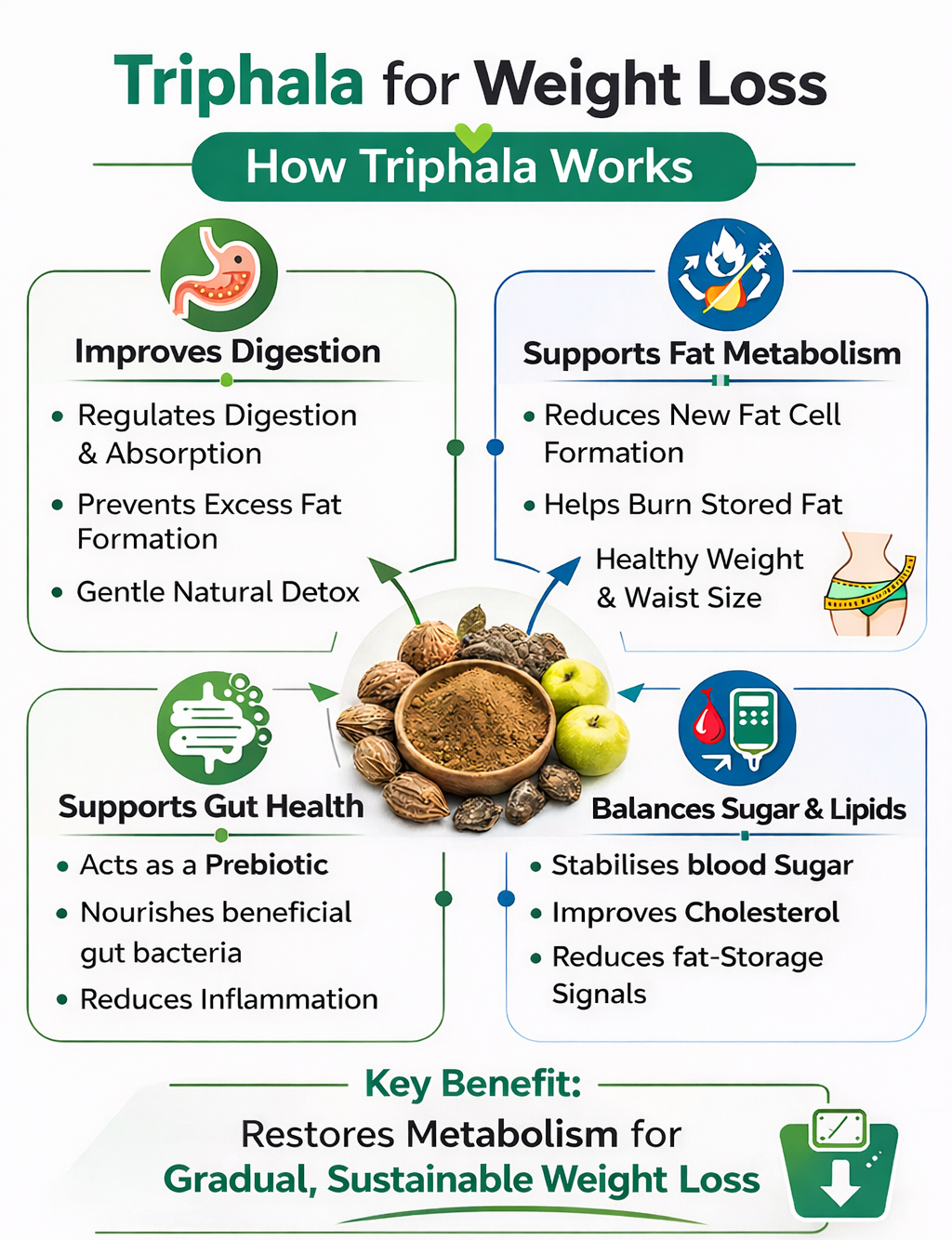
Many modern weight struggles come from slow digestion, low-grade inflammation, and a disrupted gut microbiome. In Ayurveda, these phenomena are considered impaired Agni and ama. Triphala benefitspeople wanting to reduce weight by following the mechanism –
- Supports digestion and Agni
A well-functioning Agni processes food efficiently so that nutrients are absorbed, and waste is eliminated. Triphala is a mild digestive tonic and bowel regulator. It helps clear accumulated waste (ama) and normalise digestive rhythm. When digestion improves, the body metabolises fuels better and is less likely to store excess as fat. - Modulates fat metabolism and adipogenesis
Laboratory and clinical studies suggest triphala can influence pathways involved in fat storage. It may downregulate genes that encourage the formation of new fat cells and support enzymes that favour fat mobilisation—helping to prevent new fat accumulation while supporting the gradual reduction of existing excess. - Balances the gut microbiome
Healthy gut flora is linked to healthier body weight. The polyphenols and fibres in triphala act like prebiotics, encouraging beneficial bacteria, such as Lactobacillus and Bifidobacterium. A balanced microbiome improves digestion, reduces low-grade inflammation, and helps regulate appetite and energy use. - Helps regulate blood sugar and lipid levels
Clinical evidence indicates triphala may lower fasting blood sugar and improve lipid profiles — reducing LDL and triglycerides while supporting HDL. Stable blood sugar reduces insulin spikes that promote fat storage, so this is a valuable metabolic effect. - Mild detoxification without depletion
Unlike harsh purgatives or extreme diets, triphala gently detoxifies while maintaining strength. In Ayurveda, we avoid measures that produce weakness (alpa-bala), and triphala’s balance of lightening and nourishing action makes it suitable for long-term use when monitored sensibly.
How triphala works
Here are the key mechanisms:
- Clears and tunes digestion. When digestion is steady, your body uses food for energy rather than storing it as fat. Triphala acts as a digestive regulator and mild colon cleanser — not a harsh purgative, but a gentle balancer.
- Supports fat metabolism. Research (lab and human studies) shows triphala may reduce signals that make new fat cells and improve pathways that use stored fat. This is one reason people see reductions in weight, BMI, and waist size with consistent use.
- Feeds good gut bugs. The polyphenols in triphala act like prebiotics, encouraging helpful bacteria (think Lactobacillus and Bifidobacterium) that support digestion, lower inflammation, and influence how you store energy.
- Stabilises sugar and lipids. By helping to control blood sugar and improving cholesterol patterns, triphala reduces hormonal triggers that cause fat to be stored.
In short, triphala helps your body tidy up digestion and metabolism, so weight changes are more natural and stable.
What the clinical research says
How to use Triphala for the best results
If you decide to include triphala as part of your wellness plan, follow these practical, safe steps:
- Form and dose: Triphala is available as churna (powder), tablets, and capsules. The classical and flexible option is triphala churna: about 3–5 grams (roughly one teaspoon) dissolved in a cup of warm water.
- Timing: Common practice for metabolic support is to take it at night before bed or early in the morning on an empty stomach. Night use helps gentle bowel cleansing and repair during sleep; morning use supports clearance and digestion for the day ahead.
- Combinations:
- If you tend to be thin or Vata-prone, taking triphala with a little warm ghee can prevent over-drying and maintain strength.
- If weight reduction is the aim and you are not diabetic, a small amount of honey (added to cooled Triphala water) is traditional for some people, but avoid honey if it will spike your sugars.
- Course and monitoring: Use triphala regularly for weeks or months for metabolic changes to appear under medical supervision. Track simple measures such as energy, digestion, sleep, and waist circumference rather than obsessing over the scale. If you have a chronic illness or take medications, consult a clinician so they can monitor interactions and doses.
This is how to use triphala for weight loss – practically and safely.

Safety and side effects
Triphala is generally safe when used appropriately. Some people may notice mild loose stools, a change in bowel pattern, or slight abdominal discomfort initially — this usually settles as the body adjusts.
Contraindication – Lactating mothers, pregnant women, and Children below 5 years old should never consume milk, nor should people suffering from cough, diarrhoea, or a lean body structure. Avoid this product if you are taking blood thinners.
Because of its inherent laxative properties, it may cause diarrhoea and stomach pain, particularly at large doses. It should not be consumed continuously for several months, as this can lead to dryness in the body and lack of sleep.
Quick takeaways
- Triphala is a gentle, three-fruit Ayurveda formula that balances digestion and detoxifies without causing weakness.
- Triphala benefits include better digestion, improved gut health, and modest weight-related improvements (weight, BMI, waist).
- Benefits of triphala extend beyond weight — antioxidants, skin support, eye health, and metabolic balance.
- Use triphala for weight loss as a supportive tool — at night or early morning, in the right dose, and alongside sensible lifestyle changes.
- Triphala is beneficial when used responsibly. Consult a practitioner if you are pregnant, nursing, have a chronic illness, or take regular medication.
Key takeaways
- Test early, test often. Simple urine and blood tests catch kidney stress before symptoms worsen.
- Control sugar & pressure. Tight glucose and blood-pressure control protect the kidneys.
- Lifestyle matters. Diet, hydration, sleep and gentle activities support recovery.
- Integrated care helps. Combined clinical monitoring, supportive therapies and rehabilitation improve symptoms and quality of life.
References
- Phimarn W, Sungthong B, Itabe H. Effects of Triphala on Lipid and Glucose Profiles and Anthropometric Parameters: A Systematic Review. Evidence-Based Complementary and Alternative Medicine. 2021;2021:2515690X211011038.
- Kuchewar VV. Efficacy and safety study of Triphala in patients of dyslipidemia: a pilot project. International Journal of Research in Ayurveda and Pharmacy. 2017;8(Suppl 3):177-180.
- Pavithran A, Kalamol MK, Prajeesh Nath EN, et al. Role of Triphala on Gut Microbiota in the Treatment of Obesity and its Complications. International Journal of Ayurveda and Pharma Research. 2024;12(2):97-101.
- Salehi A, Asgary S, Mohammadipour P, et al. The Anti-Obesity Effects of Triphala and Triphala Guggul: A Systematic Review and Meta-Analysis of Clinical Trials. Journal of Medicinal Natural Products. 2025;2(3):100021.
- Banjare J, Raina P, Mansara P, et al. Triphala, Regulates Adipogenesis through Modulation of Expression of Adipogenic Genes in 3T3-L1 Cell Line. Pharmacognosy Magazine. 2017;13(52):S834-S839.