Most women experience some level of discomfort during their periods. Sometimes it’s just a dull heaviness in the lower abdomen; something you notice but keep going with your day. Other times though, the cramps feel sharper. Concentrating at work becomes harder. Even resting doesn’t feel quite comfortable. And if you think about it… these cramps rarely arrive at a convenient time—a meeting, cooking dinner, commuting home, or finally sitting down after a long day.
If this sounds familiar, you’re definitely not alone.
Menstrual pain is incredibly common. Feeling it doesn’t mean something is “wrong” with your body. In many cases, it simply means the body is working through a natural cycle—sometimes a little more intensely than we’d like. The encouraging part is this: there are gentle ways to support the body. Many women find relief through Ayurveda period pain approaches, which focus not just on stopping pain but on restoring balance. Warmth, gentle movement, calming breath, and nourishing food—these simple habits can slowly shift how each cycle feels. Even small things help. A warm breakfast. Five minutes of stretching. A short walk. Over time, these little choices can make periods feel much more manageable.
Understanding Period Pain in Ayurveda
In Ayurveda, painful menstruation is called Kashtartava. The word itself explains the condition quite clearly:
- Kashta – painful or difficult
- Artava – menstrual flow
Importantly, Kashtartava isn’t viewed as a disease in Ayurveda. It’s seen more as a signal from the body, a sign that something—often subtle—may be out of balance. The main factor involved is Vata dosha, which governs movement throughout the body. Within Vata, a specific subtype called Apana Vata is responsible for downward movements, including:
- Urination
- Bowel movements
- Childbirth
- Menstrual flow
When Apana Vata moves smoothly, menstruation tends to be regular and relatively comfortable. But when Vata becomes aggravated—something that happens easily with stress, cold exposure, irregular eating, or poor sleep—the flow can feel restricted. Cramping may appear. Sometimes the pain comes in waves.
Ayurveda also describes srotas, the channels through which substances move in the body. The menstrual channel is known as Artava Srotas. You can picture it like a gentle stream. When the stream flows freely, everything moves easily. When something blocks or cools the water, the flow slows down. Discomfort follows.
Understanding Dysmenorrhea
- Fatigue
- Nausea
- Headaches
- Loose stools or digestive changes
- Primary dysmenorrhea: Pain without an underlying disease. This type is quite common and often linked to prostaglandins, which trigger uterine contractions.
- Secondary dysmenorrhea: pain caused by underlying conditions, such as endometriosis, fibroids, and pelvic adhesions.
Lifestyle Factors That Can Worsen Cramps
- Irregular sleep patterns
- Skipping meals or eating late at night
- High stress levels for several days in a row
- Long hours of sitting with little movement
- Frequent cold foods or iced drinks
Gentle Home Remedies for Period Pain
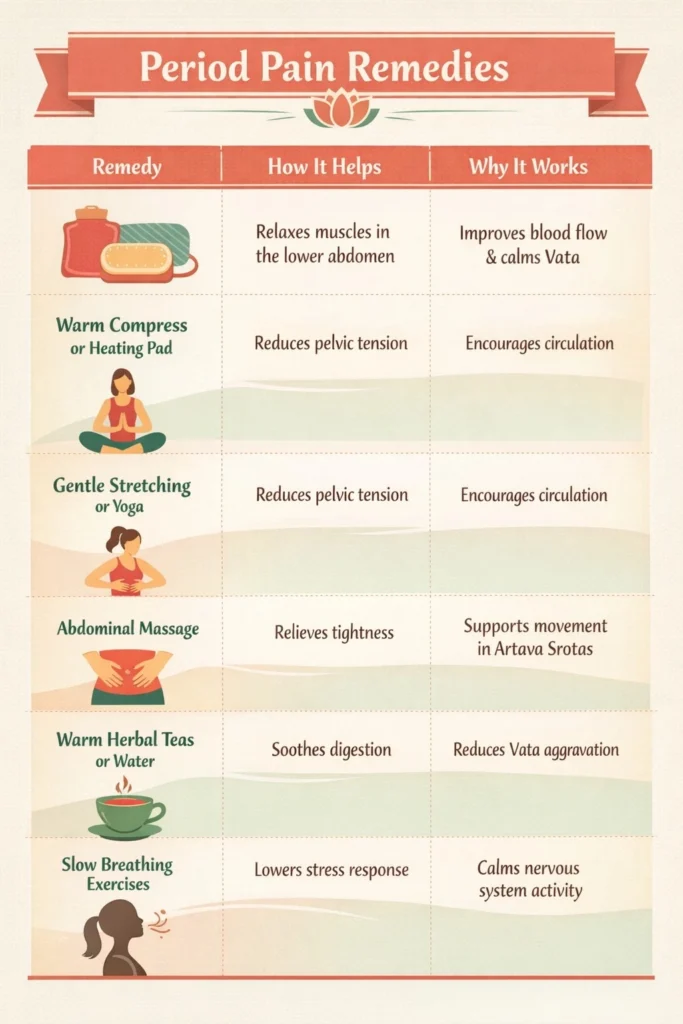
Many home remedies for period pain are easy to try at home. No complicated equipment. No strict routine. Just small, supportive habits. These period pain remedies are simple but surprisingly effective when practised consistently.
1. Warmth
Heat is one of the most effective period pain relief home remedies.
A heating pad placed on the lower abdomen often works within minutes. Warm baths help, too. Some women simply keep a hot water bottle nearby during the first day of their cycle.
Even sipping warm water can create a subtle sense of comfort.
Warmth relaxes uterine muscles and soothes aggravated Vata.
Simple. But very helpful.
2. Gentle Movement
When cramps are strong, intense exercise usually doesn’t feel appealing. And that’s okay.
But gentle movement can actually reduce pain.
Helpful options include:
- short walks
- slow hip circles
- light stretching
- relaxed yoga poses
Yoga postures like Cat–Cow, reclined bound angle, and seated forward fold gently release tension in the pelvic region. You don’t need perfect alignment. Even five minutes of slow movement can help the body relax.
3. Abdominal Massage
A soft massage across the lower abdomen sometimes provides surprising relief.
Using warm sesame oil can enhance the effect, though dry massage works as well. The movement should be slow and clockwise. Not forceful. Just gentle.
Many women describe it as one of the more comforting natural remedies for period pain, especially when cramps feel tight or gripping.
4. Breathing and Relaxation
Stress can make cramps feel stronger. This isn’t imagined—it’s a real physical effect. When the body feels stressed, muscles tighten. Pain sensitivity increases. Slow breathing helps interrupt that cycle. Try this simple pattern:
- inhale slowly for four counts
- exhale gently for six counts
The longer exhale activates the parasympathetic nervous system, which helps muscles relax.
Even resting with one hand on your abdomen while breathing slowly can bring noticeable relief.
Diet Considerations During Menstruation
In Ayurveda, digestion and menstrual comfort are closely connected. It might seem unrelated at first, but the way your body processes food can influence how your cycle feels.
When digestion becomes sluggish or strained, Vata tends to increase, and cramps may feel stronger or more persistent. Supporting digestion during your period can sometimes make a noticeable difference—not instantly, but gradually over time. Some dietary habits that many women find helpful include:
- Choosing warm, cooked meals during the first days of bleeding. Warm foods are generally easier to digest and tend to feel more comforting for the body.
- Adding mild spices like ginger, cumin, or fennel. These aren’t meant to be strong or overpowering—just gentle warming spices that support digestion.
- Eat simple, nourishing foods such as soups, stews, khichdi, and lightly cooked vegetables.
- Avoid iced drinks whenever possible, especially during the early days of the cycle.
- Limit highly processed foods and excess caffeine, which can sometimes aggravate digestive discomfort.
None of this needs to feel strict or complicated. Often, it’s the small shifts that help the most. Something as simple as replacing a cold smoothie with warm oatmeal during menstruation can gradually improve comfort over a few cycles. Little adjustments… repeated gently… can add up.

Supportive Lifestyle Practices
Beyond immediate period pain relief home remedies, everyday routines influence menstrual comfort over the long term. Some supportive habits include:
- Drinking warm or room-temperature water regularly
- Sleeping at consistent times each night
- Eating meals at predictable times
- Practising gentle yoga or stretching several days each week
Consistency matters more than intensity. These practices won’t eliminate discomfort overnight—but over time, they can make cycles feel noticeably easier.
A Calm, Whole-Body Perspective
Menstrual discomfort is common. It’s not a personal failure. And it doesn’t mean your body is “weak” or malfunctioning.
The goal of period pain Ayurveda treatment isn’t to suppress symptoms forcefully. Instead, it focuses on creating the conditions where the body can function smoothly. Warm meals. Gentle movement. Rest when needed. Small actions repeated consistently often have the biggest impact.
Over time, many women notice their cycles becoming softer, steadier, and easier to manage. You don’t need a perfect routine. Just a little patience. And steady, compassionate care.
References