Premenstrual distress need not be a monthly inevitability. If you find yourself dreading the days that lead up to bleeding, understanding how food and routine influence your inner balance can make a profound difference. In Ayurveda, we consider the late luteal phase a natural shift in the bodily doshas; with the right dietary and lifestyle choices, you can soften period symptoms, reduce PMS symptoms, and transform how your body navigates the days of discomfort. This blog offers practical advice on which foods to favour and which to avoid to relieve symptoms before period, and outlines simple routines that support long-term rhythm and resilience for premenstrual syndrome symptoms and premenstrual syndrome itself.
Ayurveda framing — simple and useful
Ayurveda views the premenstrual window (the Rituvyateeta Kala) as a time when Pitta (metabolic heat) tends to rise and Vata (movement) becomes prominent just before menses. When diet or lifestyle disruptsAgni (the digestive fire) and allowsAma (metabolic toxins) to accumulate, the result is the familiar pattern of cramps, irritability, bloating, and fatigue. The goal of an Ayurveda diet forPMS is therefore threefold: support digestion, prevent toxin accumulation, and sootheApana Vata (the downward-moving energy that governs menstruation).
Pathya — foods and habits to embrace
- Fibre-rich whole grains: Millets, barley, and whole wheat support oestrogen metabolism and reduce bloating; they keep bowel movements regular and reduce the load on the liver.
- Legumes and vegetables: Moong dal, horse gram (kulatha), sesame seeds, cooked greens and root vegetables are grounding and easy to digest—horse gram is especially valued in Ayurveda for stabilising uterine discomfort (avoid during very heavy flow).
- Nuts and seeds: A small daily handful of walnuts, flaxseeds, and pumpkin seeds provides healthy fats and plant-based omega-3s that help reduce inflammation and ease cramps.
- Warming, digestive teas: Warm water or buttermilk with a pinch of asafoetida (hing) or coriander-seed infusion (Dhanyaka Phanta) calms cramping and supports digestion. Buttermilk with a touch of fenugreek can also soothe muscular pain.
- Small amounts of healthy fat: Ghee, coconut, or sesame oil, in moderation, lubricate tissues, help Vata, and improve nutrient absorption.
- Regular, warm meals: Eat at consistent times; avoid late heavy dinners and favour warm, cooked food that’s easy on digestion.
Apathya — foods and habits to avoid
- Refined sugars and sweets: Sugary spikes worsen mood swings and fluid imbalance; they are strongly associated with worse PMS symptoms.
- Processed, packaged foods: These are low in Prana (vitality) and tend to produce Ama—avoid ready-to-eat, deep-fried or microwave meals.
- Excess salt and salty snacks: Promote water retention and bloating. Thus, reduce intake in the premenstrual period.
- Caffeine and alcohol: These aggravate Pitta and Vata, increasing anxiety, insomnia and breast tenderness—reduce or omit during the premenstrual week.
- Cold/raw heavy foods: Cold beverages and large meals of raw salad can blunt Agni and increase gas and discomfort for Vata-dominant women.

Lifestyle and Supportive Therapies
- Self-massage: A warm oil massage 20–30 minutes before taking a shower soothes Vata, increases circulation, and prevents muscle cramps.
- Heat Therapy: A warm compress applied to the lower abdomen relieves uterine cramps and balances Apana Vata.
- Restful Sleep: Maintain a consistent sleep schedule of 6–7 hours. It is not recommended to wander out late at night, as it can exacerbate premenstrual syndrome.
- Physical Therapy: Light yoga practices such as Pawanmuktasana and Baddha Konasana can provide relief from discomfort. Intensive physical activities should be avoided during severe abdominal cramps.
- Reduce Stress: Pranayama and meditation can provide relief from mood swings caused by premenstrual syndrome.
When to Seek Medical Care
Mild to moderate symptoms of PMS can be managed with dietary and lifestyle changes, but severe abdominal pain, heavy bleeding, changes in mood and sleep patterns, and effects on work and relationships should prompt medical evaluation. Coordinated care—combining appropriate medical investigations with Ayurveda support—often gives the best outcomes.
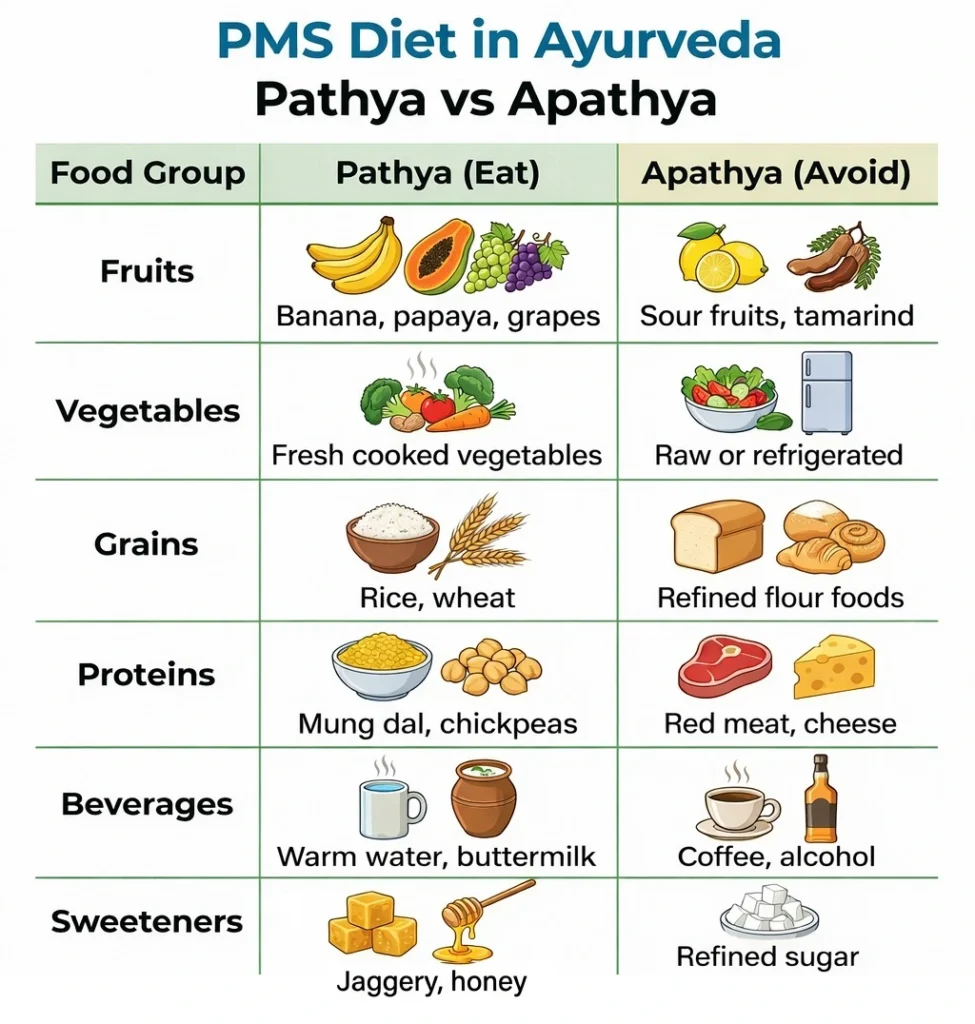
Ayurveda Diet Guide: Pathya and Apathya for PMS
| Food Group | Pathya (Favored) | Apathya (Avoided) |
|---|---|---|
| Fruits | Ripe bananas, pomegranates, chikku, cooked/baked apples, papaya, grapes, dates, figs, apricots, berries, melons, peaches, pineapples | Tender mango (sour), tamarind, and excessively sour fruits |
| Vegetables | Snake gourd, ridge gourd, ivy gourd and a wide variety of fresh, cooked vegetables. | Raw vegetables, and refrigerated/cold vegetable items |
| Grains | Rice, wheat, and fried barley gruel. | Refined white flour, corn chips, dry oats, processed cereals |
| Proteins | Mung dal (green gram), tofu, chickpeas, black beans, horse gram, sesame seeds | Red meat, and cheese, which are heavy for digestion. |
| Fats | Ghee in small quantities to nourish tissues and calm the mind. | Oily food, deep-fried food, and burnt foodstuffs. |
| Beverages | Warm water, milk, sugarcane juice, coconut water, and buttermilk | Caffeine, tea, coffee, alcohol, and soft drinks |
| Spices | Ginger, garlic (Lashuna), fenugreek (Methi), cumin, fennel, coriander (Dhanyaka), carom seeds (Ajwain), cinnamon, asafoetida (Hing) | Excessive salt, chillies, and pickles. |
| Sweeteners | Jaggery (cane sugar), honey (in moderation) | Refined white sugar, syrup |
Simple daily checklist for the luteal week
- Eat warm, cooked meals at regular times.
- Avoid sugar, processed snacks, caffeine and alcohol.
- Include a small portion of nuts/seeds each day.
- Use compresses and warm drinks for cramps.
- Prioritise sleep and gentle movement.
- Practice a 10-minute calming breathing exercise daily.
Conclusion
References
- Sharma B, Sharma S. Ayurvedic concept of premenstrual syndrome with special reference to Pittavritta Vyana Vata. Int J Ayurveda Pharma Res. 2017;5(6).
- Ingole S, Pande S. Ayurvedic perspective of premenstrual syndrome and lifestyle modification; A review. World J Pharm Med Res. 2022;8(3):150-153.
- Siminiuc R, Ţurcanu D. Impact of nutritional diet therapy on premenstrual syndrome. Front Nutr. 2023;10:1079417.
- Granda D, Szmidt MK, Jarmuzek-Orska P, Kaluza J. Dietary predictors of premenstrual syndrome: protective role of nuts, seeds, and legumes, and adverse role of sugar and sweets. Nutrition. 2025;138:112835.
- Meena GK, Sharma DC. Survey study on the importance of Pathya and Apathya in Krichartava in relation to Artavavaha Srotas. Int J Innov Res Technol. 2024;11(1):2307-2314.