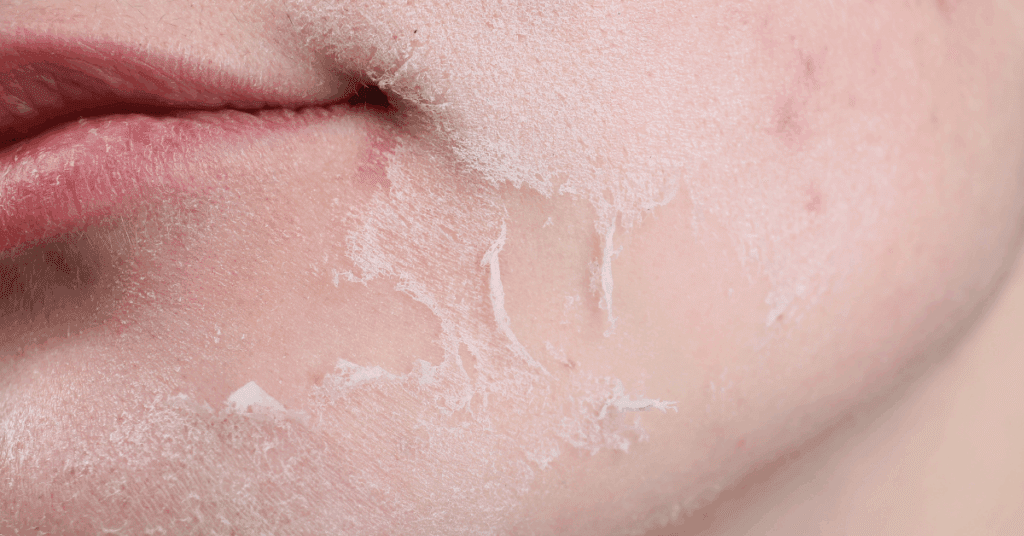
Dry Skin

Table of Contents

Introduction

Dry skin, medically referred to as xerosis or xeroderma, is a common condition affecting individuals across all age groups. If you experience skin that feels tight, rough, scaly, or perpetually itchy, you are dealing with dry skin. This condition is defined by skin deficient in hydrolipids—the essential fats and hydrophilic substances needed to maintain moisture. Learning how to prevent dry skin and understanding the symptoms of dry skin are two important first steps in managing skin health and reducing discomfort. The correct moisturiser for dry skin, along with specific internal and external treatments—including natural approaches like Ayurveda—can actively support skin health. How to treat dry skin on face and body.

What is Dry skin?
Dry skin (xerosis cutis) results from the loss of water from the outermost layer. The water deficiency either originates from an impairment in the natural barrier function or a lack of NMF (Natural Moisturising Factor) within the skin. According to Ayurveda, dryness is called Ruksha Guna. It is one of the characteristic features of Vata Dosha. An aggravation of Vata, which contains Sheeta (cold) and Rookshata (dryness) as its two qualities, generally enhances the dryness of skin.

What is Dry skin?

Dryness occurs when there is disruption of the protective lipid barrier of skin, resulting in increased transepidermal water loss.

  • Low humidity, cold and windy conditions, and indoor heat can all rob skin of moisture.
  • Long, hot baths and harsh cleansers increase dryness.
  • Ageing results in thin skin that has reduced oil production and, therefore, the ability for water retention is also compromised.
  • Occupations that require frequent washing of hands or exposure to irritating agents, such as nursing and construction, are prone to dry skin.
  • Chronic systemic diseases that may be related to dry skin include renal failure, DM, and hypothyroidism.
  • Dryness characterises several common dermatological conditions, including, but not limited to, eczema, psoriasis, and ichthyosis.
  • Nutritional deficiencies and dehydration can lead to skin that feels dry and itchy.
  • Certain medical treatments and medications have dry skin as a common side effect.

Symptoms of Dry Skin

According to Ayurveda, dry skin is usually seen as a symptom that pervades other conditions. General symptoms related to dry skin include:

  • Dryness and Roughness: The skin will appear dull, dark, rough, and dry.
  • Scaly Patches: These are very frequently found as dry, scaly skin lesions, which may be red or silvery.
  • Kandu: Severe itching is a predominant symptom accompanying dry skin in conditions like Eczema (Vicharchika) and Psoriasis (Kitibha Kushta).
  • Cracking: It is due to dry skin, especially on the palms and feet.
  • Shyava Varna: The skin’s colour may become blackish-brown.
  • Peeling: There is peeling of skin in Kitibha Kushta.
  • Lack of Sweating (Aswedanam): Certain conditions such as Ekakustha exhibit loss of sweating.
  • Skin Laxity and Wrinkles: Dryness may also be associated with skin laxity and early wrinkles.
Insurance Backed

Precision Ayurveda
Medical Care

Diagnosis is primarily clinical: history and focused skin examination assess distribution, triggers, and coexisting dermatoses. Your clinician will ask about bathing habits, occupational exposures, prescriptions, systemic symptoms, and family history; laboratory tests (thyroid function, renal profile, blood glucose, or nutrient levels) are ordered when systemic disease is suspected. For chronic or resistant cases, skin biopsy may be performed by dermatologists or referred for patch testing.

Ayurvedic Treatment for Dry Skin

Ayurveda treats dry skin by keeping in mind the dominance of the Vata Dosha and by attempting to counteract its dryness quality or Ruksha Guna with its opposite, Snigdha Guna. The mode of treatment usually consists of Shodhana (purification therapy), followed by Shamana (pacification therapy).

  • Abhyanga: It is very much recommended to soothe dry skin, reduce stiffness in the muscles, and improve blood circulation. Massage should be done with Vata balancing oils at least once a week, or applied 30 minutes to 1 hour before bathing.
  • Herbal Oils: Recommended oils for the body include sesame oil. Medicated tailas like Kumkumadi thailam, Eladi keram, or Nalpamaradi thailam can be applied once or twice a day, also acting as a safe covering against the hot sun.
  • Panchakarma: Vasti, or enema therapy, works well to balance Vata dosha and cure the dry and flaky skin conditions by hydrating the skin from inside, thus reducing scaling. Vamana and Virechana are the other major purification methods employed to eliminate the underlying dosha imbalance, which is normally associated with chronic skin conditions like psoriasis. Eczema.
  • Internal Medicines: Ghee consumption is advised as it balances Vata and gives oiliness to the skin, hence relieving dryness. Medicated ghee is prescribed for dry skin conditions. 

Home Remedies for Dry Skin

How to prevent dry skin? The following remedies can prevent and relieve symptoms of dry skin.

Evidence-based and traditional at-home measures can be highly effective. Consume–

  1. Warm, unctuous, Vata-pacifying diet
    Foods like warm milk, ghee, sesame oil, freshly prepared soups, stews, and cooked grains help counter dryness by providing internal lubrication and nourishing tissues, and act as moisturizer for dry skin.
  1. Hydrating fruits and vegetables
    Fruits such as pomegranate, grapes, and papaya, and vegetables like gourds and leafy greens support hydration and improve skin moisture through their snigdha (unctuous), madhura (sweet), and high-water content.
  1. Adequate water and warm fluids
    Warm water, herbal infusions (like fennel, cumin, and coriander tea), and adequate hydration maintain internal fluid balance, preventing Rasa dhatu kshaya and Vata aggravation.
  1. Include healthy fats regularly
    Essential fatty acids, such as those from ghee, sesame oil, flaxseed oil, and nuts, improve skin barrier integrity and lower trans epidermal water loss.
  1. Mindful digestion-friendly habits
    The condition of dull, dry skin is said in Ayurveda to result from ama formation prevented by following light, regular meals, avoidance of late-night eating, and supporting Agni with ginger, cumin, and hing.
  1. Oil Abhyanga as a daily routine
    The daily warm oil massage with sesame oil, almond oil, or medicated oil helps restore Snigdhata, improves circulation, and reduces the dryness brought on by Vāta.

When to Seek the Doctors

While many cases of dry skin respond well to lifestyle changes, the following issues may require medical attention.

  • See a doctor if your symptoms persist or the condition is causing so much discomfort that it interferes with your sleep or distracts you from your daily routines.
  • If you have deep cracks that bleed, open sores, or signs of infection such as inflammation, soreness, or foul-smelling discharge.
  • Dry skin that cracks lets in bacteria, potentially leading to infections or aggravating conditions like atopic dermatitis.
  • If you have a chronic disorder affecting you, such as diabetes, psoriasis, or eczema, or if dryness is generalised and persistent

Conclusion

The effective management of dry skin requires an understanding that it is often an interplay between external factors, lifestyle choices, and internal imbalances, particularly concerning Vata Dosha according to Ayurveda. By incorporating, on a consistent basis, proper moisturizer for dry skin—those rich in lipids—and by adopting practices such as regular oil massage (Abhyanga), individuals can go a long way in managing and learning how to prevent dry skin. Paying close attention to persistent symptoms of dry skin and seeking timely professional help ensures that dry skin remains simply a manageable nuisance and not a gateway to more serious health concerns.

FAQs

What is the best Ayurvedic oil for dry skin?
Using Vata-balancing oils such as Sesame or medicated oils can reduce the symptoms of dry skin. For face and body moisturising, Kumkumadi taila and Eladi oil are recommended, as they effectively relieve skin and lip dryness.
Can Triphala help with dry skin?
Excessive bitter and astringent tastes (which Triphala contains) can induce dryness. Consuming triphala should generally be avoided during cold weather to prevent Vata vitiation and increased skin dryness.
How to treat dry skin allergies at home?
General home treatment involves applying a hypoallergenic and fragrance-free moisturizer for dry skin, such as petrolatum, immediately after bathing to seal in water and help skin hydration. You can also apply Aloe Vera pulp mixed with turmeric powder externally; this paste is left on for 20 minutes and washed off with water to help soothe the skin.
Is dry skin related to digestion in Ayurveda?
Yes, dryness (Ruksha) is a key quality of Vata Dosha, and increased Vata due to cold weather can exacerbate dryness. If inadequate food quantity is consumed when the digestive fire is high (such as during winter), the body may consume its own tissues (Rasa Dhatu depletion), leading to Vata imbalance and increased dryness symptoms.
How to remove dead skin from the face?
To remove scales and rough patches, the skin should be gently exfoliated; exfoliating agents can be applied to help shed dead cells. Using mild, non-alkaline soaps or fragrance-free cleansing creams and rinsing thoroughly also supports the renewal of the skin surface.

REFERENCES

Kakkooth, S P et al. (2024). Detailed Analysis of Mukha-Twak Pariksha through Ayurvedic and Basic Contemporary Parameters. AYUSHDHARA. external link
Gujjar, P et al. (2025). An overview of Kitibha Kushtha (Psoriasis) and the methods used in Ayurvedic scriptures to manage it. Journal of Ayurveda and Integrated Medical Sciences. external link
Khatri, A N et al. (2024). A Case Study of the Management of Childhood Atopic Dermatitis Applying Ayurveda Treatment. Journal of Natural Remedies. external link
K, L M et al. (2023). A Case Study on the Ayurvedic Management of Childhood Atopic Dermatitis. International Journal of Ayurveda and Pharma Research. external link
Shah, S A et al. (2022). Management of Skin Disorders in Ayurveda : A Review. International Research Journal of Ayurveda & Yoga. external link
Did the information meet your needs?

As we work hard to improve our services, your feedback is important to us. Please take a moment to help us serve you better.

Stay Connected to Health and Wellness

Subscribe to our hospital newsletter for the latest health tips, updates on services, patient stories, and community events. Sign up today and stay informed!

Homepage B RCB

Please fill out the form below to Request a call back

Patient details

Select Preferred Center

Table of Contents

Popular Searches: DiseasesTreatmentsDoctorsHospitalsWhole person careRefer a patientInsurance

Hours of Operation:
8am – 8pm (Mon-Sat)
8am – 5pm (Sun)

Follow Apollo AyurVAID hospitals

We’d Love to Hear from You!

Feedback form(disease page)