Skin Thickening

Table of Contents

Introduction

Skin thickening, or Hyperkeratosis is not a disease by itself but a symptom that often reflects an ongoing problem in the skin or within the body. In clinical practice, patients commonly report that the skin has become harder, rougher, or darker over time. At first, most people don’t take it seriously. They think it’s just dry skin, work-related, or part of ageing. But when the thickening doesn’t go away, it usually means the skin has been irritated for a long time or that something else needs to be checked. From an Ayurveda standpoint, the skin mirrors the state of digestion, blood, and dosha balance, making this symptom important to evaluate early.

Causes of Skin Thickening

Skin thickening happens slowly over time and is usually caused by long-term stress on the skin. The most common reasons are:

  • One of the common causes of thickened skin is repeated friction or pressure on certain areas (e.g., feet, palms, elbows, knees) due to poorly fitting shoes or manual labour; persistent rubbing may also contribute to thickened skin. 
  • When skin problems like eczema or psoriasis last for a long time, the skin often becomes thicker. This is mostly because of repeated itching and scratching, which slowly makes the skin tougher and less able to stretch normally.
  • Conditions that affect the body’s metabolism, like diabetes, thyroid problems, and autoimmune diseases, can change the structure of the skin and its ability to heal, which can lead to thickened or hardened areas.
  • If a fungal infection is ignored or keeps coming back, the skin in that spot often changes. Over time, it can start to look and feel thicker than the surrounding area.
  • Working withharsh chemicals, detergents, or exposure to too much sunlight can damage the skin barrier and make it thicker than normal.

Ayurveda says that these things are often linked to an imbalance in the Vata and Kapha doshas, as well as an accumulation of toxins (Ama) that affects the skin tissues.

Symptoms of Skin Thickening

Skin thickening rarely occurs on its own. Most patients notice it in conjunction with other gradual changes in their skin. 

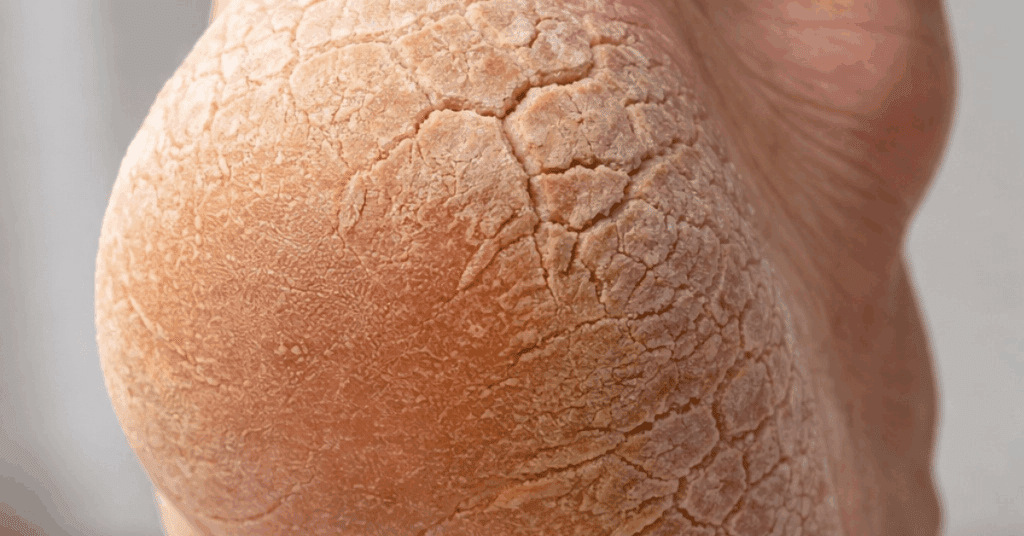
  • Skin starts to feel unusually rough or hard, sometimes leathery to touch. 
  • Over time, visible thickened areas may develop, appearing uneven or slightly raised compared to the surrounding skin.
  • Dryness is a common complaint that is often accompanied by scaling or flaking that does not improve with routine moisturisers. 
  • Some patients also notice darkening or pigmentation over the affected area.
  • Itching may be present, particularly at night or during colder, drier weather. 
  • Advanced cases may produce painful cracks on the skin, often found on the heel and palm, which may become infected if untreated. If the skin loses flexibility due to moisture loss, some basic activities will begin to cause discomfort while moving through routine (e.g., while bathing).
Insurance Backed

Precision Ayurveda
Medical Care

The severity of symptoms will depend on the severity of the underlying cause and the amount of time since the first appearance of the condition. Diagnosis will begin through a thorough clinical assessment, coupled with a comprehensive review of the patient’s history and extent of symptoms and other associated skin issues or illnesses (comorbidities).

In most cases, skin thickening can be identified clinically. A patient may want to be screened for additional potential issues if their symptoms have been getting worse without a clear cause. 

A skin biopsy can help rule out any autoimmune or chronic inflammatory diseases, while blood tests can identify any possible metabolic issues like diabetes or hyperthyroidism

If you believe your patient’s allergic reaction might be due to something they’re putting on their skin, then performing an allergy test can help determine which substances should be avoided. Effective treatment can be started, and the likelihood of recurrence is reduced if the underlying cause of the symptoms is identified as soon as possible.

Ayurvedic treatment for Skin Thickening

Instead of just treating the symptom, Ayurveda treatment focuses on correcting the underlying imbalance. Based on chronicity, dosha involvement, and general health, treatment is customised. Herbs and internal medicines are used to promote blood purification and lower inflammation. External treatments like Abhyanga with medicated oils, swedana, udvartana, and lepana can help soften thickened skin, improve circulation, and restore skin elasticity. Detoxification treatments under Panchakarma may be recommended to eliminate accumulated toxins from the body in chronic or recurrent cases. Treatment does not stop with medicines alone. Diet and daily habits play an equally important role. Simple, easily digested foods and a routine help calm imbalances, particularly those of Vata and Kapha, which often reflect on the skin. At centres like Apollo AyurVAID, traditional Ayurveda principles are combined with modern clinical assessment to manage long-standing skin conditions in a safe, structured, and evidence-based manner.

Home Remedies for Skin Thickening

When used consistently, home remedies can support treatment:

  • To keep skin hydrated, apply natural oils like sesame or coconut oil every day.
  • To soften hardened skin, soak affected areas in warm water.
  • Using fresh aloe vera gel to relieve dryness and irritation
  • Exfoliate gently with a soft cloth; do not scrub vigorously.
  • Consume an adequate amount of water and maintain a well-balanced diet to enhance skin health holistically.

To prevent more irritation, these treatments should be applied consistently and carefully, under the guidance of an Ayurveda physician.

When to Seek the Doctors

It’s important to see a doctor if the thickened skin starts to hurt or begins to crack and bleed. Medical advice is also needed if there is persistent redness, intense itching, or any signs of infection.
If you notice the thickened area slowly spreading, or if the skin changes colour or texture, it should not be ignored. Sometimes, skin changes are accompanied by other symptoms such as numbness, ongoing tiredness, or unexplained weight changes. If these continue despite regular home care, then a proper medical evaluation is necessary. Early assessment allows timely treatment and helps prevent further complications.

Conclusion

Skin thickening is not often just a problem with the surface. Usually, this means the skin has been stressed for a long time, or the body is imbalanced. If you catch it early, get the right mix of medical care, Ayurveda treatment, and home support, you can make a big difference in how your skin feels and looks. To get lasting relief, you must find and treat the root cause, not just the visible skin issue.

FAQs

Is skin thickening always abnormal?
Not always. A little thickening here and there can be normal, but if it sticks around or keeps getting worse, it’s worth getting checked.
Can skin thickening be reversed?
In many cases, yes. Once we figure out what’s causing it and take appropriate treatment, the skin often softens and starts looking more normal again.
Does Ayurveda treat only the skin?
Not at all. Ayurveda looks at your whole body—the skin is just the outside sign of what’s happening inside.
How long does treatment take?
It really depends. Some people see changes in a few weeks, but if the skin has been thickened for a long time, it can take a couple of months to make noticeable improvements.
Can skin thickening come back?
It can, if the underlying reason isn’t addressed. That’s why treatment should focus on both the cause and the skin itself, not just one or the other.

REFERENCES

Kafaja S, Clements P. Management of Widespread Skin Thickening in Diffuse Systemic Sclerosis. Curr Treatm Opt Rheumatol. 2016 Mar;2(1):49–60. external link
Yan BX, Chen XY, Ye LR, Chen JQ, Zheng M, Man XY. Cutaneous and Systemic Psoriasis: Classifications and Classification for the Distinction. Front Med (Lausanne). 2021;8:649408. external link
Kim J, Nadella P, Kim DJ, Brodmerkel C, Correa da Rosa J, Krueger JG, et al. Histological Stratification of Thick and Thin Plaque Psoriasis Explores Molecular Phenotypes with Clinical Implications. PLoS ONE. 2015;10(7):e0132454. external link
Wyss A, Jordan S, Graf N, Carreira P, Distler J, Cerinic M, et al. Does regression of skin thickening predict improvement of internal organ involvement and survival in patients with diffuse cutaneous systemic sclerosis? A EUSTAR analysis. Arthritis Research & Therapy. 2024;26. external link
Farci F, Mahabal GD. Hyperkeratosis. StatPearls [Internet]. Treasure Island (FL): StatPearls Publishing; 2025. external link
Did the information meet your needs?

As we work hard to improve our services, your feedback is important to us. Please take a moment to help us serve you better.

Stay Connected to Health and Wellness

Subscribe to our hospital newsletter for the latest health tips, updates on services, patient stories, and community events. Sign up today and stay informed!

Homepage B RCB

Please fill out the form below to Request a call back

Patient details

Select Preferred Center

Table of Contents

Popular Searches: DiseasesTreatmentsDoctorsHospitalsWhole person careRefer a patientInsurance

Hours of Operation:
8am – 8pm (Mon-Sat)
8am – 5pm (Sun)

Follow Apollo AyurVAID hospitals

We’d Love to Hear from You!

Feedback form(disease page)