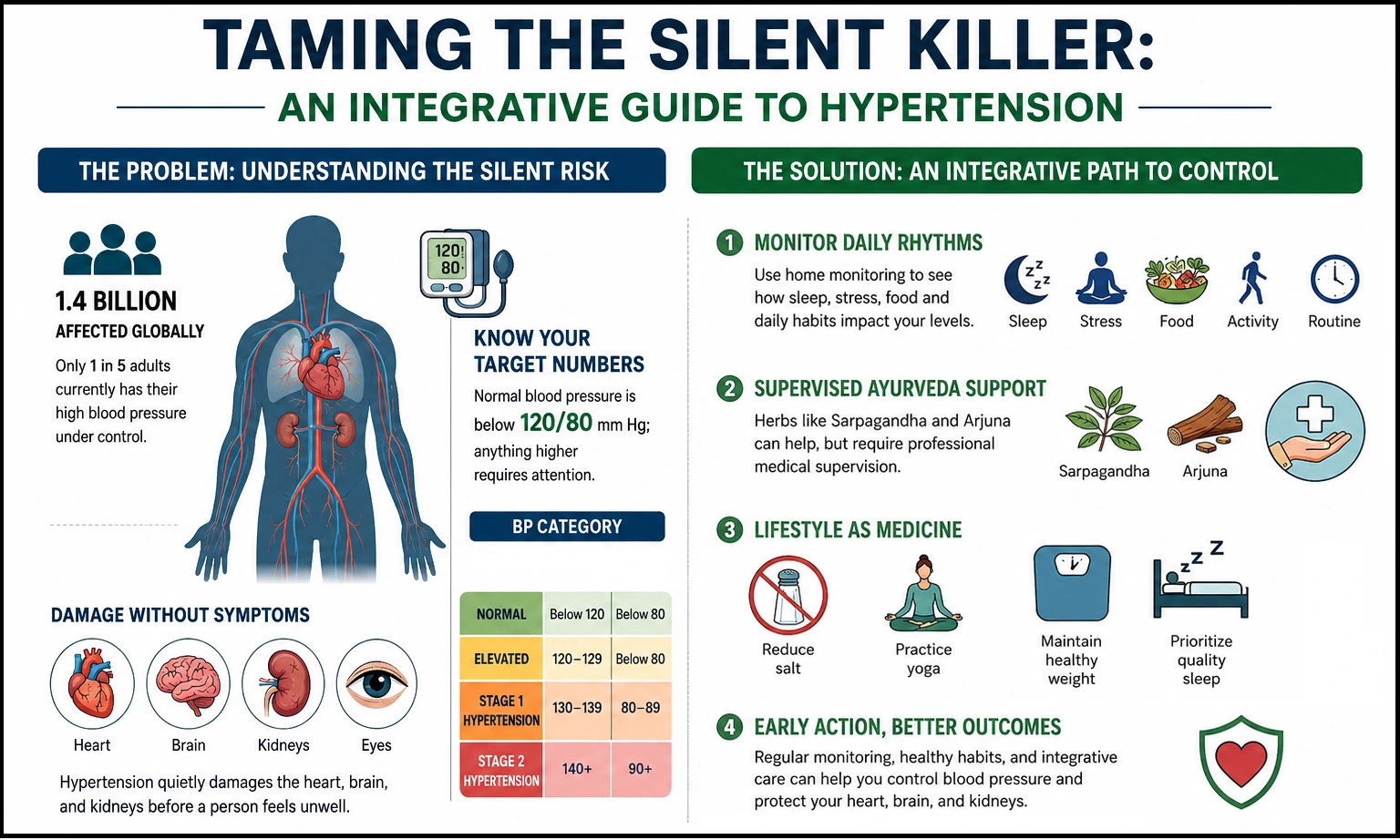
Hypertension can sit quietly for years, damaging the heart, brain, kidneys, and eyes, before a person feels “unwell.” That is why it is often called the silent killer. The scale is enormous too: the WHO estimates that 1.4 billion adults worldwide had hypertension in 2024, and only about 1 in 5 had it under control. This is not just a medical issue; it is a family issue, a lifestyle issue, and a public health issue.
This year’s message, World Hypertension Day 2026 theme, feels simple and powerful: controlling hypertension together. Because blood pressure control does not happen through fear but through awareness, regular checks, timely treatment, and small daily choices that are repeated with patience. In that sense, high blood pressure Ayurveda is not only about herbs; it is about restoring rhythm to the whole person.
Know your numbers
One of the most important habits is to understand your reading. According to the American Heart Association
- Normal BP is below 120/80 mm Hg.
- Elevated BP is 120–129 and below 80 mm Hg
- Stage 1 hypertension is 130–139 or 80–89 mm Hg
- Stage 2 hypertension is 140/90 or higher.
So, when we say high blood pressure numbers meaning, we are not talking about a vague idea; we are talking about a number that needs attention. Blood pressure is not a fixed number; it can rise and fall throughout the day depending on sleep quality, stress, movement, and what you eat. A single reading matters, but the bigger picture comes from repeated readings and the lifestyle patterns behind them.
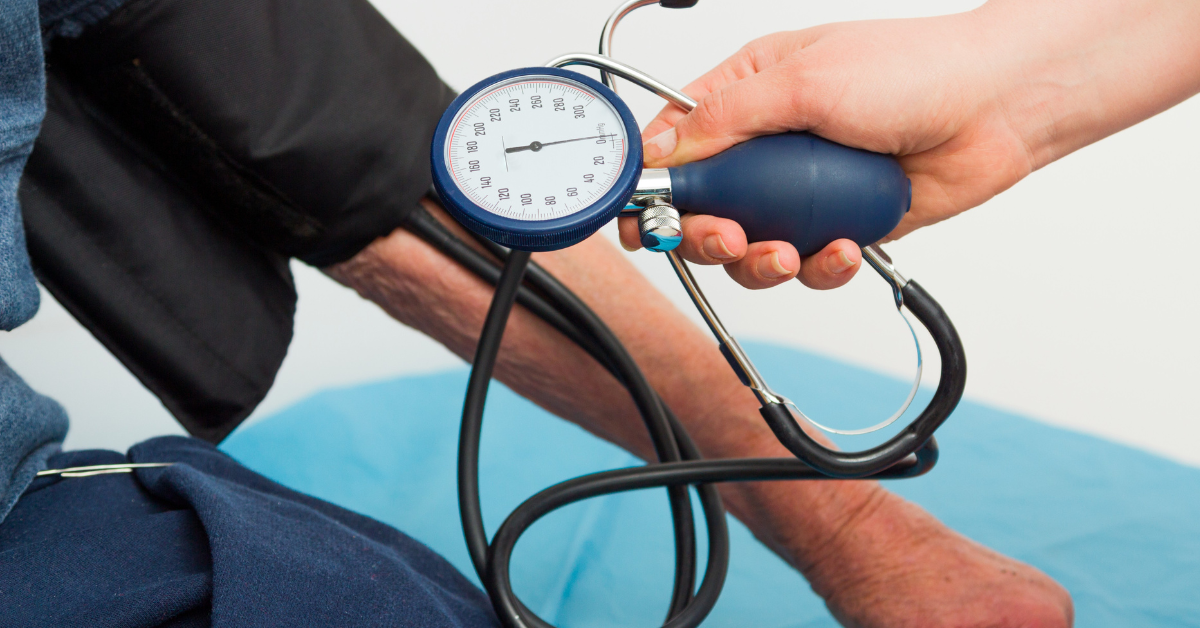
That is why how often to check blood pressure matters so much. If you already have hypertension, home monitoring helps you and your doctor see the real pattern, not just a single clinic reading.
Hypertension can lead to serious conditions such as stroke, heart attack, heart failure, kidney disease, and vision loss. Many people discover their problem only when a complication has already begun, and that is exactly what regular measurement helps prevent.
How Ayurveda sees hypertension
What often pushes BP up
The common cause for high BP is not one single thing. It is usually a combination of high salt intake, poor sleep, mental strain, inactivity, weight gain, smoking, alcohol, and long-term stress. When these factors keep repeating, blood pressure rises quietly in the background.
That is why I often tell patients to stop thinking only about the number and start looking at the rhythm of the day. How late are you sleeping? How rushed are your meals? How much movement do you have? How much tension are you carrying in the body? These questions matter.
Best Ayurvedic medicine for high BP
When people search for the best Ayurvedic medicine for high BP, they usually want one answer. But hypertension does not work that way. In supervised practice, classical options such as Sarpagandha for blood pressure, Arjuna for hypertension, and Ashwagandha blood pressure support are discussed differently depending on the person, the stage of disease, and the medicines already being taken. Rauwolfia serpentina (Sarpagandha) has a long history in hypertension research, and Terminalia arjuna (Arjuna) has been studied for cardiovascular support; at the same time, Ashwagandha can interact with medicines, including those for high blood pressure, so it should not be used casually.
So, when we speak about Ayurvedic treatment for high blood pressure, the real answer is supervision, not self-medication. The goal is not to “try a herb” and hope for the best. The goal is to choose the right support for the right body, with follow-up. That is how sarpagandha benefits and other classical remedies are used safely and meaningfully.
NOTE: Consuming these medicines without the proper supervision of a qualified Ayurveda doctor can cause more harm than benefit. The dose, duration and selection of the herb are highly dependent on the patient and other factors.
Food, yoga, and daily rhythm
A sensible blood pressure control food plan is usually simple: less salt, less packaged food, fewer pickles and papads, more home-cooked meals, more vegetables, fruits, pulses, and adequate hydration. We also recommend a Vata- and Pitta-pacifying approach, cooling foods, regular meal timings, and easy-to-digest meals. In everyday life, small changes are the ones that stay.
For many patients, yoga for high blood pressure and pranayama for bp are helpful additions because they calm the nervous system. Practices such as Bhramari, Anuloma-Viloma, Yoga Nidra, and Shavasana are often used to reduce stress and support balance. In other words, the practice is not about exercise alone; it is about teaching the body how to downshift.
As for the best herbal tea for high blood pressure, hibiscus tea is one of the most studied options. Research shows it may lower blood pressure modestly in some people, but it should be seen as support, not a substitute for treatment.
A gentle closing thought
Hypertension is common, but it is not harmless. If we are serious about control, we must be serious about consistency. Check the numbers. Reduce the triggers. Eat with awareness. Sleep on time. Move daily. And seek the right treatment early. That is the real spirit of controlling hypertension together.
If you are wondering is shatavari good for high blood pressure, the honest answer is that it is not a first-line BP medicine and should never replace prescribed care. The same applies to every herb and every “natural” remedy: helpful only when chosen wisely, with the right context, and with proper monitoring.

References
- Mishra S, Singh P. A review on Rauwolfia serpentina and its medicinal properties. J Ayurveda Integr Med [Internet]. 2015 [cited 2026 May 7];6(2):89-94.
- Dwivedi S. Terminalia arjuna Wight & Arn.—A useful drug for cardiovascular disorders. J Ethnopharmacol. 2007
- AlDisi SS, Anwar MA, Eid AH. Anti-hypertensive herbs and their mechanisms of action: Part I. Front Pharmacol. 2022
- National Center for Biotechnology Information. Ashwagandha and potential interactions. Bethesda (MD): NCBI; 2025
- World Health Organization. Uncontrolled high blood pressure puts over a billion people at risk. Geneva: WHO; 2025