Each year, when we observe World Obesity Day, the majority of discussions still revolve around body size. The condition itself is more complex than that. Obesity is not simply visible weight gain. It is a chronic, relapsing disorder involving metabolic regulation, endocrine signalling, low-grade inflammation, and behavioural patterns that evolve.
The World Health Organisation defines obesity as abnormal or excessive fat accumulation that poses a health risk. The wording is deliberate. It emphasises morbidity and long-term complications more than appearances.
Even so, conversations often return to body size. Many patients say the first comment they heard was about how they looked, not about blood pressure or glucose levels. That distinction shapes how early—or late—care is sought.
The 2026 World Obesity Day celebration continues to emphasise early recognition and structured management. Earlier recognition does not mean waiting for severe symptoms. It may involves routine checking of waist circumference, reviewing lipid profiles, or identifying rising fasting glucose before diabetes develops. Many patients postpone evaluation. By the time laboratory tests are done, fasting glucose may be elevated, lipid profiles altered, or blood pressure persistently high. Weight gain is often the most visible sign of a broader metabolic shift. Recognising that an early shift changes the discussion.
What Is Obesity?
Obesity develops when energy intake exceeds expenditure over time. That explanation is technically correct but is incomplete.
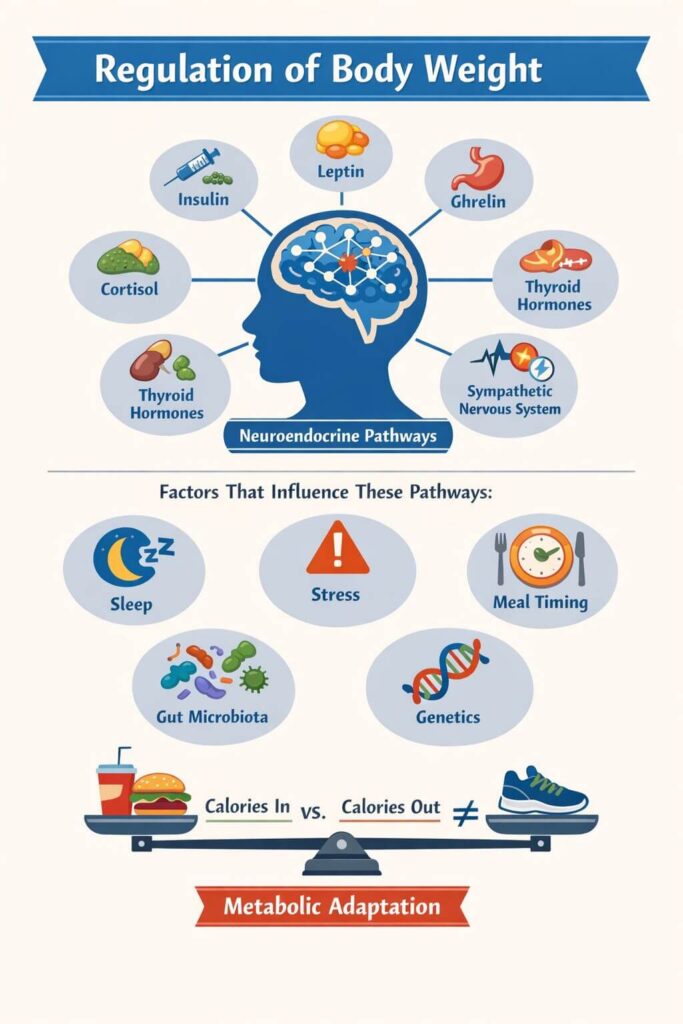
Body weight is regulated through neuroendocrine pathways involving insulin, leptin, ghrelin, cortisol, thyroid hormones, and sympathetic nervous system activity. Sleep, stress exposure, meal timing, gut microbiota, and genetics influence these pathways. A simple calorie equation does not account for metabolic adaptation.
For this reason, obesity cannot be explained by excess intake alone. The body adjusts hunger, energy expenditure, and fat storage in response to internal and external signals. These adjustments are not obvious, but they are clinically relevant.
Body Mass Index (BMI) is widely used in clinical settings as an initial screening tool:
BMI ≥ 25: Overweight
BMI ≥ 30: Obesity
BMI does not directly measure visceral fat or metabolic dysfunction. Central adiposity, which refers to increased abdominal circumference, correlates more strongly with insulin resistance and cardiovascular risk than BMI alone.
Obesity increases the likelihood of:
- Type 2 diabetes mellitus
- Hypertension
- Coronary artery disease
- Stroke
- Non-alcoholic fatty liver disease
- Osteoarthritis
- Obstructive sleep apnoea
- Reproductive and menstrual irregularities
The psychological component is frequently under-discussed. Many patients mention persistent fatigue, reduced mobility, or withdrawal from social situations. Short consultations may not fully explore these concerns, yet they significantly impact adherence and long-term outcomes.
Why Weight Loss Rarely Follows a Straight Line
Many patients say, “I’ve tried everything.” It is rarely said casually.
When weight decreases, resting metabolic rate declines. Ghrelin may increase. Satiety signalling weakens. The body attempts to restore previous energy reserves. This is a protective mechanism.
Sleep restriction worsens insulin sensitivity. Chronic stress elevates cortisol, contributing to central fat accumulation. Certain medications like antidepressants, antipsychotics, and corticosteroids can alter weight regulation. These factors often overlap.
Short-term calorie restriction may reduce weight. Maintaining that reduction is another matter.
Obesity in India
Urban routines have shifted substantially. Work is increasingly sedentary. Meal timing is irregular. Processed foods are accessible at nearly all hours.
Early metabolic changes are easy to overlook. A tighter waistband. Mild breathlessness while climbing stairs. Borderline fasting glucose. These signs rarely feel urgent.
The World Obesity Day celebration can function as a checkpoint rather than a campaign slogan. Waist circumference measurement. Blood pressure recording. A basic metabolic panel. These are small steps, but they are clinically informative.
Ayurveda’s Interpretation: Sthoulya
How Evidence-Based Ayurveda Manages Obesity
Management does not begin with severe restriction. In fact, aggressive dieting may further suppress metabolic rate. Many patients notice this after repeated cycles of rapid loss and regain.
At Apollo AyurVAID, the approach follows a structured, clinical, protocol-driven, evidence-based model.
The preparatory phase, often termed ‘Poorvakarma’, focuses on improving digestive capacity and addressing metabolic sluggishness. Internal medicines supporting Agni and facilitating Ama pachana may be prescribed. Some individuals undergo external therapies such as Udwartana or medicated steam procedures. Not everyone requires the same interventions.
Where indicated, the main therapeutic phase (Pradhana Karma) may include selected Panchakarma procedures. Vamana, Virechana, or Vasti are not routine weight-loss techniques. They are recommended based on constitution, strength, and disease stage. Many patients assume all detox procedures are standard. They are not.
Documentation is central. Baseline anthropometric measurements are recorded — BMI, waist circumference, and waist–hip ratio. Biomarkers are assessed where relevant. Follow-up is based on measurable parameters and patient-reported outcomes, not visual estimation alone.
Response varies. Some patients show a steady reduction over months. Others require longer metabolic correction. That variability is expected in chronic disease management.

Conclusion
Obesity is a chronic metabolic condition. It changes slowly and seldom follows a straight line. Periods of effort may be followed by plateaus or gains.
That can feel discouraging. Many patients say they blame themselves when their weight returns. In reality, appetite hormones, resting metabolic rate, and energy regulation adapt in response to weight loss. The body is responding to a perceived energy deficit, not failing out of lack of will.
It’s common to see laboratory markers improve before the scale moves significantly. Waist circumference may be reduced. Fasting glucose may stabilise. These shifts are quieter but clinically relevant.
World Obesity Day offers a pause for reassessment. A waist measurement. Blood pressure review. A follow-up conversation without judgment. Obesity requires structured monitoring, like any other chronic condition. For most people, progress is gradual. Not dramatic. But measurable over time.
References