Diabetes is a growing global challenge, affecting hundreds of millions of adults, and one of its quietly progressive complications is diabetic neuropathy — a condition that often begins with small, easily missed changes but can profoundly affect comfort and mobility. Current estimates suggest that up to 50% of people with diabetes will develop some form of nerve damage during their lives.
Because symptoms such as tingling, numbness, burning, or subtle balance problems often begin quietly, recognising them early and seeking care early can protect your comfort, prevent complications, and preserve independence. My goal here is to explain what is diabetic neuropathy? Why it happens, how it can show up, and what we can do about it so that patients and families can benefit and prevent further progression.
What is diabetic neuropathy?
Diabetic neuropathy means nerve dysfunction in a person with diabetes after other causes have been excluded. It’s not a single disease but a collection of syndromes affecting different parts of the nervous system. The most common form, diabetic peripheral neuropathy, affects sensory and motor nerves in a gradual, symmetrical way. Patients often describe it as a “stocking-and-glove” pattern: the longest nerves are affected first, so symptoms begin in the feet and later involve the hands.
Roughly half of people with long-standing diabetes will develop some degree of nerve damage. When we catch symptoms early, we can slow progression and reduce the risk of serious outcomes such as ulceration, infection, and even limb loss.
Why do nerves get damaged?
The processes that injure nerves in diabetes are multiple and interlinked. Here are the diabetic neuropathy causes at a glance:
- Sugar overload and metabolic strain. When blood glucose stays high for long periods, the body diverts excess sugar into alternate chemical pathways. One such path, the polyol pathway, converts glucose into sorbitol and fructose inside nerve cells. These substances accumulate and create osmotic stress, which harms the cells and reduces important cofactors needed for repair.
- Oxidative stress and inflammation. High sugar levels increase the production of unstable molecules called reactive oxygen species (ROS). These overwhelm the cell’s antioxidant defence systems, injure nerve fibres directly, and keep inflammation alive around the nerves.
- Advanced Glycation End-Products (AGEs). Chronic hyperglycaemia causes proteins and fats to bind abnormally to sugar, creating AGEs. These change the structure and function of tissues, interfere with normal cellular repair, and further increase oxidative damage.
- Reduced blood supply (vascular insufficiency). Nerves rely on tiny blood vessels called the vasa nervorum. Diabetes thickens vessel walls and reduces blood flow; nerves become starved of oxygen and nutrients and cannot function or heal well.
Together, these are the chief causes we aim to address when treating or preventing nerve damage.
How diabetic neuropathy symptoms appear
Depending on the affected nerve groups, the symptoms vary. Common patterns include:
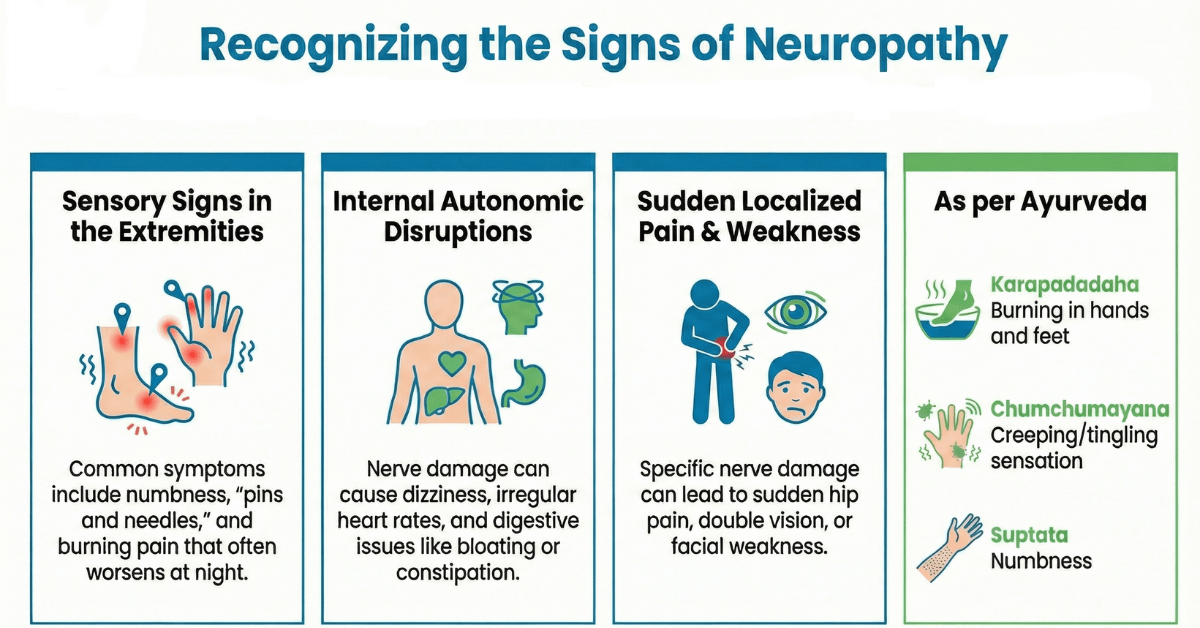
- Peripheral neuropathy (the most common): numbness, tingling, “pins and needles”, burning pain (often worse at night), cramps, and unusual sensitivity. In severe cases, even the slightest touch from a blanket can cause discomfort. This is the pattern we call diabetic peripheral neuropathy.
- Autonomic neuropathy: When nerves that control automatic functions are affected, patients may notice dizziness on standing, irregular heart rate, digestive symptoms (bloating, constipation, diarrhoea), urinary problems, or even loss of the warning symptoms of low blood sugar (hypoglycaemia unawareness).
- Proximal neuropathy (diabetic amyotrophy): This causes severe pain in the hips, thighs or buttocks and may lead to muscle weakness on one side.
- Mononeuropathy (focal): Sudden pain or weakness confined to a single nerve (for example, sudden double vision or Bell’s palsy).
From an Ayurveda viewpoint, classical texts described subtle prodromal signs long before modern tests were available. These include karapadadaha (burning in hands and feet), chumchumayana (a creeping, tingling sensation like ants), and suptata (numbness). Listening to these early complaints can give us a head start.
How we approach diabetic neuropathy treatment
Effective care is always multidisciplinary. There are measures from modern medicine that reduce progression and control symptoms, and complementary Ayurveda approaches that aim to restore balance and strengthen the nervous system. A combined, patient-centred plan often gives the best results.
- Foundations: glucose control & risk reduction
Tight, sustained control of blood sugar is the cornerstone of prevention and slowing progression. Alongside this:
- Control blood pressure and cholesterol.
- Stop smoking — it worsens vascular disease.
- Maintain a healthy weight and regular physical activity.
- Regular foot care and screening to catch sores or reduced sensation early.
- Symptom management
Internal medicines and topical agents can reduce pain and improve sleep. They can be life-changing for some patients. We use them thoughtfully and monitor them closely.
- Ayurveda therapies
We have time-tested therapies in Ayurveda that work on the root causes and also nourish body tissues.
- Panchakarma (detoxification): Techniques such as Virechana and Vasti aim to remove accumulated toxins, restoring balance to doshas, especially Vata, which controls nerve functions
- External therapies: Abhyanga (oil therapy), Dhara (pouring of medicated liquid), lepa (application of paste), and Swedana (sudation) help nourish the nerves and circulation and reduce stiffness and pain in the body.
- Rasayana Therapy: These may be useful to manage blood sugar levels, reduce inflammation, and protect nerves. It should always be noted that supplements should be taken only under a qualified practitioner’s guidance.
- Rehabilitation
Physiotherapy, balance training, and regular supervised exercise help preserve mobility, reduce falls and maintain muscle strength.
Several people we cared for presented with typical, distressing complaints — persistent numbness and burning in the feet, aching and radiating leg pain, swelling of the lower limbs, fatigue and bladder or digestive disturbances — and many had long-standing diabetes and related medical issues. The details of the patients are given below
Practical tips
- Pay attention to early sensations such as burning, tingling, numbness, or creeping sensations in feet or hands — tell your doctor.
- Maintain blood sugars within a target range, along with regular checkups.
- Daily inspection of feet, wearing comfortable footwear, and taking appropriate care if any wound is present.
- Stay active by walking and doing some other exercises and a supervised strengthening/balance exercise programme.
- If using supplements or Ayurveda medicines, consult a qualified practitioner to ensure safety and quality.
Diabetic neuropathy can be frightening, but it is not inevitable nor untreatable. With early recognition, sensible glucose control, careful symptom management, and supportive therapies, we can preserve quality of life, reduce pain, and protect mobility. If you notice even small changes in sensation in your feet or hands, don’t ignore them: early conversations, early action.

Key Takeaways
- Diabetic neuropathy is a condition that affects around 50% of diabetic patients, mainly in the form of peripheral neuropathy.
- Among the main diabetic neuropathy causes, hyperglycaemia leads to oxidative stress, inflammation, and microvascular damage.
- The general symptoms associated with diabetic neuropathy include tingling sensations, burning, and numbness, which provide classic warnings.
- Effective diabetic neuropathy treatment is possible with the help of an integrated approach involving Ayurveda (Panchakarma and medicine).
References
- Parveen R, Baruah H. An Ayurvedic Approach to the Diagnosis and Management of Diabetic Neuropathy. AYUHOM. 2019;6(2):53-59.
- Vasudevan AN, Sharma A, Mund JS. An Ayurvedic Protocol to Manage Diabetic Neuropathy-A Case Report. Annals of RSCB. 2021;25(4):6631-6640.
- Mohite PP, Deshmukhe PN, Lokhande SV. Ayurvedic and modern approach to Diabetic Neuropathy: A Review. J Ayurveda Integr Med Sci. 2022;7(1):199-204.
- Sain M, Bisht S, Singh NR. The systematic review on Madhumeha w.r.t. Diabetic Neuropathy and its management. J Ayurveda Integr Med Sci. 2023;8(12):145-149.
- Sowjanya BR, Borannavar S. Revitalizing Nerves: Panchakarma Therapy for Diabetic Neuropathy. AYUSHDHARA. 2024;11(5):124-130.