Diabetes can feel like a quiet companion at first — manageable, familiar, even harmless. But for many, it slowly tightens its grip and reaches organs we rarely think about until symptoms force us to. One of the most serious and silent consequences is the gradual loss of kidney function, leading to diabetic nephropathy.
So let me explain it simply. A clear diabetic nephropathy definition is useful. It’s kidney damage that can occur when blood sugar levels remain high for an extended period. Early on, diabetic nephropathy symptoms are often very mild or even absent. The first warning is usually a small amount of protein in the urine (through a lab test) that you can’t feel. Regular urine and blood tests, controlling blood sugar and blood pressure, eating well, staying active, and following your doctor’s advice are the best steps to protect your kidneys and maintain your health.
In this blog, I will explain what is diabetic nephropathy, why early detection matters, and how an integrated approach can slow or sometimes even reverse the harm.
Understanding the condition
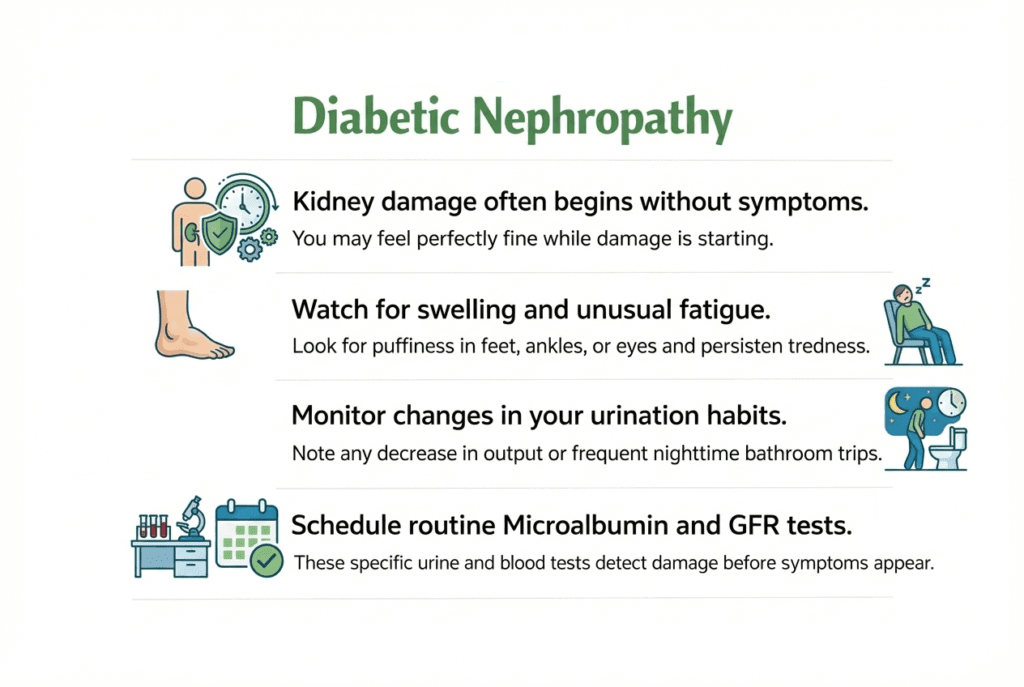
If you have ever asked, what is diabetic nephropathy?’, the simplest answer is – it is kidney damage caused by long-standing high blood sugar. In clinical practice, we define it by a trio of findings — persistent albumin in the urine, a falling glomerular filtration rate, and often rising blood pressure. This trio is the core of the diabetic nephropathy definition used by nephrologists and diabetologists worldwide.
At a microscopic level, chronic high blood sugar in blood triggers biochemical pathways that injure the tiny filtering units of the kidney (glomeruli). Sugar sticks to proteins and causes extra fibrous material to build up in the kidney’s tiny filters, so they become thicker and less flexible. At the same time, some filter cells multiply, and harmful reactive molecules damage the tissue, leading to gradual scarring and hardening of the filters—a process we call glomerulosclerosis (loss of normal filtering ability). The early sign is usually very subtle. Small amounts of protein leak into the urine (microalbuminuria). Left unattended, this progresses to overt proteinuria, fluid retention, and ultimately end-stage renal disease.
Why is it called “silent”? — the signs to watch for
Many people ask, “What are the first diabetic nephropathy symptoms?” The truth is—in the early stages, there may be none. That is why screening matters. When symptoms appear, they often include:
- Swelling of legs, ankles, or around the eyes (pitting oedema).
- Fatigue and generalised weakness.
- Reduced or scanty urine output.
- Nausea, vomiting, and poor appetite occur as kidney function deteriorates.
- Nocturia or frequent urination at night.
While these red flags are important, their appearance may already indicate advanced damage. Routine screening for microalbuminuria and periodic estimation of GFR through lab tests are the most effective ways to catch the disease early.
Diabetic Nephropathy – Ayurveda Perspective
Classical texts such as the Charaka Samhita do not name modern diseases in our terms, yet they offer a strikingly relevant framework. Chronic Prameha (diabetes) with deranged Kapha and Meda, compounded by Vata disturbance, leads to Srotorodha (channel obstruction) and Dhatu kshaya (degeneration of tissue). In Ayurveda terms, kidney involvement is described as Vrikka Vikruti — a progressive derangement of renal function resulting from chronic metabolic imbalance.
In simple terms, Ayurveda explains a process that closely resembles what modern medicine describes: metabolic imbalance (too much Kapha/Medas), poor blood flow (Srotorodha), and depletion of the subtle life elements (Ojas). This parallel helps us design treatments that address both symptom control and the underlying metabolic milieu.
Bitter Gourd: The Vegetable People Love to Hate
Let’s be honest. Most people don’t enjoy bitter gourd.
Yet it keeps showing up whenever someone asks about what foods can reverse diabetes. That’s because it contains plant compounds that help cells absorb glucose more efficiently.
Ayurveda associates Prameha strongly withKapha imbalance and excess Meda Dhatu (fat metabolism disturbance). Bitter foods traditionally help reduce this metabolic heaviness and support cleansing of internal channels (Srotas). It can be helpful. But drinking large glasses of bitter gourd juice every morning—something we see often—can actually make some patients unsafe. Balance always matters more than enthusiasm.
Practical integrative management
Ayurveda emphasises a combined strategy of Shamana (palliative), Shodhana (purification), and Rasayana (rejuvenation), along with modern care such as strict blood sugar and blood pressure control, together forming a strong kidney-protective approach. Early detection through regular urine albumin and GFR testing guides timely intervention, while supportive Rasayana therapies help reduce inflammation, oxidative stress and metabolic imbalances. Supervised Panchakarma procedures, such as Vasti, which aid in clearing metabolic waste and restoring balance, often improve symptoms and early protein leakage when integrated with continuous medical monitoring.

How Apollo AyurVAID Treats Diabetic Nephropathy
At AyurVAID, we follow a practical approach to treating diabetic nephropathy by combining contemporary evidence-based treatment with supportive Ayurveda practices to stabilise the kidneys, relieve symptoms, and improve quality of life. The following are a few patient stories of people who got relief from the symptoms.
Lifestyle changes
Lifestyle is the single most important and universally accessible intervention.
- Dietary principles (Aahara): Favor light, dry, and easily digestible foods. Barley (Yava), roasted beans, and balanced and regular meals help maintain metabolic equilibrium. Incompatible food combinations and excessive heavy fats should be avoided.
- Physical activity (Vyayama): Exercise helps reduce Kapha and Medas, increases insulin sensitivity, and maintains cardiovascular and renal functions. For most patients, gentle yoga poses like Paschimottanasana and Vajrasana can be added to the regimen.
- Sleep and daily routine: Refraining from daytime sleep and regular sleep patterns helps maintain the balance of metabolic cycles. Sound sleep helps maintain insulin sensitivity and overall resilience.
Conclusion
Key takeaways
- Test early, test often. Simple urine and blood tests catch kidney stress before symptoms worsen.
- Control sugar & pressure. Tight glucose and blood-pressure control protect the kidneys.
- Lifestyle matters. Diet, hydration, sleep and gentle activities support recovery.
- Integrated care helps. Combined clinical monitoring, supportive therapies and rehabilitation improve symptoms and quality of life.
References