For many women, pelvic health is a subject often whispered about or overlooked until discomfort becomes impossible to ignore. One of the most significant yet frequently misunderstood conditions affecting female reproductive health is pelvic inflammatory disease (PID). This condition is more than just a simple infection; it is a serious inflammatory state of the upper genital tract, including the uterus, fallopian tubes, and ovaries.
If you are trying to understand PID, its warning signs and how to treat it, this blog brings together clear medical information and a grounded Ayurveda perspective. Here you will find a concise overview of PID causes, the most common PID symptoms, how clinicians make the diagnosis, and pelvic inflammatory disease treatment—including practical steps you can take at home.
What is Pelvic inflammatory disease?
Pelvic inflammatory disease (PID) is an infection and inflammation of the upper female genital tract—the uterus, fallopian tubes and ovaries—usually caused when bacteria ascend from the vagina or cervix. Left untreated, this process can cause scarring of the fallopian tubes, chronic pelvic pain, ectopic pregnancy and infertility. Because PID can be subtle or even asymptomatic in some women, awareness and early evaluation matter.
Common Pelvic inflammatory disease causes
Understanding pelvic inflammatory disease causes helps in both prevention and timely treatment. The common pathways include:
- Bacterial pathogens: The most frequent culprits are sexually transmitted organisms—Chlamydia trachomatis and Neisseria gonorrhoeae—which travel upward from the lower genital tract.
- Iatrogenic introduction: Procedures such as the insertion of an intrauterine device (IUD), dilation and curettage, endometrial biopsy, childbirth or incomplete miscarriage can introduce bacteria into the uterus and trigger PID.
- Disruption in vaginal defence mechanisms: Frequent practices such as douching can disrupt the normal acidic pH of the vagina (normal pH is 3.8-4.4). This disrupts normal flora, making it easier for disease-causing bacteria to adhere and ascend from the vagina.
From an Ayurveda lens, persistent improper diet and lifestyle—Mithyachara—and suppression of natural impulses can contribute to the imbalance of Vata and Pitta, creating a terrain in which inflammatory conditions such as Paripluta Yonivyapat arise.
Recognising the key PID symptoms
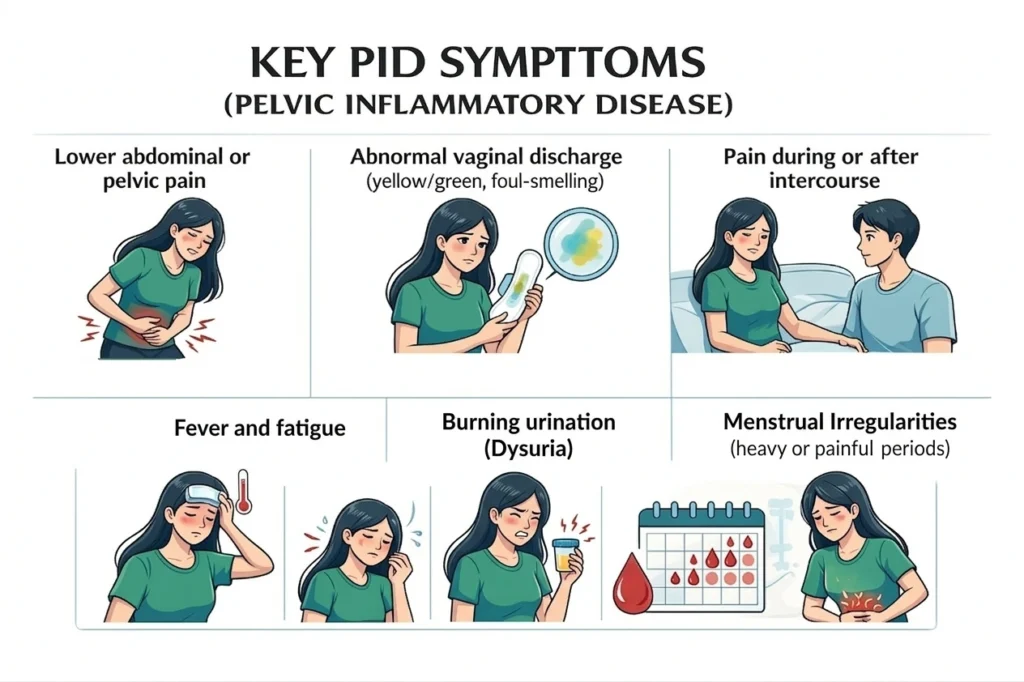
Symptoms vary widely. PID may be dramatic and acute or subtle and chronic. Typical PID symptoms include:
- Pain: Shula/Vedana — persistent lower-abdominal, pelvic, groin or lower-back pain (dull, aching or sharp).
- Tenderness on exam: Sparsha Asahatva — cervical motion or adnexal tenderness on pelvic examination.
- Swelling/edema: Shunatva — local pelvic or vaginal tissue swelling.
- Abnormal discharge: Nila-Pita vedana yukta srava — increased, discoloured (yellow/green/blue), often foul-smelling vaginal discharge.
- Dyspareunia: Maithunasahishnuta / Gramyadharme Ruja—painful intercourse or post-coital discomfort.
- Burning sensation: Yoni Daha — persistent vaginal burning, suggesting Pitta involvement.
- Systemic signs: Jwara, Angamarda, Daurbalya — fever with chills, body-ache, malaise; urinary discomfort may occur when infection is systemic.
- Menstrual irregularities or heavier, more painful periods in some cases.
Because PID can be “clinically silent,” any risk factors or subtle complaints should prompt discussion with a healthcare provider.
How PID is diagnosed
Minimal diagnostic signs (on pelvic exam) include uterine tenderness, adnexal tenderness, or cervical-motion tenderness — any one of these should raise suspicion.
- Clinical features that strengthen the diagnosis: high fever (>101°F / 38.3°C), mucopurulent cervical discharge, or marked systemic symptoms.
- Inflammatory markers: Raised C-Reactive Protein (CRP) or ESR can provide evidence for the diagnosis.
- Imaging role: Vaginal ultrasound can show the presence of fluid or thickening of the fallopian tubes, suggestive of salpingitis; laparoscopy is best avoided in unclear cases of acute PID.
An Ayurveda practitioner will utilise Nidana Panchaka to determine causality and prognosis and will assess local signs of disease such as Sparsha Asahatva (tenderness) and Shunatva (oedema) to determine Vata and Pitta involvement and provide supportive therapy.
When to seek medical care
Seek urgent care for severe pelvic pain, high fever, vomiting, faintness, or heavy vaginal bleeding. If you or a partner has had a sexually transmitted infection (STI) or unprotected sex, get evaluated promptly—even without dramatic symptoms—because early antibiotic therapy prevents progression and long-term damage. Timely attention reduces the risk of irreversible tubal scarring and preserves future fertility.

Conventional Pelvic inflammatory disease treatment
The Ayurveda treatment for PID
Ayurveda approaches inflammatory disorders by addressing both the immediate pathology and the underlying imbalance. The objective is to reduce inflammation, remove toxins, pacify the aggravating doshas and strengthen reproductive tissues so recurrence is less likely.
- Shodhana Chikitsa: In chronic and recurrent cases, classical methods of purification are indicated. Virechana Karma (purgation) is indicated to remove excess Pitta and inflammatory toxins, and Vasti Karma (enemas) is indicated to balance and heal the Vata dosha, heal the pelvic tissues, and restore normal physiological functions.
- Sthanika Chikitsa: Local treatments and therapies can be employed to provide symptomatic relief and healing of the tissues and the mucous membrane. Procedures such as Yoni Pichu, which involves the insertion of a sterile tampon or pad that is saturated with medicated oil or Ghee, can be employed to heal the tissues and the mucous membrane and provide symptomatic relief. Similarly, Yoni Dhavana/ Prakshalana, which is an herbal wash, can be employed judiciously and with due caution to cleanse and heal the local tissues.
- Internal Ayurveda medicines: A specific and unique combination of Ayurveda medicines can be used to treat infections, reproductive organs and tissues, and to regulate the menstrual cycle and reproductive tissues. In addition, rejuvenative medicines can be employed as part of the treatment protocol.Ayurveda approaches inflammatory disorders by addressing both the immediate pathology and the underlying imbalance. The objective is to reduce inflammation, remove toxins, pacify the aggravating doshas and strengthen reproductive tissues so recurrence is less likely.
Integrative and lifestyle measures
Combining prompt antibiotics with supportive Ayurveda care can be safe and effective when coordinated with a clinician. Key home and preventive measures include:
- Avoid douching; protect the natural acidic vaginal environment.
- Maintain genital hygiene. Wipe front to back after toileting.
- Practise safe sex and ensure timely STI screening for both partners.
- Reduce spicy, deep-fried and excessively processed foods that aggravate Pitta. Favour fresh, easily digestible meals, cooling herbs and anti-inflammatory preparations such as turmeric.
- Warm compresses for pain, adequate rest during acute illness, and gentle, nourishing foods to support recovery.
How Apollo AyurVAID treat PID
| Patient | Symptom(s) | Before Treatment | After Treatment | Outcome |
|---|---|---|---|---|
| Mrs S, 24 years | Itching | Moderate–Severe | Absent | Complete relief |
| Vaginal discharge | Severe, persistent (curdy) | Reduced but ongoing | Clear improvement; continued OP medicines advised | |
| Pelvic / lower-abdominal pain (VAS) | 4/10 | 3/10 | Noticeable pain reduction | |
| General wellbeing | Moderate | Good | Improved vitality & sleep | |
| Mrs J, 30 years | Itching | Severe (+++) | Absent | Complete resolution |
| Vaginal discharge | Severe (+++) | Absent | Infection resolved | |
| Lower-abdominal pain (VAS) | 9/10 | 0/10 (absent) | Pain fully relieved | |
| Energy & sleep | Moderate / disturbed | Good / restored | Marked functional recovery |
Key Takeaways
- Act quickly: Pelvic inflammatory disease is time-sensitive — seek care for persistent pelvic pain, abnormal/foul discharge, painful intercourse or fever.
- Know the causes & prevent: Most cases follow ascending STIs (notably Chlamydia and Gonorrhea) or procedures; practise safe sex, avoid douching, and screen/treat partners.
- Diagnose and treat decisively: Pelvic tenderness on examination with supportive laboratory and imaging findings should be treated with antibiotics.
- Ayurveda as a form of Integrative care: Shodhana Chikitsa, Sthanika Chikitsa, and internal medicines aim to reduce inflammation and prevent infection progression.
- Protect fertility with follow-up: Partner treatment, reevaluation for persistence of symptoms, and urgent medical attention for high-grade fever, pain, fainting spells, or heavy bleeding should be emphasised.
References
- Mathapati P, Rawal PK, Shiraguppi S. Clinical Study To Evaluate The Efficacy Of Triphaladi Ghrita Yonipichu In Paripluta Yonivyapat With Special Reference To Pelvic Inflammatory Disease. IRJAY [Internet]. 2021 Aug 31;4(8):29-37
- Harsha, Saini SR. A Case Report- Ayurvedic Management Of Pariplutayonivyapada W.S.R To Pelvic Inflammatory Disease. Int J Adv Res [Internet]. 2023 Mar 23;11(03):587-592
- Mane M, Gavane S. Role of Sthanik Chikitsa in Stree Roga. Int J Pharm Res Appl [Internet]. 2023 Nov-Dec;8(6):213-217.
- Pandya M, Donga S, Cholera M. Ayurvedic management of Paripluta yonivyapad (pelvic inflammatory disease)-A case report [Medknow Publication]. Indian J Ayurveda Integr Med [Internet]. 2023;4:70-4.
- Pandey S, Tiwari N, Singh D. A Detailed Study on Artava Vaha Srotas W.S.R. To Artava Dushti and Its Modern Correlation. Int Ayurvedic Med J [Internet]. 2023 Nov;11(11).