Doctors’ Day usually follows a familiar script. Flowers arrive. Patients say thank you. Social media fills with messages celebrating dedication, sacrifice and compassion. By evening, many of those same doctors are still at work. Someone has missed lunch again. Someone has been awake since dawn after a night on call. Someone is carrying the memory of a difficult conversation they had with a patient’s family just hours ago. Tomorrow, they will return and do it all over again. Somewhere along the way, medicine quietly created an expectation that doctors should always cope. They are trained to recognise suffering in others, yet many struggle to acknowledge it in themselves.
The growing conversation around doctor burnout reminds us that doctors are not immune to exhaustion simply because they know medicine. They experience stress differently, often silently, because caring for others leaves very little room to care for themselves.
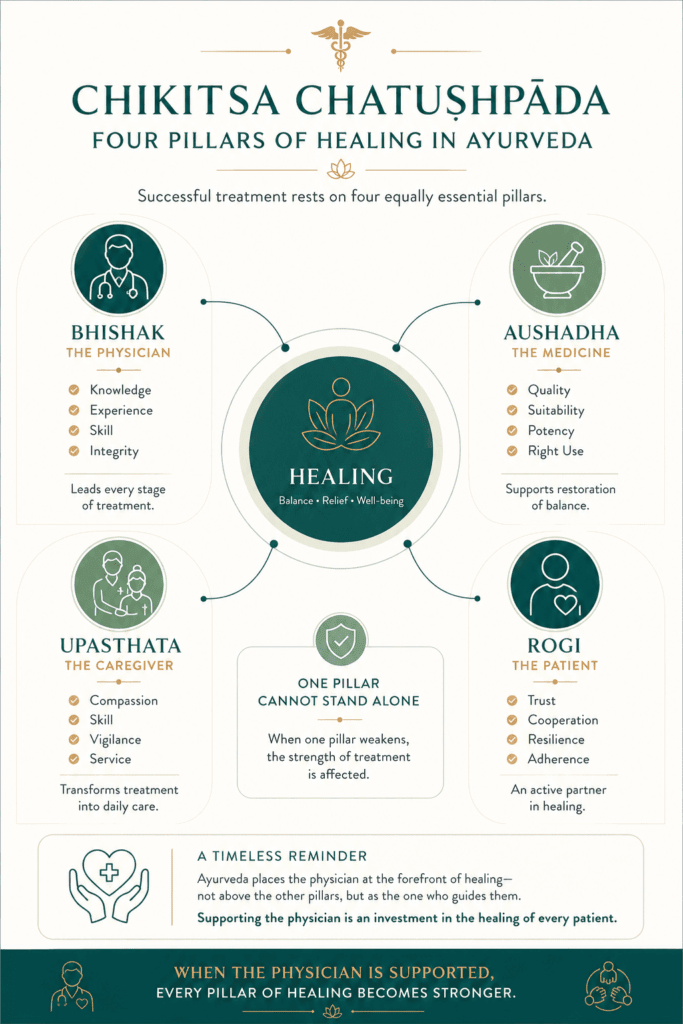
Ayurveda has always looked at healing as a partnership. The concept of Chikitsa Chatushpada describes four pillars that make healing possible: the physician, the patient, the medicine and the caregiver. Each pillar supports the other. If one begins to weaken, the entire process of healing is affected. Perhaps that is why the well-being of the physician deserves as much attention as the well-being of the patient.

The Hidden Cost of Caring: Burnout Statistics Among Indian Doctors
Most doctors never decide to neglect themselves. It happens gradually. The consultation that runs longer than expected. The emergency that interrupts lunch. The night shift that turns into another working day. Weeks pass before there is time to pause. The exhaustion, self-doubt and emotional weight that many doctors carry are far more common than they often realise. A systematic review of healthcare professionals in India found that nearly one in four experienced significant emotional exhaustion, suggesting that burnout is far from uncommon among those caring for others. Younger doctors and resident physicians consistently emerged among those at greater risk, with long working hours, irregular shifts and demanding clinical environments repeatedly associated with burnout.
The World Health Organisation recognises burnout as an occupational phenomenon resulting from chronic workplace stress that has not been successfully managed. Burnout rarely begins with a complete inability to work. Most doctors continue seeing patients, making clinical decisions and finishing their shifts long before they recognise that anything is wrong. The earliest changes are often subtle: feeling physically and mentally drained even after a night’s sleep, taking longer to recover after consecutive shifts, finding it difficult to concentrate by the end of the day, becoming less patient during routine interactions, or carrying the emotional weight of difficult consultations long after leaving the hospital. Left unaddressed, these changes can gradually affect not only personal well-being but also professional fulfilment and the ability to recover between demanding days.
How Ayurveda Reads Burnout
Long before the term burnout entered medical literature, Ayurveda described what happens when daily routines are repeatedly disrupted. For many doctors, irregular shifts, missed meals, interrupted sleep and the emotional weight of caring for patients gradually disturb Vata Dosha, the principle associated with movement, communication and the nervous system. As Vata becomes aggravated, the effects begin to appear in everyday life. Thoughts often continue long after the shift is over, making it difficult to unwind. Digestion becomes less predictable. Small frustrations feel harder to shake off, and the body no longer recovers as quickly between demanding days.
Ayurveda also speaks about Prajnaparadha, the tendency to go against one’s inner wisdom despite knowing what supports health and wellbeing. In many ways, it describes the quiet compromises that become part of a doctor’s everyday life. A doctor knows sleep matters, yet accepts another night without it. A doctor understands nutrition, yet skips meals because patients come first. A doctor advises stress management every day while quietly believing there is no time to practise it personally. These choices are rarely intentional. They simply become part of professional life. Over months and years, this persistent imbalance begins to weaken Ojas, the subtle essence linked with vitality, immunity and emotional steadiness. When Ojas is depleted, it becomes harder to feel physically and emotionally restored. Recovery takes longer. Even weekends may no longer feel restorative.
Modern research paints a remarkably similar picture. Chronic stress influences cortisol regulation, sleep quality, immune function and emotional well-being. Ayurveda arrives at the same destination through a different language, one that places equal importance on daily rhythm, digestion, rest and the connection between body and mind.
A Realistic Self-Care Protocol for Working Doctors
Morning Rituals Before the Day Begins
No doctor has the luxury of an unhurried morning. The aim is not to complete an elaborate wellness routine before a twelve-hour shift. It is to prepare the body, even if only for a few minutes.
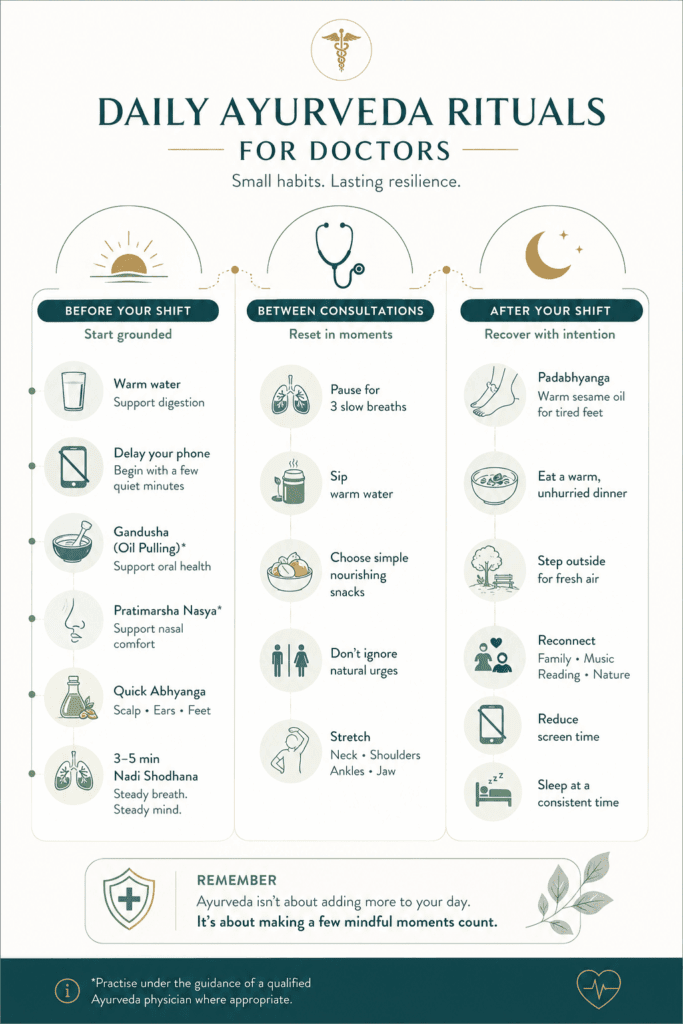
Begin the day with a glass of warm water to gently support digestion. Before reaching for your phone, allow yourself a few quiet minutes to wake up without immediately stepping into emails, messages or hospital updates. If it fits your routine, Gandusha or oil pulling using sesame oil is a simple Ayurveda practice that supports oral health, especially for doctors who spend much of the day speaking with patients. Where appropriate and under the guidance of an Ayurveda physician, Pratimarsha Nasya with medicated oil may also be included to support the nasal passages, particularly for those working in air-conditioned hospital environments. Even a brief Abhyanga using warm sesame oil over the scalp, ears or feet before bathing can be grounding on days that are likely to be long and demanding. Before stepping out, spend three to five minutes practising Nadi Shodhana. A steadier breath at the start of the day often makes it easier to navigate whatever the day brings.
Small Ayurveda Practices Between Consultations
Some breaks are only long enough to wash your hands before the next patient arrives. Even then, there is something you can do. Pause for three slow, unhurried breaths before opening the consultation room door again. Keep a flask of warm water nearby and sip it throughout the day instead of relying entirely on coffee. If you packed soaked almonds, seasonal fruit or a simple homemade snack, eat it when the opportunity comes rather than waiting until late evening. Ayurveda also advises against Vegavarodha, the repeated suppression of the body’s natural urges. In a busy hospital, postponing meals, ignoring thirst or delaying a visit to the washroom can easily become part of the routine. When there is an opportunity to respond to these basic needs, taking it is not a distraction from patient care. It is a simple way of supporting your health throughout the day. If you have been standing for several hours, gently stretch your neck and shoulders, roll your ankles or simply relax your jaw for a minute. These small pauses help interrupt the constant pace of the day without taking you away from patient care.
Evening Rituals for Recovery
The end of a shift is not always the end of the day. There are notes to complete, calls to return and responsibilities waiting at home. Even so, creating a small transition between work and rest can help the body recognise that the day is over.
A few minutes of Padabhyanga with warm sesame oil can soothe tired feet after hours of standing. Choose a warm, freshly prepared dinner whenever possible and allow yourself enough time to eat without rushing. If you can, step outside for a few minutes, feel the evening air or spend a quiet moment in nature before moving on to the next task. These small moments of grounding are an important part of restoring balance.
Make space, however briefly, for the people and activities that help you feel like yourself beyond the white coat. A conversation with family, playing with your children, listening to music, tending to a garden or reading a few pages of a book can gently shift the mind away from the demands of the hospital. As the day comes to a close, reduce screen time where possible and aim for a consistent bedtime. Ayurveda does not expect every evening to look the same. It simply reminds us that the body heals best when it is allowed to rest before another demanding day begins.
If You Work Night Shifts
Not everyone has the option of following a daytime schedule. Healthcare professionals, emergency responders and many others work through the night to care for others. While night shifts do challenge the body’s natural circadian rhythm, a few consistent practices can help reduce their impact.
After a night shift, try to avoid running errands or delaying sleep. Have a light, warm meal if you are hungry, create a dark and quiet sleeping environment and aim to go to bed as soon as possible. Blackout curtains, earplugs or white noise can be helpful if daytime sleep is frequently interrupted. On waking, spend a few minutes in natural daylight whenever possible. Eat meals at roughly similar times across your workdays instead of grazing through the shift, and stay well hydrated. If your shifts rotate, avoid changing your sleep schedule abruptly on days off. Keeping wake up and meal timings as consistent as your work allows is often more beneficial than trying to “catch up” on lost sleep over the weekend. Most importantly, recognise that recovery is part of the job. If you regularly work nights, prioritising sleep is not a luxury. It is one of the most important ways to protect your health over the long term.
When Self-Care Is Not Enough: Recognising When to Seek Support
Some forms of stress cannot be managed with better routines alone. If exhaustion continues for weeks, if sleep refuses to improve, if work begins to feel emotionally empty, or if hopelessness quietly replaces purpose, those are signals worth listening to. Doctors encourage patients to seek help before illness becomes severe. The same compassion deserves to be extended inward.
Professional counselling, peer support, medical evaluation and personalised lifestyle guidance can all become part of recovery. Ayurveda adds another layer by understanding how stress has affected digestion, sleep, energy and constitutional balance before creating an individualised plan.
At Apollo AyurVAID, the Peak Health Stress Programme follows this whole-person approach. Designed as part of its preventive health and corporate wellness initiatives, it combines personalised Ayurveda assessment, nutrition, lifestyle guidance, mind-body practices and evidence-based therapies wherever appropriate. The focus is practical. The recommendations are designed for people whose schedules are unpredictable, including healthcare professionals and shift workers.
Sometimes healing begins with something as simple as permitting yourself to receive care. Doctors spend years becoming the person others rely on during life’s most uncertain moments. They comfort families they have never met. They make difficult decisions under immense pressure. They continue showing up even when they themselves are running on very little sleep, energy or emotional reserve. Perhaps that is why this conversation matters. Protecting physician mental health is about preserving empathy, clinical judgement and the quiet humanity that makes medicine more than a profession.
For doctors looking for sustainable stress management for doctors, Ayurveda offers something refreshingly practical. It does not demand perfect routines or complete lifestyle overhauls. It begins wherever you are, with whatever time you have. Sometimes the smallest daily rituals are enough to help you find your footing again.
References