Introduction
Most of us have had mornings when we wake up feeling like we never really slept. We tell ourselves it is just one bad night. Another coffee will help. Tomorrow will be better. But when poor sleep becomes part of everyday life, it begins to show up at work. You lose your focus more easily. Small mistakes creep in. Ironically, being tired does not always make it easier to sleep. For many professionals, bedtime is when the mind becomes most active, making it difficult to relax and fall asleep naturally. For employers, it also means higher levels of presenteeism, burnout and rising healthcare costs. As a result, corporate wellness sleep programmes are becoming an important part of many organisations’ employee wellbeing strategies.
While many workplace programmes focus on improving sleep habits, Ayurveda approaches the issue from a different perspective. It sees restorative sleep as the result of a balanced body, a settled mind and healthy daily routines. Instead of asking only how to sleep better at night, Ayurveda asks a different question: what happened during the day that made restful sleep difficult in the first place?

How Does Poor Sleep Affect Workplace Productivity?
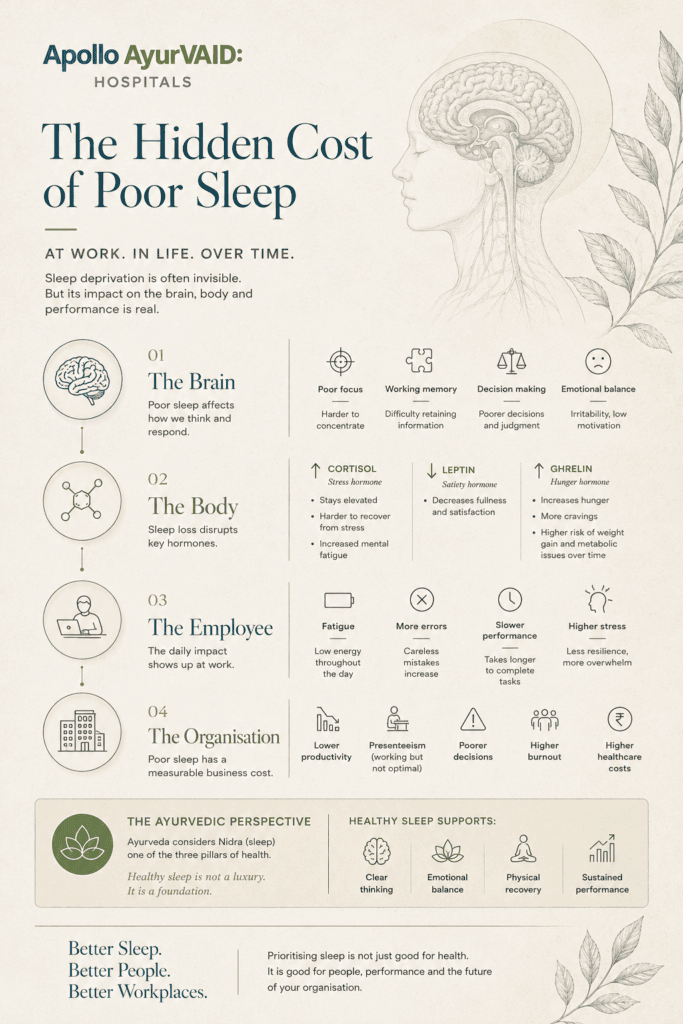
One of the biggest misconceptions about sleep deprivation is that it’s obvious. Often, it isn’t. The employee who stayed awake until 2 a.m. preparing a proposal still attends the morning meeting. The manager who slept poorly because of work stress still delivers the presentation. On paper, everyone is present. Performance tells a different story.
The effects of poor sleep are often subtle at first. Reading the same email twice before sending it. Losing track of a conversation during a meeting. Taking longer to make decisions that would normally come easily. After several days of poor sleep, many people notice they become less patient and more mentally drained by the afternoon. Sleep loss also affects what is happening beneath the surface. The body remains in a heightened state of stress, with cortisol levels staying elevated for longer than they should. At the same time, the hormones that regulate appetite, leptin and ghrelin, become disrupted. Hunger increases, cravings become harder to ignore and maintaining healthy eating habits often becomes more difficult. Over time, these hormonal changes, together with oxidative stress and metabolic dysfunction, may increase the risk ofobesity, cardiovascular disease and other chronic health conditions. Sleep, therefore, deserves a place in conversations about leadership, employee wellbeing and business sustainability, not only personal health.
Why Doesn't Generic Sleep Hygiene Advice Work for Many Professionals?
Most professionals already know what they are “supposed” to do. Go to bed earlier. Avoid screens before sleeping. Drink less coffee. Keep a regular bedtime. The advice is sensible, yet many people follow it and still struggle. Why? Because the problem often begins long before bedtime. Imagine spending an entire day moving from one deadline to another. Your inbox never quite empties. Your phone continues buzzing after dinner. You finally switch off the lights, but your mind is still reviewing tomorrow’s tasks. Your body is lying in bed. Your thoughts are still at work.
Ayurveda understands sleep through the balance of the doshas rather than viewing insomnia as an isolated symptom. WhenVata becomes aggravated, the mind tends to remain restless and alert. An increasedPitta imbalance may manifest as frequent night awakenings or difficulty settling back to sleep. A reduction in functionalKapha often means sleep feels shallow, even after spending enough hours in bed. For many people, these changes develop gradually as demanding routines, chronic stress and inconsistent daily habits become the norm rather than the exception. This is why Ayurveda places so much importance onDinacharya, or the daily routine. Sleep is influenced by what happens across the day, not only by what happens before bed. Regular meal timings, short breaks during the workday and a clear boundary between work and the evening can make it easier for the mind to settle at night. Even small changes to the daily routine often influence how well a person sleeps.
Choosing the Right Corporate Sleep Programme
Many workplace sleep initiatives begin with good intentions. Employees attend a webinar, receive advice on sleep hygiene and leave with a checklist of healthier habits. Education certainly has a role, but information alone rarely solves persistent sleep problems.
Sleep is not disrupted for the same reason in every employee. One person may be struggling with long working hours and an overactive mind. Another may have an underlying medical condition, medication that affects sleep or symptoms that need clinical attention. Treating these situations in the same way is unlikely to produce lasting results.
This is one area where Ayurveda has always taken an individualised approach. Assessment comes first. In Ayurveda practice, sleep is understood in the context of the person’s constitution (Prakriti), current imbalance (Vikriti), daily routine, diet, work demands and medical history. Rather than asking only how someone sleeps, the assessment explores why sleep has become disturbed. For employers, this approach also has practical value. Identifying sleep problems early allows employees to receive the right support before poor sleep begins affecting productivity, absenteeism or long-term health.
A workplace sleep programme should therefore do more than just raise awareness. It should help identify the factors contributing to poor sleep, provide access to experienced clinicians and offer recommendations that employees can realistically follow within the demands of working life. Better sleep, improved daytime alertness, greater mental clarity and steadier energy are more meaningful measures of success than attendance at a webinar.
Apollo AyurVAID's Peak Health Sleep Programme
Apollo AyurVAID’s Peak Health Sleep Programme follows the Precision Ayurveda model, combining classical Ayurveda practice with structured clinical assessment, standardised care pathways and measurable health outcomes. The programme is designed to improve sleep, productivity and overall wellbeing in the workplace.
Every participant begins with a detailed consultation with an AyurVAID physician. Along with understanding sleep patterns, the assessment explores medical history, work demands, lifestyle, diet, and factors that may be contributing to disturbed sleep. Participants also complete the AyurVAID Sleep Quality Index, interpreted alongside validated tools such as the Pittsburgh Sleep Quality Index (PSQI), allowing physicians to establish a baseline and monitor progress over time.
Treatment is tailored to the individual. Depending on the physician’s findings, it may include dietary advice, Dinacharya-based lifestyle guidance, classical Ayurveda medicines and physician-supervised therapies such as Abhyangam, Shirodhara, Takradhara or Nasya.
The objective is not simply to increase the number of hours slept. Restorative sleep should also be reflected in everyday life. Employees who sleep well often report better concentration, steadier energy, improved mood and greater resilience during the working day. These changes provide a more meaningful measure of recovery than sleep duration alone.
A Better Workplace Starts With Better Sleep
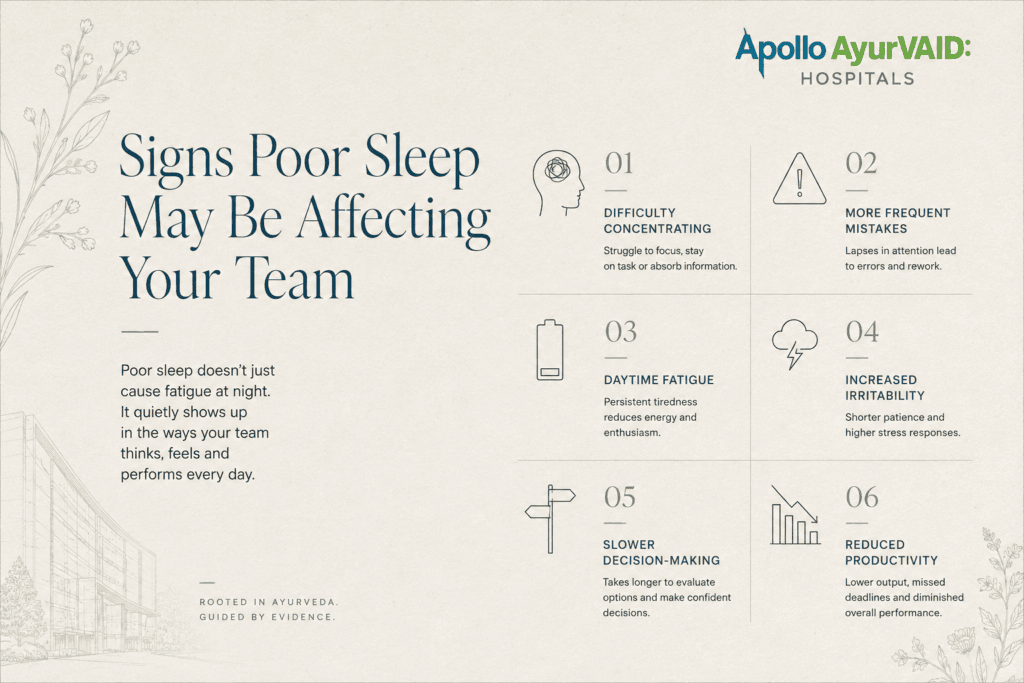
Sleep problems are easy to overlook because the changes are often subtle at first. Someone who is usually organised may begin forgetting small details. Meetings become harder to concentrate on. Tasks that once took half an hour start taking much longer. These changes are often blamed on workload or stress rather than poor sleep.
By the time exhaustion becomes obvious, or sickness absence starts increasing, disturbed sleep may have been affecting day-to-day performance for quite some time. Supporting better sleep is therefore less about reacting to burnout and more about recognising problems before they become harder to manage. For organisations, that means healthier employees, steadier performance, and a workforce that is better able to cope with the demands of everyday work.
References