Introduction
Hair loss often begins subtly—a few extra strands on the pillow, a widening parting, a thinning ponytail, or visible gaps between hair strands that were not there before. Over time, the scalp becomes more noticeable, styling becomes difficult and many people find themselves feeling less confident than they once did.
It can affect self-esteem and emotional well-being. The frustration is also much worse when even with the use of various shampoos, oils, or supplements, the issue remains unsolved.
In the classical concept known as khalitya, Ayurveda recognises that healthy hair depends on proper digestion, tissue nourishment, hormonal balance, stress management and dosha harmony. Therefore, one should expect Ayurvedic treatment for hair loss to resolve the underlying issue along with hair fall reduction.
Why You’re Losing Hair
In Ayurveda, hair loss is known as khalitya and is commonly described as a disorder of the head region. Ayurveda explains that hair is an upadhatu of Asthi Dhatu.The quality of hair is influenced by the health of the bones and deeper tissues. When Asthi Dhatu is weak, hair may become thin, dry, lifeless, or prone to falling.
Khalitya involves disturbance of the doshas, especially Vata and Pitta, along with involvement of Rakta and sometimes Kapha. In simple terms, excess heat may damage the hair roots, while blocked nourishment prevents new hair from growing well. This is why in Ayurveda, hair fall is never viewed as a single-cause issue. It usually develops over time due to an internal imbalance.

Types of Hair Loss in Ayurveda
In Ayurveda, Khalitya is usually described under Kshudra Roga or Shiroroga. Rather than being viewed as a single uniform disorder, it is considered a progressive condition that develops through deeper dosha imbalance. It also describes related scalp and hair disorders that may occur alongside or overlap with Khalitya.
- Indralupta refers to patchy hair loss, similar to alopecia areata in modern terms.
- Palithya is premature greying, Darunaka is dandruff with dryness and itching, and Arumshika is a scalp condition marked by crusting and inflammation.
Ayurveda does not consider every pattern of hair loss to be the same. The most effective hair fall treatment Ayurveda approach depends on identifying which dosha is predominant.
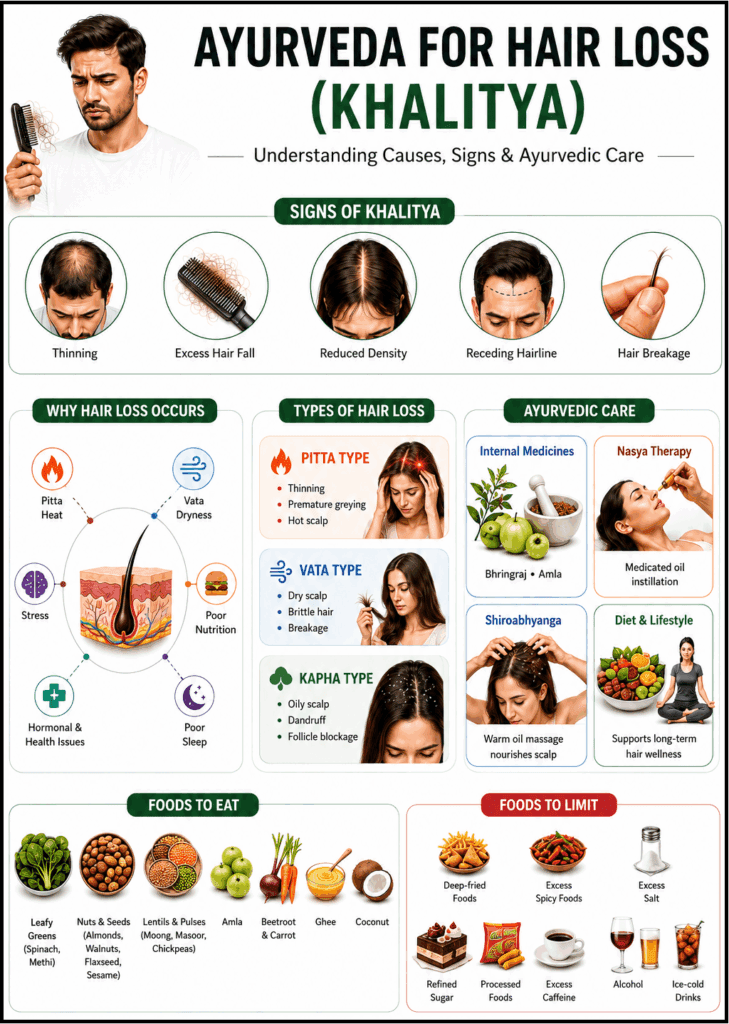
Pitta-type
This condition is one of the most common presentations. When Pitta becomes aggravated, the scalp may feel hot, sensitive, or inflamed. Hair tends to thin diffusely across the scalp, premature greying may occur, and some people notice scalp sweating or a burning sensation. In this type, the internal heat needs to be pacified before the hair root environment can recover.
Vata-type
When Vata is dominant, dryness becomes the major feature. Hair may become rough, frizzy, brittle and more likely to break. The scalp may feel dry or tight and some individuals complain of tingling, discomfort, or lack of nourishment. In this form of hairfall, the treatment focus is on lubrication, grounding and tissue support.
Kapha-type
In Kapha imbalance, the scalp becomes heavy, oily and congested. This can lead to blocked follicles, dandruff, sticky scalp buildup and dull hair. Though it may not appear as dramatic as other forms, it can steadily weaken follicle health. Here, the treatment must reduce heaviness while improving scalp clarity and circulation.
Root Causes
Khalitya is usually a result of internal imbalance, poor digestion, stress and lifestyle strain acting together over time.
- Internal dosha imbalance
Hair fall is most often linked to Pitta aggravation, usually with Vata involvement. Excess heat can weaken the scalp and loosen the hair roots. In later stages, Kapha and Rakta may obstruct the follicles, making regrowth more difficult. Poor nourishment of the deeper tissues can also lead to thinning. - Agni dysfunction and diet
When Agni is weak, tissue formation becomes poor and Ama builds up. This condition directly affects the nourishment reaching the hair roots. Frequent intake of very salty, spicy, fried, caffeinated, alcoholic, or heavily processed foods can aggravate Pitta and worsen hair fall. - Stress and emotional disturbances
Increased cortisol levels due to stress affect the hair cycles and force the hair follicles to enter the resting phase, leading to increased hair shedding. - Lifestyle issues
Staying up late at night, irregular sleep patterns, suppression of natural urges, lack of physical activity and exposure to dust, pollution and heat adversely affect scalp health and hair condition. - Scalp issues and hair damage
Scalp disorders such as dandruff result in itching, dryness and hair loss. Harsh chemicals present in hair colour, dyes and hair treatments also add to the problem. - Hormonal, genetic, and illness-related causes
Hormonal shifts, genetic predisposition, ageing, anaemia and recovery after illness (especially heavy menstrual bleeding and other bleeding disorders) can all contribute to hair loss. In many people, these factors act together and accelerate thinning.
Here, the real focus of hair fall treatment Ayurveda is not just stopping the shedding but correcting the deeper imbalance behind it.
Best Ayurvedic Medicines for Hair Loss
The best Ayurvedic medicine for hair fall is not a single product for everyone. It depends on the dosha, body constitution, digestive strength and cause of the problem. Still, Ayurveda widely values certain classical remedies for hair growth.
Bhringraja is one of the most respected herbs in hair fall treatment Ayurveda. Traditionally called Kesharaja, it is known for supporting the scalp, calming excess heat and promoting stronger hair roots. It is often included in oils, powders and internal formulations designed for Ayurveda for hair growth.
Amalaki or Amla, is prized for its cooling, nourishing and rejuvenating effects. It helps pacify Pitta, supports antioxidant activity and is often used when premature greying or heat-related thinning is present. In many clinical and traditional formulations, amla is an important part of the best Ayurvedic medicine for hair fall strategy.
Nasya for Hair Loss
In Ayurveda, the nose is called the gateway to the head. This is why Nasya is often included in a complete Ayurvedic treatment for hair loss plan.
Nasya is the administration of medicated oils or drops through the nostrils. It is believed to support the head region, improve circulation and calm excess Vata and Pitta in the upper body. Nasya may be especially helpful when hair loss is associated with stress, tension, headaches, or premature greying. This therapy should be selected carefully according to individual’s constitution and symptoms.
Diet for Hair Growth
No Ayurveda for hair growth plan is complete without a proper diet. Hair is nourished from within and food directly influences tissue quality.
A simple pathya approach includes soaked almonds, raisins, figs in moderation; leafy greens, beetroot, carrot, etc., vegetables, fresh Amla, sesame seeds, ghee and healthy cooking oils in moderation. These support nourishment, cooling and tissue strength.
Spices such as turmeric, ginger and black pepper can improve digestion when used appropriately. Good digestion in turn, helps maintain healthy hair.
At the same time, it is advisable to reduce excessive salt, highly processed sugar, deep-fried foods, and ice-cold drinks. These can weaken Agni and increase imbalance. For patients seeking sustainable Ayurveda for hair growth, diet consistency is as important as topical treatment.
Shiroabhyanga Technique at Home
Shiroabhyanga (Head Massage) is one of the simplest and most effective home practices in hair fall treatment in Ayurveda. It helps improve scalp nourishment, reduce stress and support overall relaxation.
Prefer doing the massage when on an empty stomach for maximum absorption. Begin by choosing a suitable oil. Warm it slightly so that it feels comfortable on the scalp.
Apply the oil to the scalp gently and evenly, including the crown, temples, and hairline. Massage using slow circular movements with the fingertips for about 5 to 10 minutes. The goal is gentle stimulation and relaxation.
Pay attention to the temple area and the crown, as these regions are often sensitive to stress-related hair fall. Leave the oil on for at least 20 minutes, or longer if appropriate, before washing with a mild cleanser.
When practised regularly, Shiroabhyanga becomes more than a beauty ritual. It becomes a therapeutic self-care practice that supports the broader goals of Ayurvedic treatment for hair loss.
Conclusion
References