You finish lunch. The meal was simple, balanced, and even carefully planned. Yet an hour later, your stomach still feels heavy. Sometimes there is nausea. Sometimes bloating creeps in quietly. And for people living with diabetes, there is another worry — sugar levels behaving unpredictably despite doing everything right.
Many patients describe this exact situation. They blame stress. They blame ageing. Some assume their medicines are failing. But often, the real issue sits silently inside the stomach. This condition is called gastroparesis—delayed stomach emptying.
And when diabetes is present, it becomes even more complicated.
In clinical practice, I frequently see patients who focus only on blood sugar numbers. But digestion plays a far larger role than most people realise. Choosing the best diet for gastroparesis does not just improve comfort. It can stabilise sugar patterns, improve energy, and restore appetite.
Why Gastroparesis Happens in Diabetes
From a modern medical perspective, long-standing diabetes can damage nerves. When the vagus nerve, the nerve that controls stomach movement, weakens, the stomach loses its rhythm. Food stays inside longer than it should.
Ayurveda explains this in a very interesting way. It describes digestion as governed by Agni, the body’s metabolic fire. When Agni is strong, food transforms smoothly into energy and nourishment. When Agni becomes weak, a state called Mandagni, the digestion slows. Food stagnates, and the improperly digested material forms Ama, which can be understood as metabolic residue or toxin-like accumulation.
Over time, this Ama blocks normal tissue nourishment and interferes with metabolic balance. Ayurveda also explains that the Kapha and Vata doshas play a role in these stagnation issues, which are similar to slow gastric movement described in modern medicine. When Kapha increases, heaviness and sluggishness develop. When Vata becomes obstructed or imbalanced, the natural movement of food through the digestive tract becomes irregular and delayed.
In people with diabetes, these imbalances can become more pronounced due to long-term metabolic disturbance. As a result, digestion slows further, symptoms worsen, and blood sugar control becomes more unpredictable.
Understanding both perspectives helps create a more comprehensive approach to managing gastroparesis in diabetes — addressing not only nerve function and blood glucose levels, but also digestive strength and metabolic balance.
Common Symptoms Patients Notice
Gastroparesis rarely appears suddenly. It often builds quietly. You may notice:
- Feeling full after eating very little
- Bloating or abdominal heaviness
- Nausea after meals
- Irregular or delayed sugar spikes
- Loss of appetite
- Occasional vomiting
These symptoms cause discomfort and other health issues. They make diabetes management unpredictable and exhausting.
Why Food Choice Matters So Much in Gastroparesis
When stomach emptying slows down, glucose absorption becomes irregular. Sugar may rise hours after eating. At other times, it may drop suddenly. Patients often feel confused because they are following their diabetic diet strictly.
Following the best foods for gastroparesis helps digestion move more smoothly. When the stomach works with less effort, glucose enters the bloodstream in a steadier pattern.
I often explain digestion as the first gateway of metabolism. If food gets stuck at that gate, the entire metabolic rhythm becomes disturbed.
Best Foods for Gastroparesis
The goal is not a strict restriction. It is an intelligent simplification. The stomach needs foods that are soft, warm, and easy to process.
Soft and Light Grains
Certain grains become very gentle on digestion when cooked properly. They provide stable energy without overwhelming the stomach.
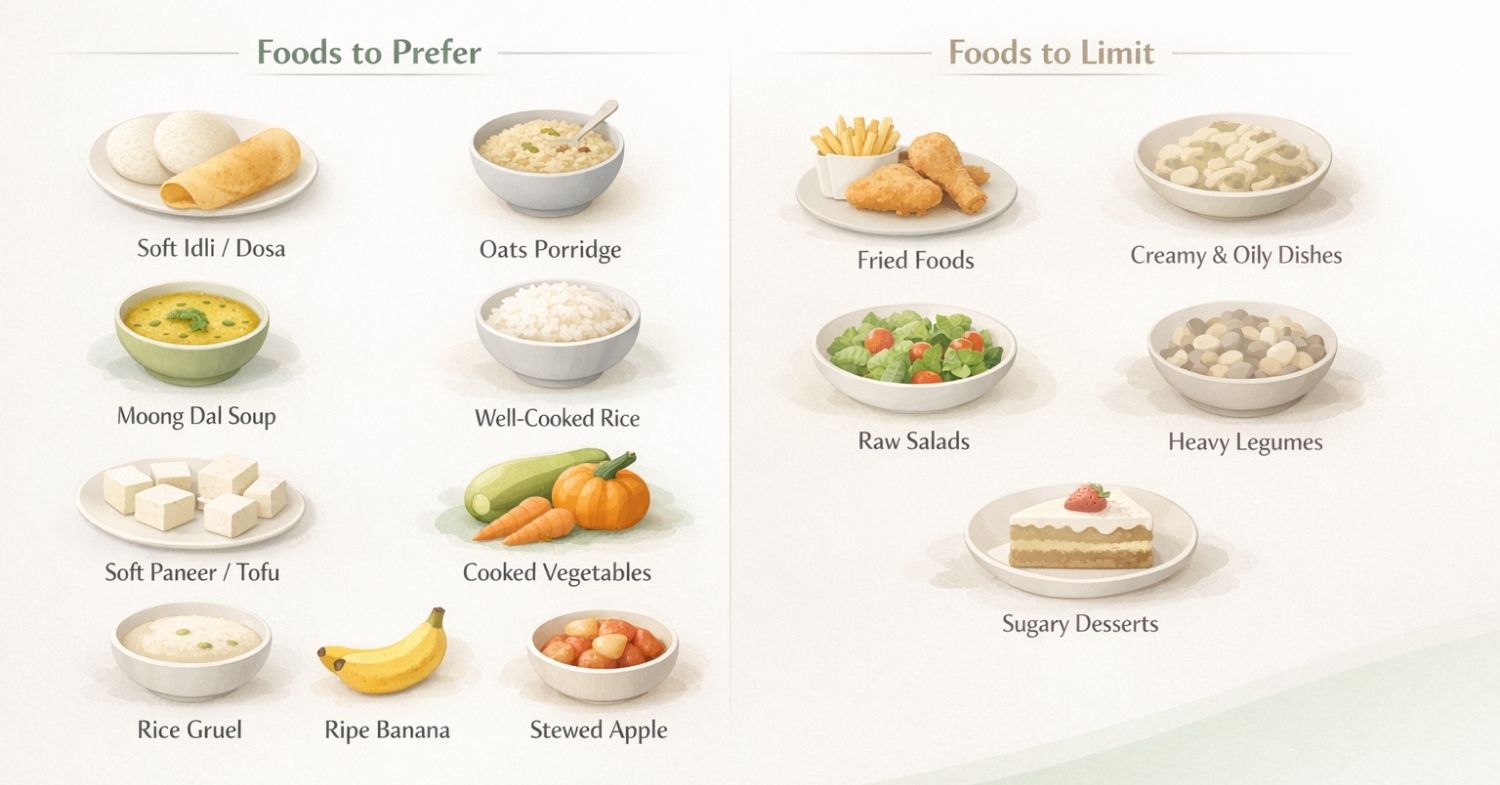
Some of the best foods for gastroparesis include:
- Well-cooked red rice
- Idli or soft dosa
- Oats porridge
Broken wheat or semolina preparations
Ayurveda traditionally recommends warm, freshly cooked grains because they help maintain digestive fire and reduce the formation of Ama.
Easy-to-Digest Protein Sources
Protein is essential in diabetes, but heavy or dense protein can cause delayed gastric emptying. Foods beneficial for gastroparesis include:
- Green moong dal
- Soft paneer
- Tofu
- Soft-cooked eggs in small portions (if individually suitable)
Green moong holds a special place in Ayurveda. It nourishes tissues while remaining light on digestion. It rarely produces heaviness or bloating when prepared correctly.

Vegetables That Support Digestion
Certain vegetables have a naturally calming effect on the stomach. They tend to digest quietly, without creating heaviness or discomfort. For people dealing with gastroparesis, these choices can feel noticeably easier to tolerate.
Some commonly helpful options include bottle gourd, pumpkin, ridge gourd, ash gourd, and soft-cooked carrots. These vegetables become especially gentle when cooked well. These vegetables should be properly softened, not just slightly tender.
Raw vegetables, on the other hand, can sometimes sit in the stomach longer than expected. Many patients don’t realise this until they notice bloating or fullness after salads, which they assumed were healthy. Cooking helps reduce that digestive load and allows the stomach to move food forward more smoothly.
Fluids and Semi-Solid Foods That Help
During symptom flare-ups, the texture of food often matters just as much as what you eat. Sometimes even more. Semi-solid or lighter preparations tend to move through the stomach with less resistance.
Simple options like light vegetable soups, rice gruel, or thin buttermilk with mild digestive spices are often easier to handle on difficult days. They nourish the body, but they do it gently.
Many patients describe these foods as “comfort meals” during flare periods. They give the stomach a little breathing space while still maintaining energy and hydration. Over time, this helps digestion slowly regain its natural rhythm.
Foods That Usually Worsen Gastroparesis
Some foods demand stronger digestive effort and can aggravate symptoms significantly.
Raw and Highly Fibrous Foods
Heavy legumes and raw salads may remain in the stomach longer. They can increase bloating and discomfort, especially during active symptoms.
Fat-Rich MealsFried snacks, creamy gravies, and processed fast foods slow gastric emptying dramatically. Ayurveda also considers excessively oily foods as Kapha-aggravating and Ama-forming.
Sugary Foods
Apart from worsening diabetes, processed sugary foods disturb metabolic coordination and digestive rhythm.
Ayurveda’s View: Agni, Ama, and Dosha Balance
Ayurveda sees diabetic gastroparesis as a combined digestive-metabolic imbalance. It often correlates this condition as a complication of Prameha. Three key processes become central in management:
Agni Deepana
Strengthening digestive fire so food gets processed efficiently.
Ama Pachana
Digesting accumulated metabolic toxins that obstruct digestion and tissue nourishment.
Vatanulomana
Restoring the natural downward movement of Vata, which regulates gut motility.
When these three processes improve, patients often notice better appetite, less bloating, and steadier sugar levels.
Ayurveda also emphasises Rasayana therapy—rejuvenative support that strengthens neuromuscular coordination in the gut and improves long-term metabolic stability once the agnideepana is achieved.
A Clinical Story That Stays With Me
A software engineer in her mid-40s once walked into a consultation feeling defeated. She followed every diabetic rule carefully. Still, she experienced bloating after meals and unpredictable sugar readings.
Instead of changing medicines immediately, we studied her digestive pattern. Her meal texture, timing, and constitution revealed subtle imbalances.
Her treatment involved gentle dietary restructuring, digestive herbal support, and adjusting meal intervals.
Within a few weeks, she described something simple but powerful. She felt natural hunger returning. Her sugars became more predictable. She felt in control again.
Sometimes healing begins when the body’s rhythm is simply allowed to return.
The Integrative Care Approach at Apollo AyurVAID
Gastroparesis is not viewed only as a stomach disorder. It is treated as a systemic digestive and metabolic imbalance. Management usually includes:
- Physician-guided Ayurveda assessment
- Integration with modern diagnostic reports
- Personalised diet planning
- Evidence-based treatment protocols
- Continuous monitoring and follow-up
Such integrative care supports both safety and long-term improvement.
Practical Everyday Tips That Often Help
Digestive recovery rarely comes with one big change. It usually improves through small, steady habits that the body slowly begins to trust.
- Try eating smaller meals instead of two or three heavy ones. Large portions can overwhelm a sluggish stomach. Smaller portions feel lighter. Easier to process, too.
- Slow down while eating. Many people don’t realise how quickly they finish meals until they consciously try to chew more. Digestion actually begins in the mouth — giving food time there reduces pressure later.
- Warm, freshly cooked meals tend to feel kinder to the stomach. Cold leftovers or refrigerated foods sometimes sit heavier, especially when digestion is already sensitive.
- Avoid lying down right after meals. The body needs gravity and gentle movement to move food forward. Sitting upright or simply staying active for a while can help more than most expect.
- Monitor your blood sugar levels, especially on days when your digestion seems irregular. Fluctuations often mirror what is happening in the gut.
- A slow walk after meals can be surprisingly helpful. Nothing intense. Simply take a stroll that is relaxed and unhurried. Many patients say this simple habit makes meals feel “lighter” over time.
These steps may sound ordinary. Yet when practised consistently, they often bring noticeable comfort — sometimes in ways people don’t expect at first.
When Should You Seek Medical Help?
Early evaluation is important if you experience:
- Persistent nausea
- Sudden sugar fluctuations
- Unexplained weight loss
- Constant bloating
- Loss of appetite
Delayed care can worsen nerve dysfunction and digestive weakness. Early support usually leads to better outcomes.