A company’s success relies heavily on identifying, acquiring, and retaining the right talent, which is why human resources management matters. The HR department is often seen as the one that handles payroll, resolves conflicts, and organises fun weekend activities to liven up the office. Sounds pretty easy, doesn’t it? The reality is that HR managers must address the varied needs and expectations of a diverse workforce while keeping the company at the forefront of benefits packages in their industry and region. A great package and good work-life balance are just part of the bigger picture. The real deal is choosing the right health insurance to best suit employees’ needs, showing you are there to support them in sickness and health. Many types of insurance are on the market, and this article discusses what HR managers should look for before choosing a corporate insurance policy for their companies.

Know More About Corporate Health Insurance
Corporate health insurance, also known as group health insurance, is a policy an organisation provides to its employees. Post-COVID, the Insurance Regulatory and Development Authority of India (IRDAI) has mandated companies to provide health coverage to their employees. But who pays the premium? Three models are currently in place:
- Type 1 (Fully paid by employer): The employer pays the premium in full, and employees are medically covered under the group policy. It extends this benefit to spouses, children and dependent parents (dependent coverage depends on the policy and employer’s terms).
- Type 2 (Partially funded): In this most common model, the employer covers the employee’s base premium and sometimes the employee’s immediate family (spouse and children); employees pay separately through a monthly salary deduction if they want to add parents or upgrade to a higher insurance sum.
- Type 3 (Shared premium): Employees often contribute a percentage (usually 25-50%) toward the dependent portion, while employers cover the base amount.
What Does Corporate Health Insurance Cover?
In-patient treatment is generally covered. This may include charges for rooms, doctors’ fees, medicines, surgery and diagnostic tests. Depending on the policy, employees may also be entitled to maternity benefits, nursery treatment costs, and cover for medical expenses incurred before and after hospitalisation. Benefits vary by company. Some employers also offer life insurance or personal accident cover as part of their employee benefits package. While these provide different types of protection, together they offer employees broader financial security.
What should HR managers remember when selecting a policy?
The lowest premium can be tempting when comparing quotations, particularly for companies with a large number of employees. But the cheaper policy may also come with restrictions that employees may find tricky to navigate.
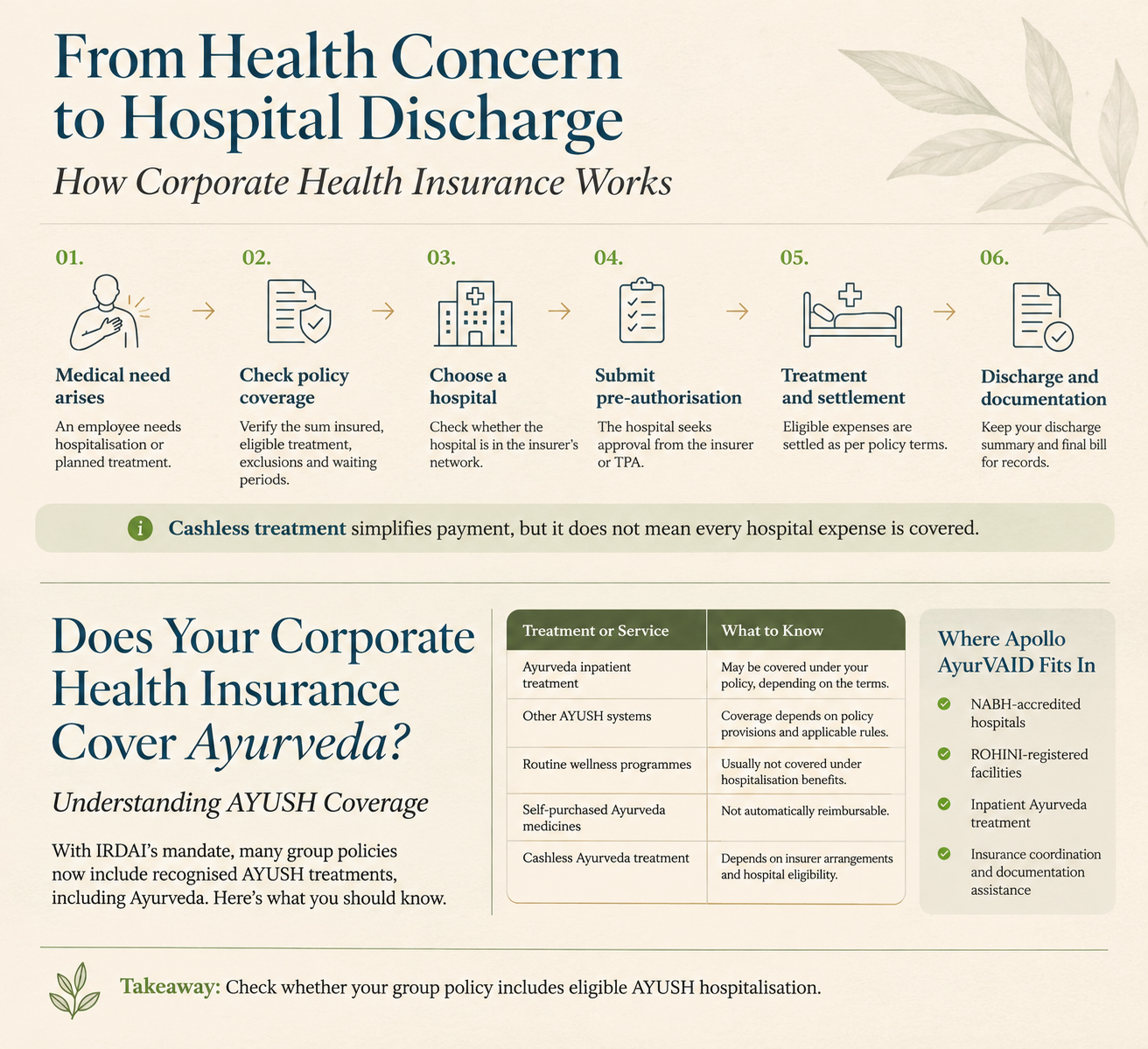
HR managers should look beyond the premium to the benefits that matter. Are dependents covered under the policy? Maternity leave? Does it cover OPD benefits for consultations and medicines? What are the limits of room rent and special treatment? These details can make a huge difference when someone needs medical help. We should also mention the hospital network. A policy may have a reasonable sum insured, but employees should be able to access hospitals in the cities and towns where they live. Be sure there are hospitals in the network that your employees are likely to use—not just a long list of names. It is also good to understand how claims are handled. If the process is complicated, it can add pressure to an already difficult situation. HR teams need to know who employees should contact, what documents are required, and how long approvals usually take.
How much health insurance coverage is sufficient for employees?
There is no one-size-fits-all figure for organisations. The right cover relies on factors such as employees’ age profile, the number of dependents covered, the workforce’s location, and the cost of treatment in those locations.
A young workforce will have different needs than one with many employees nearing retirement. Likewise, a policy for employees only will cost more than one that includes spouses, children and parents. HR managers should also ensure that the sum insured is sufficient to cover large hospitalisation bills. Medical expenses are unpredictable, and the sum insured that was adequate a few years back might not go far today. Where budgets allow, organisations may want to consider a simple group policy with optional top-up cover. Employees who want more protection can then buy extra cover, depending on what the insurer offers.
Hospital Networks, Cashless Claims & Policy Exclusions
The insurer’s empanelled hospitals generally provide cashless treatment. Some insurance companies also provide cashless facility everywhere depending on their terms and conditions and the hospital’s willingness and ability to process the request. HR managers need to explain that cashless approval does not mean every expense will be reimbursed. Insurers review the claim under the policy terms. Exclusions, waiting periods, limits, and medical-necessity requirements still apply.
Why HR Managers Should Consider AYUSH Coverage in Employee Health Benefits
Healthcare needs vary across a workforce. While some employees may prefer conventional medical treatment, others may wish to explore recognised systems, such as Ayurveda, for certain health conditions. AYUSH coverage has gained greater attention after IRDAI directed insurers to include these treatment systems in health insurance. For HR managers, this adds another factor to consider when reviewing group health insurance benefits.
It’s important to know the difference between inpatient treatment for medical reasons and general wellness services. If an employee is hospitalised for a medical condition and treated with Ayurveda, insurance might cover it, depending on the policy and the hospital. But routine check-ups, buying medicines on your own, or wellness programmes usually aren’t covered. That’s why choosing the right healthcare provider is important.
Apollo AyurVAID offers Ayurveda-based inpatient treatment for various medical conditions. The hospitals are NABH-accredited and ROHINI-registered, and the inpatient care process includes clinical documentation and insurance coordination. For employees considering Ayurveda treatment, the insurance desk at Apollo AyurVAID can help check the applicable policy details, insurer or TPA arrangements and documentation requirements. Cashless treatment may be available through empanelled insurers and TPAs. If the insurer isn’t directly empanelled, you can also look at the Cashless Anywhere option (provided the insurer is OK with it and the appropriate arrangements are in place). HR folks should check whether their group policy has AYUSH hospitalisation benefits and whether those can be utilised at AYUSH facilities such as Apollo AyurVAID. The key is to check the actual policy coverage rather than assume all Ayurveda treatments or hospital expenses will automatically be covered.
Common Challenges HR Teams Face While Managing Corporate Health Insurance
Selecting a policy is only the beginning. Once the insurance becomes active, HR teams regularly face questions that weren’t part of the initial discussion with the insurer. A few common challenges include:
- Employees not knowing their coverage: Employees may be unaware of their sum insured, dependent coverage, waiting periods or exclusions. This can confuse when they try to make a claim.
- Claim delays and documentation issues: Missing documents, incomplete medical records or delays in pre-authorisation can hold up the process. Having a clear point of contact with the insurer or TPA makes a difference.
- Insufficient coverage: A policy that worked reasonably well for a smaller workforce may not meet the needs of a larger or older employee population. Changes in healthcare costs and dependent coverage also need attention.
- Renewal premium increases: Premiums may change at renewal based on factors such as claims experience, the number of insured members, and revised coverage requirements. HR teams need to assess whether the benefits justify the cost.
- Limited employee awareness: Even a comprehensive policy may not be particularly useful if employees do not know how to access it. They should know where to find their policy information, how to locate network hospitals and whom to contact when they need assistance.
These problems are easier to manage when HR teams keep regular communication with the insurer, TPA and employees rather than waiting for a problem to arise.
How to Choose the Right Corporate Health Insurance Provider
Choosing an insurer involves more than comparing quotations. The organisation should look at the quality of service it can expect throughout the policy period.
Before making a decision, HR managers should consider:
- Insurer’s reputation: Review the insurer’s experience handling group health insurance policies and its service record.
- Hospital network: Check whether the insurer has a useful hospital network across the locations where employees live and work.
- Claim support: Understand the pre-authorisation process, claim filing requirements, and available employee support channels.
- Policy flexibility: Check whether the insurer allows changes to dependent coverage, the sum insured, and additional benefits.
- AYUSH coverage: Understand the extent of coverage for eligible Ayurveda and other AYUSH treatments, including the requirements for hospitalisation and network facilities.
- Renewal terms: Review how premiums, benefits and coverage conditions may change at renewal.
It is also worth asking the insurer or broker to explain the policy in practical terms. A policy document may contain all the necessary information, but HR managers need to understand how those conditions affect employees in real situations.
Conclusion
Corporate health insurance is an important part of the benefits an organisation offers its employees. But simply having a policy in place does not necessarily mean that employees have the protection they need. Coverage, the hospital network, the claims process, and the benefits included all influence how useful the policy will be when someone needs medical care.
For HR managers, the responsibility does not stop with selecting an insurer and paying the annual premium. Employees should know what their policy covers, how to use it and where to seek help when required. Reviewing these details regularly can make the benefit more meaningful and easier to use.
As employee healthcare expectations evolve, organisations may also want to review the treatment options available under their group health insurance, including eligible AYUSH coverage. Providers such as Apollo AyurVAID offer another avenue for employees seeking recognised Ayurveda treatment, subject to their individual policy terms and insurance eligibility.
Ultimately, a good corporate health insurance policy should do more than look attractive on paper. It should offer employees practical support when they and their families need it most.
References