Your body is a finely tuned orchestra, and hormones are its silent conductors. They regulate digestion, sleep, mood, reproduction, skin health and energy — so when one or more of these chemical messengers fall out of step, the whole performance feels off. In my clinical practice, I see how everyday choices slowly push people toward imbalance. Understanding hormonal imbalance, recognising hormonal imbalance symptoms, knowing the common causes of hormonal imbalance, and learning how to control hormonal imbalance naturally are the first steps toward steady, sustainable recovery.
Common hormonal imbalance symptoms
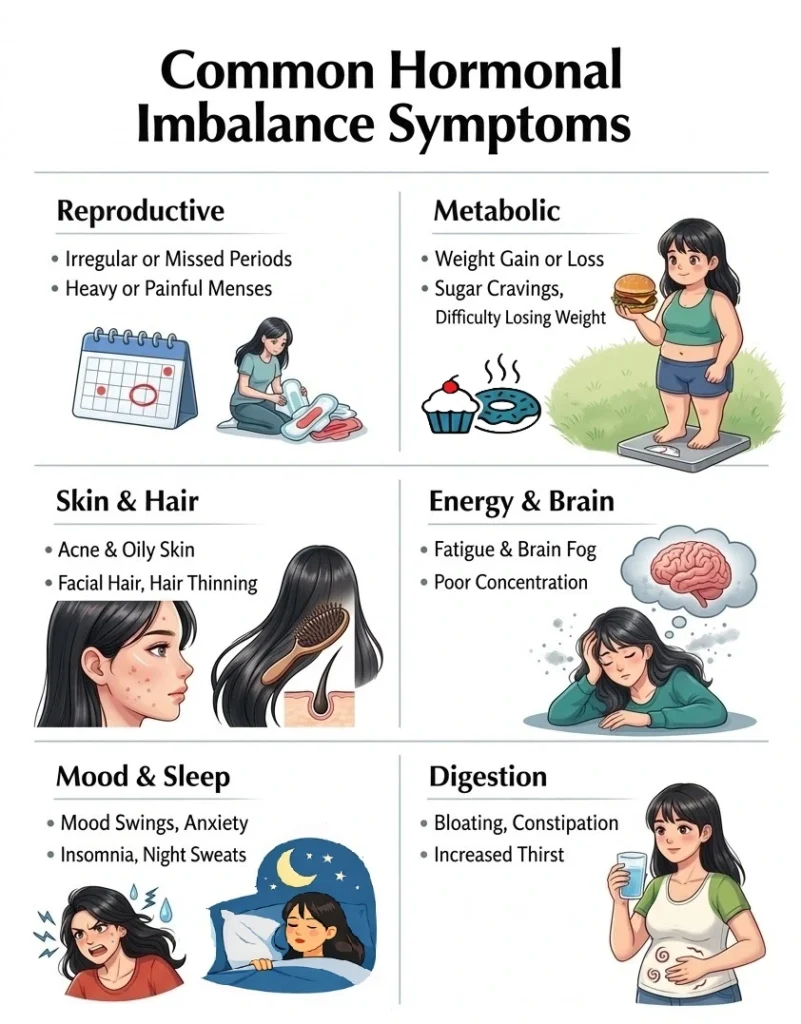
Hormones affect many systems, so the signals are varied and sometimes subtle. Look for patterns rather than isolated signs:
- Reproductive changes: irregular cycles, missed periods, very light or very heavy bleeding, painful menses or cycles that suddenly change.
- Metabolic signs: unexplained weight gain or loss, difficulty losing weight despite effort, persistent sugar cravings, or changes in appetite.
- Skin and hair: stubborn acne (face, back, shoulders), oily skin, excess facial hair in women, or hair thinning.
- Energy and cognition: chronic fatigue, “brain fog”, slowed thinking or poor concentration.
- Mood and sleep: mood swings, heightened irritability, anxiety, insomnia or night sweats.
- Digestive and fluid changes: bloating, constipation, increased thirst or fluxes in bowel habits.
When several of these occur together, they are less likely to be a coincidence and more likely to reflect a systemic hormonal disturbance.
Why hormonal imbalance happens
To reverse the imbalance, we must attend to the root causes rather than only quieting symptoms. From the Ayurveda perspective, the concept of Agni (metabolic fire) plays a vital role. When digestion and transformation of tissues become weak, metabolic waste products calledAma accumulate and interfere with the normal routes through which hormones and nutrients act. In the context of contemporary medicine, this translates into
- Thyroid abnormalities such as hyper- and hypothyroidism affect the metabolic rate and energy status of the body.
- Polycystic Ovary Syndrome (PCOS) is associated with irregularities in the reproductive system and insulin resistance, androgens, and hormones.
- Stress and the hypothalamic-pituitary-adrenal axis affect the hypothalamus and lead to cortisol-related imbalances.
- Insulin resistance due to improper diet and lack of exercise leads to imbalances in sex hormones and fat distribution.
- Environmental toxins, circadian disruption (irregular sleep), and certain medications can also be causes of hormonal imbalance.
Role of doshas
The differences between Vata, Pitta, andKapha symptoms are rooted in their distinct biological roles. Vata is responsible for movement and coordination, Pitta controls transformation and metabolism, and Kapha brings about structure and stability. When these three doshas become imbalanced, there are certain symptoms that occur in terms of hormonal and physical well-being.
- Vata – Irregularity, dryness, anxiety, painful menstruation, variable appetite.
- Pitta – Heat, acne, clotted menstruation, irritability, excessive digestion.
- Kapha – Sluggishness, gain in weight, mucousy discharges, long menstruation, low mood.
This dosha lens guides dietary choices, activity, and calming or stimulating interventions depending on the person.
Everyday reasons for hormonal imbalance
While some drivers are genetic or unavoidable, many common reasons for hormonal imbalance are behavioural and reversible.
- Diets high in processed foods, sugar, or fried or stale foods (blunt metabolism).
- Irregular meal timings and prolonged fasting without medical supervision.
- Sedentary lifestyle and low muscle mass.
- Poor sleep habits and late-night light exposure.
- Chronic psychological stress and poor stress-management skills.
- Environmental exposures and supplementation without supervision.
Addressing these practical factors often yields the most immediate improvements.

How to control hormonal imbalance?
By following “Nidana Parivarjana,” which means removing lifestyle factors—like stress and a poor diet—that caused the issue, one can aid in balancing hormones. Healing requires a combined focus on digestion, circulation, nervous system resilience, and targeted nourishment. Here are concrete, dosha-aware strategies:
- Rekindle Agni
Warm, freshly cooked, easily digestible food is recommended. Include spices that help digestion: ginger, cumin, coriander, fennel. Avoid foods that cause Ama: heavy, cold, and processed food. Eating at regular intervals helps stabilise insulin and circadian hormone balance. Eat your largest meal when your digestive fire is strongest (usually midday).
- Regular routine
A daily routine soothes the nervous system and regulates the endocrine system. Go to bed and wake up at the same time every day. If you can, go to bed before 10-11 pm and avoid eating too close to bedtime. Daily self-care like Abhyanga (oil therapy) soothes Vata and nourishes the skin.
- Move with purpose
Balance activity. For instance, brisk walking or sun salutations in the morning, strength training to boost metabolism, and restorative yoga or gentle stretches on other days. Avoid excessive high-intensity activity if you’re chronically fatigued, as it could worsen cortisol levels.
- Targeted nutrition
Include nutrient-dense foods like leafy greens, legumes, whole grains, sesame seeds, flaxseeds, almonds, and iron-rich foods like dates, millets, and beans. Healthy fats (ghee, olive oil) are essential for hormone synthesis. When appropriate, include phytoestrogenic foods (flaxseed, fenugreek) and adaptogens. Always consult a physician before consuming the herbs or supplements for personalising them.
- Stress management
Daily breathing (pranayama), short meditations, and progressive muscle relaxation reduce HPA-axis overactivity. Even five minutes of breathwork after meals supports digestion and mood.
- Gentle detox and clearance
For deeper Ama, supervised detoxification (guided Ayurveda Panchakarma therapies) helps. Simple daily habits like drinking warm water, waking early, increasing dietary fibre, and adequate hydration support natural elimination.
When to seek medical care
To conclude
References
- Urs PC, Ajayamalatesh NM, Prashant MB. An Ayurvedic holistic approach in achieving hormonal balance in a co-existing condition of PCOS and Hypothyroidism – A Case Report. J Ayu Int Med Sci. 2025;10(1):264-267.
- Palla S, Kulkarni M, Khot B. A comprehensive conceptual analysis of PCOS in Ayurvedic perspective. Int J Ayurveda Sahiti Prabha’s. 2025;16(4).
- Chaurasia MD, Patil SB, Shirin MA. A conceptual analysis of dhatvagni dysfunction as a root mechanism in endocrinal disorders: an integrative ayurvedic perspective. Ayurline: Int J Res Indian Med. 2026;10(02).
- Rakshith K, Subash Chandra Bose M. Ayurvedic Insights on Thyroid Imbalances. J Chem Health Risks. 2025 Aug 26;15(4).
- Katole UM, Ovar DD, Shinde MM, Deshmukh GS. Ayurveda view on common menstrual disorders, causes, symptoms and management. World J Pharm Med Res. 2021;7(9):1630749873.