Why do so many people feel tired, stressed, and mentally overloaded even when everything seems “normal” on the outside? – It’s worth taking a moment to ask yourself this simple question during Stress Awareness Month 2026 (April).
The answer is in the type of stress that life today causes. It’s a steady build-up from screens, noise, deadlines, lack of sleep, irregular meals, and emotional exhaustion. Over time, such stress affects more than just the mind; it also affects digestion, immunity, sleep quality, and overall health. Ayurveda offers a useful, tried-and-true way to understand and address this imbalance. In this blog, let’s learn how to reduce stress, Ashwagandha for stress, and other stress management in Ayurveda.
Why stress is different in 2026
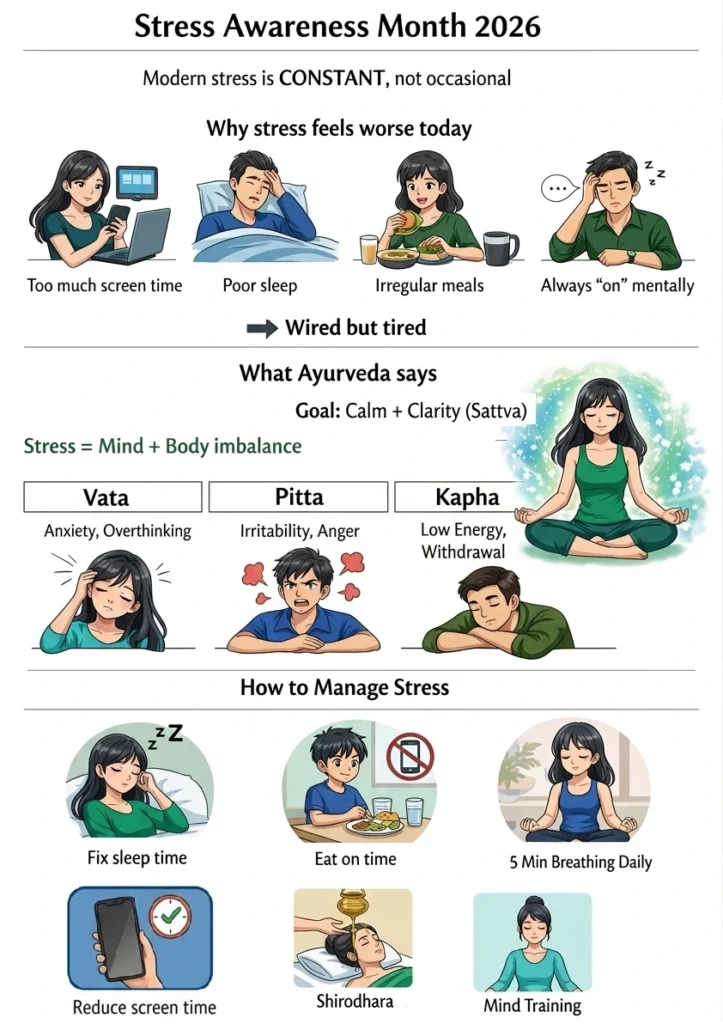
Being around screens all the time keeps the mind alert. Too much digital stuff makes it hard to tell when you’re working and when you’re resting. Not getting enough sleep, missing meals, and holding back your feelings make the problem worse. The result is not only tiredness but also a feeling of being “wired and tired” in the mind.
Ayurveda says that this state is very similar to Udvega, where the mind is disturbed and becomes restless. It often stems from Prajnaparadha, which refers to using your mind incorrectly and ignoring what your body and mind truly need.
Some common examples are going to bed too late, eating at odd times, keeping your mind active long after your body is tired, and pushing through stress without taking a break.
Stress management in Ayurveda
- An imbalance in Vata can cause anxiety, racing thoughts, fear, dryness, light sleep, and a lack of focus.
- Pitta imbalance can show up as anger, irritability, frustration, acidity, heat, and impatience.
- Kapha imbalance can cause feelings of heaviness, a lack of motivation, withdrawal from social interactions, laziness, and comfort eating.
- ‘Sattva’ means clarity, balance, and stability.
- ‘Rajas’ means being restless, agitated, or overly active.
- ‘Tamas‘ means tiredness, dullness, and lack of energy.

How to deal with stress
- Satvavajaya (mind training): counselling, mindfulness, cognitive reframing, and meditation to calm thoughts and foster clarity.
- Yuktivyapashraya (lifestyle & medicines): diet adjustments, sleep rules, adaptogens, and medhya rasayanas that support brain health and resilience.
- Daivavyapashraya (spiritual practices): simple chanting, guided breathing, or prayer if it aligns with you — to deepen inner calm.
Ashwagandha for stress
One of the most popular Ayurveda ways to build resilience is to use Ashwagandha for stress. It has been valued for a long time for helping to keep you healthy, making it easier to deal with stress, lowering tiredness, and helping the body get used to being under a lot of stress for a long time.
Ayurveda sees herbs like Ashwagandha as part of a larger approach to rejuvenation, not as a quick fix. The right formulation depends on the person’s body type, how well they digest food, how well they sleep, and how much stress they are under overall.
Shirodhara for stress
Restorative therapies can work very well when stress has become deeply ingrained in the nervous system. One such treatment is shirodhara for stress.
It involves a gentle stream of warm oil being poured over the forehead, which has a very calming effect on the mind and nervous system.
People often use it when they have racing thoughts, difficulty sleeping, mental unrest, long-term stress, or trouble turning off their minds.
Practical therapies often recommended are Abhyanga (oil therapy) for deep relaxation, Shirodhara for insomnia and racing thoughts, and Akshi tarpana for digital eye strain. These are soothing and restorative, and, importantly, they teach your nervous system how to come back to balance.
Satvavajaya for burnouts
Ayurveda also stresses mental discipline through Satvavajaya. This includes counselling, changing the way you think, being aware of your feelings and thoughts, and fixing bad habits.
Satvavajaya is especially helpful for people dealing with digital burnout by helping them overcome overstimulation and emotional drain. It pushes better limits by making decisions with greater awareness, being less quick to react, and having more self-awareness.
Easy Ayurveda tips for daily life
You don’t have to change your whole life to feel better. Changes that are small and consistent are better than big, short-term ones.
- Change one habit related to sleep. Go to bed at the same time every night. Use screens less before bed. Even getting up 15 minutes earlier can help.
- Breathe every day. Practice Nadi Shodhana, or alternate nostril breathing, for five minutes. This helps keep the nervous system steady.
- Eat more often. Don’t skip meals. Don’t eat quickly. Try to keep your meals calm.
- Set limits on your digital life. Every night, turn off notifications for at least one stretch of time. Set aside one time each day when you won’t use a screen.
- Provide the mind with fewer things to think about. Don’t do more than one thing at a time. Cut down on unnecessary stimulation. Make room for quiet.
These are simple but effective ways to lower stress without making your day harder.
Signs that your body might need help
Stress often shows up before things get really bad. Some common signs are not getting enough sleep, tightness in the chest, tension in the muscles, upset stomach, being irritable, tiredness, not being able to focus, being emotionally reactive, and feeling “burnt out” even after taking a break.
If these signs don’t go away, it’s important to deal with the underlying problem instead of just the symptoms.
How Apollo AyurVAID helps people deal with stress
The stress program at Apollo AyurVAID is tailored to each person and uses a mix of therapies. The goal is to help things get back to normal in sleep, digestion, how the nervous system works, controlling your emotions, and strength over time.
Depending on what you need, this approach may be available in different ways: a short sample for busy people, a reset that lasts 3 to 7 days, or a longer, customised program for people who are always tired.
How improvement might look
- In the first few weeks, you may notice more sleep, less stress, calmer mornings, and less mental restlessness.
- In 1 to 3 months, there may be better mood stability, better digestion, more power, and clearer thoughts.
- For three to six months, there may be more emotional strength, better ability to deal with stress, better recovery after stress, and a more stable sense of well-being overall.
Conclusion
Stress awareness month 2026 is a reminder that being stressed doesn’t mean you’re weak. It is a sign. The mind and body want to be healed.
Ayurveda gives us a clear, kind, and useful way to move forward. Stress management in Ayurveda helps us deal with the underlying causes of imbalance instead of just hiding the symptoms.
Healing is possible through daily actions like ashwagandha for stress, shirodhara for stress, better sleep, breathing exercises, or just setting digital boundaries.
Ayurveda can help you deal with stress and find a long-term solution to it. It can also help you get back to clarity, resilience, and inner balance.
References