Grishma Ritu, or summer, is the season when heat becomes intense, moisture drops, and the body begins to feel the strain of the environment. Many people notice dryness, redness, acne, sun tanned skin, sun spots on skin, irritation, burning, and even sun allergy skin. These are not just cosmetic concerns; they are often signs that Pitta is rising because of heat and Vata is increasing because of dryness.
From an Ayurveda point of view, glowing skin in summer is not created by external products alone. It is a reflection of the digestive process, the level of hydration, the level of sleep, and the balance of the doshas. If the Agni is stable and the doshas are balanced, the tissues are well-nourished and the skin is calm, smooth, and glowing. This is the reason why it is vital to know how to protect the skin from sun and how to care for the body from the inside in the summer months.
Is sun good for skin?
Understanding summer skin through Ayurveda
According to Ayurveda, skin health depends on the balance of Vata, Pitta, and Kapha. In the summer, Pitta becomes the main concern because of its hot and sharp qualities. When Pitta increases, the skin may become red, sensitive, inflamed, or prone to breakouts. People with a Pitta constitution often notice that their skin reacts quickly to heat and sunlight, leading to flared-up eczema,prickly heat, etc., skin conditions.
At the same time, summer dryness can aggravate Vata. This may show up as roughness, flaking, loss of softness, fine lines, or a worn appearance. In some individuals, there may also be oily breakouts combined with dehydration underneath. That is why summer skin care must be cooling, hydrating, and gentle.

How to protect skin from the sun naturally
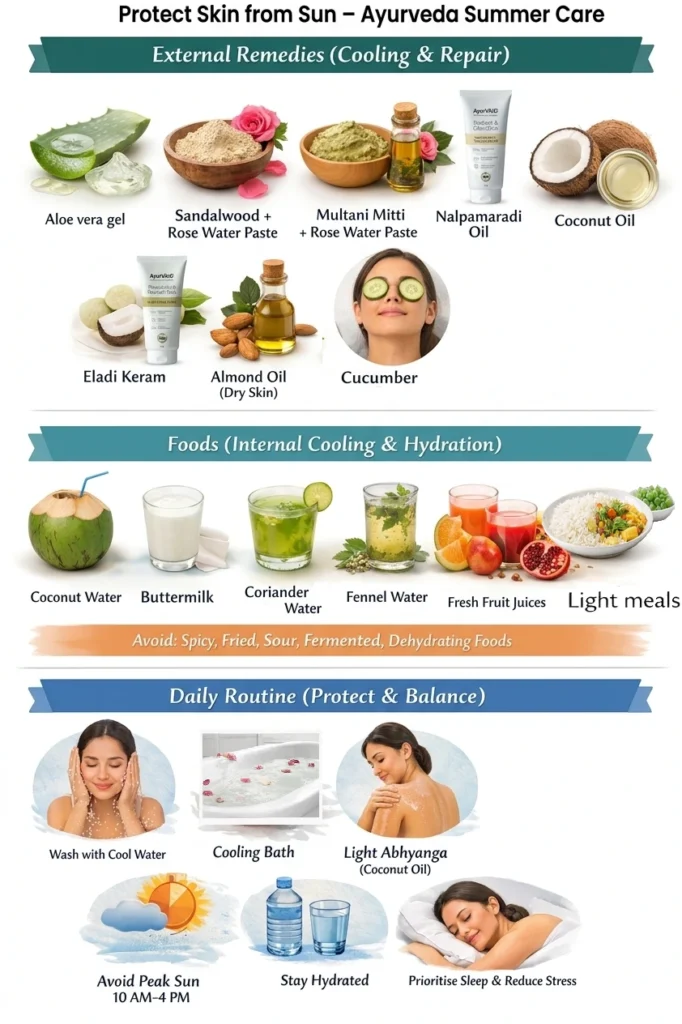
If you are wondering how to protect skin from sun, the first principle is to reduce unnecessary exposure. Avoid standing in direct sunlight during peak hours, usually between 10 a.m. and 4 p.m. Use protective clothing, a hat, sunglasses, and breathable natural fabrics whenever possible.
Ayurveda recommends the use of cooling external applications before exposure. A simple lepa made with sandalwood, liquorice (Yashtimadhu), or red sandalwood can help soothe the skin and reduce heat. These ingredients are traditionally valued for their cooling and complexion-supporting properties.
You may also combine modern sun care with Ayurveda wisdom. A mineral sunscreen containing zinc oxide can be useful for physical protection, especially when used consistently. Ayurveda herbs such as Amla (Indian gooseberry) and saffron (Kumkuma) may support skin comfort and antioxidant defence when included in a broader routine.
Cooling drinks, balanced meals, and reduced intake of spicy, sour, and salty foods can help calm Pitta from within. This matters because skin often reflects internal heat before it becomes visible externally.
Sun damaged skin and how Ayurveda helps
When the skin is repeatedly exposed to intense heat and ultraviolet radiation, it may begin to look dull, rough, pigmented, or prematurely aged. This is often described as sun damaged skin. In Ayurveda, this is related to heat stress, tissue depletion, and Pitta imbalance.
- To assist in recovery, the skin should be cooled, moisturised, and protected from further strain.
- Fresh aloe vera gel can be used to soothe and moisturise.
- Sandalwood paste mixed with rose water is another good option.
- Multani mitti can be applied along with rose water.
- Nalpamaradi oil is traditionally used at night to support glow, pigmentation balance, and tissue nourishment.
For dry or rough skin, gentle oiling can be helpful. Coconut oil or Eladi Keram is generally cooling and suitable for people with heat-prone skin.
For those with very dry skin, almond oil or a small amount of sesame oil may be used with care, depending on individual skin type.
How to Treat Skin Burn in Summer: Home Remedies & First Aid
Skin burns during summer are quite common, especially with prolonged sun exposure, heat, or accidental contact with hot surfaces. They may start as redness or irritation but can quickly become painful if not managed early. Quick and simple care can help calm the skin and prevent further damage.
Some effective home remedies that are commonly used include:
• Cool water application
Running cool (not cold) water over the affected area helps bring down heat and prevents the burn from worsening.
• Aloe vera (Kumari)
Fresh aloe vera gel is often applied for its cooling effect, which helps soothe irritated skin and reduce redness.
• Cold compress
A clean, damp cloth placed gently over the burn can provide relief from pain and inflammation.
• Coconut oil
Once the initial heat settles, a light layer of coconut oil can help keep the skin moisturised and support healing.
• Honey
Applied in small amounts, honey is traditionally used for its soothing and protective properties on minor burns.
Sunspots on skin and pigmentation care
Many people develop sun tanned skin during summer, especially after regular outdoor activity. A tan is the skin’s protective response to UV exposure, but when it becomes uneven or persistent, it can make the face look dull and tired. Dark patches, freckles, and post-sun pigmentation are also common. These may be seen as sun spots on skin or uneven skin tone. Ayurveda often associates this with Vyanga, a condition marked by pigmentation and discolouration.
Ayurveda recommends cooling and soothing measures rather than harsh bleaching or scrubbing.
- Herbs with complexion-supporting and blood-cleansing properties are prescribed.
- External application of Kumkumadi oil is also widely used in traditional skin care for pigmentation support.
- The paste made by mixing masoor dal and milk may be used gently as a face pack to enhance the complexion.
- Aloe vera gel is also helpful. It not only soothes the skin but also hydrates it.
- Cucumber is another simple option that gives the skin a refreshing, cooling effect.
The key is consistency and gentleness. Skin that is already heat-stressed should never be over-exfoliated or scrubbed.
Care for sun allergy skin
Some people develop itching, redness, rashes, or burning after sun exposure. This is often referred to as sun allergy skin. In Ayurveda understanding, this is commonly a sign of aggravated Pitta along with sensitive or reactive skin. For such skin, internal cooling is especially important.
Coriander water, fennel infusion, coconut water, and lightly spiced buttermilk may be useful. Avoiding excessive heat, sour food, fried food, fermented items, and dehydration can make a significant difference.
Topically, use only soothing and non-irritating preparations. Sandalwood, rose water, aloe vera, and cucumber are usually better tolerated than strong actives or harsh scrubs. If sun sensitivity is severe or recurrent, medical evaluation is important.
A summer-friendly Ayurveda diet for glowing skin
Diet is one of the most powerful tools for skin care. In Grishma Ritu, the digestive fire, or Jatharagni, is usually lighter. This means the body cannot tolerate heavy, oily, spicy, or excessively fermented food as well as it does in cooler seasons.
Choose foods that are Madhura (sweet), Sheeta (cooling), Snigdha (unctuous), and Drava (fluid). Coconut water, buttermilk, fresh fruit juices, ripe mango in moderation, and pomegranate juice can help replenish fluids and support skin vitality.
Meals should be light but nourishing. Rice, lentils, soft-cooked vegetables, and a little ghee can support internal moisture and prevent dryness. At the same time, avoid eating too much chilli, pickles, sour curds, deep-fried snacks, and dehydrated foods.
Natural Summer Skin Care Routine: Home Remedies That Work
A steady routine keeps the body balanced. Begin the day by washing your face with cool water.
- If the skin is sensitive or acne-prone, an Amalaki infusion may be used gently.
- A cooling bath with natural water, or water infused with rose petals, can help reduce body heat and refresh the skin.
- Abhyanga with cooling oil, such as coconut oil, is often preferred for heat-prone skin. Massage the face and body lightly before bathing to support softness and circulation.
- Overexertion in peak heat can worsen dehydration and skin irritation.
- Sleep, hydration, and stress control are also important because the skin often reacts to internal strain before other symptoms appear.
Ayurveda vs. Conventional Skin Care in Summer: What's Different
Summer skin care is not just about managing sweat or oil. Heat, sun exposure, and dehydration can affect the skin in different ways. While both Ayurveda and conventional skin care aim to protect the skin, their approach and focus are quite different.
The key differences can be understood across a few areas:
• Approach to treatment
Ayurveda focuses on balancing the body, especially pitta dosha, which tends to increase in summer and leads to heat-related skin issues. Conventional skin care usually targets visible concerns like tanning, acne, or sunburn with specific products.
• Type of ingredients used
Ayurvedic care relies on natural ingredients like aloe vera, sandalwood, rose, and herbal oils known for their cooling and soothing properties. Conventional products often include active ingredients such as SPF filters, retinoids, or chemical exfoliants designed for faster results.
• Focus on root cause vs. symptoms
In Ayurveda, the aim is to address the internal imbalance that shows up on the skin. Conventional skin care typically works on reducing or managing external symptoms directly.
• Speed of results
Ayurvedic methods tend to work gradually, supporting long-term balance and skin health. Conventional treatments often provide quicker, more visible changes in a shorter time.
• Daily routine and lifestyle
Ayurveda places importance on diet, hydration, and daily routines along with topical care. Conventional skin care is more product-focused, with routines built around cleansers, serums, and sunscreens.
• Suitability for skin types
Ayurveda customizes care based on prakriti (body type), while conventional skin care categorizes skin as oily, dry, or combination and treats accordingly.
Both approaches have their place. Many people find that combining simple Ayurvedic practices with essential modern care, like sunscreen, works well during summer. The goal is to protect the skin, keep it balanced, and avoid unnecessary irritation during hotter months.
Final thoughts
Preventing excessive contact and managing post-exposure damage are essential components of a healthy summer routine for skin. It is about doing the right things consistently. A calm Pitta, balanced Vata, good digestion, proper hydration, and careful sun protection all contribute to a naturally glowing complexion.
References
- Datta HS, Paramesh R. Trends in aging and skin care: Ayurvedic concepts. J Ayurveda Integr Med. 2010;1:110-3.
- Kumar S, Palbag S, Maurya SK, Kumar D. Skin care in Ayurveda: A literary review. Int Res J Pharm. 2013;4(3):1-3.
- Patil SS, Desai RI. A review on Yuvanpitika with special reference to Acne Vulgaris. 2023.
- Sharma P, Sharma MK. Significance of Ayurvedic Cosmetology in Contemporary Context: A Critical Review. 2024.
- Gathe K, Damle R. Back to Basics: A Review on Skincare by Ayurveda vis a vis Contemporary Science. J Ayurveda Integr Med Sci. 2024;3:186-193.