World Thyroid Day is a good reminder that the thyroid is small, but its influence is not. It affects energy, weight, mood, temperature, digestion, menstrual health, heart rate, and even clarity of thought. When the thyroid slows down, life can begin to feel heavy, dull, and unexplained. When it becomes overactive, the body can feel restless, overheated, and overstimulated. Both situations deserve attention.
Signs That Should Not Be Ignored
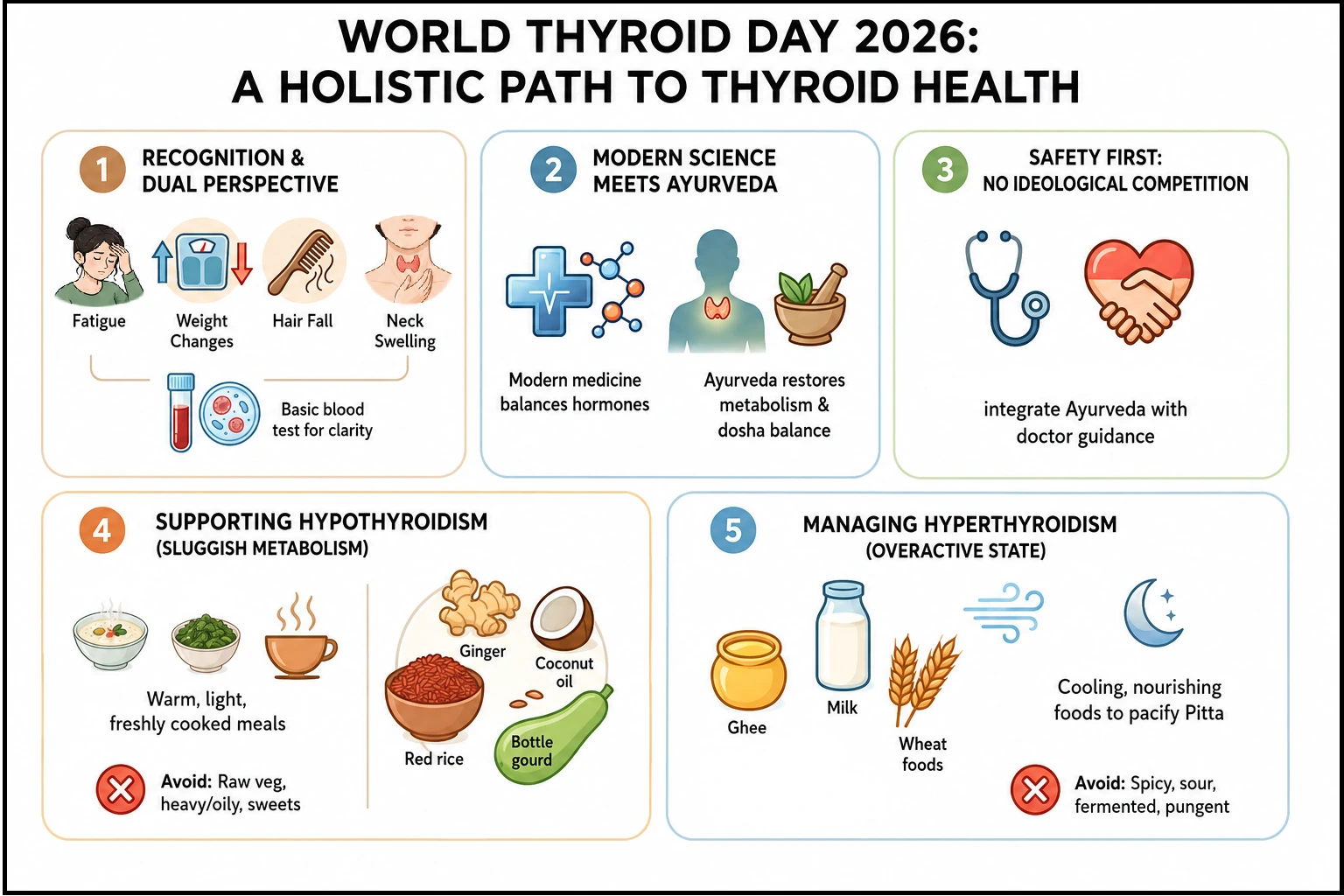
On this World Thyroid Day 2026, the message is simple: Do not ignore persistent symptoms. Fatigue, unexplained weight gain or weight loss, constipation, palpitations, hair fall, neck swelling, anxiety, cold intolerance, or irregular periods may all be clues. A basic blood test can often bring clarity. Early testing matters because thyroid problems are common, and many people live with them for months or years without realising what is happening.
Modern Treatment Needs Consistency
Ayurveda and Galaganda Roga
Ayurveda looks at the same problem through a different lens. Enlargement in the neck region and thyroid imbalance are discussed under Galaganda Roga. In Ayurveda, this pattern often reflects disturbance in Kapha and Vata, with digestion and metabolism also becoming sluggish. That is why thyroid-related care in Ayurveda does not begin and end with a single herb. It usually involves food, daily routine, digestive support, and deeper correction of the underlying imbalance.
Ayurvedic Medicine for Thyroid
Many patients ask for Ayurvedic medicine for thyroid issues. The honest answer is that there is no single solution. The best medicine is the one chosen after understanding the person, not just the lab report. Ayurveda physicians may consider classical formulations along with other supportive medicines depending on the clinical picture. These are used with the intention of reducing swelling, supporting metabolism, and correcting the sluggishness often seen in hypothyroid states. But they should not be self-started, especially when a person is already on thyroid medication.
Ashwagandha and the Need for Careful Use
One herb that receives attention in the literature is Ashwagandha. A randomised, placebo-controlled trial reported an improvement in thyroid indices in people with subclinical hypothyroidism after Ashwagandha root extract was used for eight weeks. That is encouraging, but it does not mean the herb should replace standard care. It means we should remain open-minded while staying careful. Supplements and herbs can help some patients but may also interact with medicines or be unsuitable in certain conditions. Thyroid care should always be supervised.
Allopathy vs Ayurveda for Thyroid
The question of allopathy vs Ayurveda for thyroid is often framed as a competition. In real life, it is better understood as a matter of sequence, safety, and integration. If someone has confirmed hypothyroidism and has been prescribed allopathic medicine, that treatment should not be stopped suddenly in the hope that an herbal remedy will “take over”. If someone is already under thyroid care and wants to include Ayurveda, that can often be done thoughtfully and safely, provided both systems of care are aware of each other. The goal is not ideology. The goal is stable health.
Thyroid – Food choices
In hypothyroidism, Ayurveda focuses on improving Agni, reducing Kapha, and preventing Ama formation. Warm, freshly cooked, light meals are preferred. Brown rice, millets, cooked greens, bottle gourd, pomegranate, buttermilk, ghee from cows moderately, and mildly spiced food items, such as ginger, cumin seeds, and Trikatu, can improve digestion and metabolism.
Heavy foods, stale foods, refrigerated foods, oily foods, sweets in abundance, poor dietary habits, fasting, and too many raw cruciferous vegetables should be strictly avoided.
While treating hyperthyroidism, the main focus is to pacify increased Pitta and nourish tissues that have been weakened. Cooling and nutritious foods, such as ghee, milk, and wheat-based foods, should be consumed, while spicy, sour, fermented, and highly pungent foods should be avoided.
Lifestyle changes also play a significant role. Regular walks, yoga, pranayama, adequate sleep, stress relief, and proper timings for eating meals prove beneficial.
Diet Support in Hypothyroidism
Panchakarma for Thyroid
What You Should Do
What should a person actually do? First, notice the signs. Second, test the thyroid rather than guessing. Third, follow the treatment plan consistently. Fourth, build a lifestyle that helps the body settle: sleep on time, move daily, manage stress, and eat in a regular rhythm. Fifth, if you are combining modern medicine with Ayurveda, keep both sides informed. This is especially important in thyroid disorders, because hormone balance can shift slowly, and changes in symptoms may not always be obvious right away.
A More Complete Path to Healing

References
- Dubey N, Ekta, Das JR, Bora GK, Rao BC, Srikanth N. Efficacy and safety of Ayurveda interventions for hypothyroidism in 18 to 60 years’ age-group: A systematic review protocol. J Res Ayurvedic Sci. 2019;3(3):112–6. DOI:10.5005/jras-10064-0084.
- Belaguli G, Brinda GM. Role of Ayurveda and its intervention in the management of Primary hypothyroidism: A case study. Indian J Ayurveda Integr Med KLEU. 2023 Jul.
- Vivek, Chougale A, Joshi H, Tubaki BR. Add on effect of Whole System Ayurveda protocol in suboptimal controlled Primary Hypothyroidism – A randomized controlled trial. J Ayurveda Integr Med. 2025 Jan 10;16(1):101052.
- Bisht S, Chauhan S, Singh NR. A clinical case study of hyperthyroidism and its ayurvedic management. Int J Res Ayurveda Pharm. 2024;15(1):5-8.
- Akshaya G, Mohan N, Saranya K. UNDERSTANDING HYPERTHYROIDISM, A ANUKTA VYADHI & ROLE OF EKAMOOLIKA PRAYOGAS IN THE SAMPRAPTI VIGHATANA. Int J Biol Pharm Allied Sci. 2022;11(12):5769-80.