Introduction
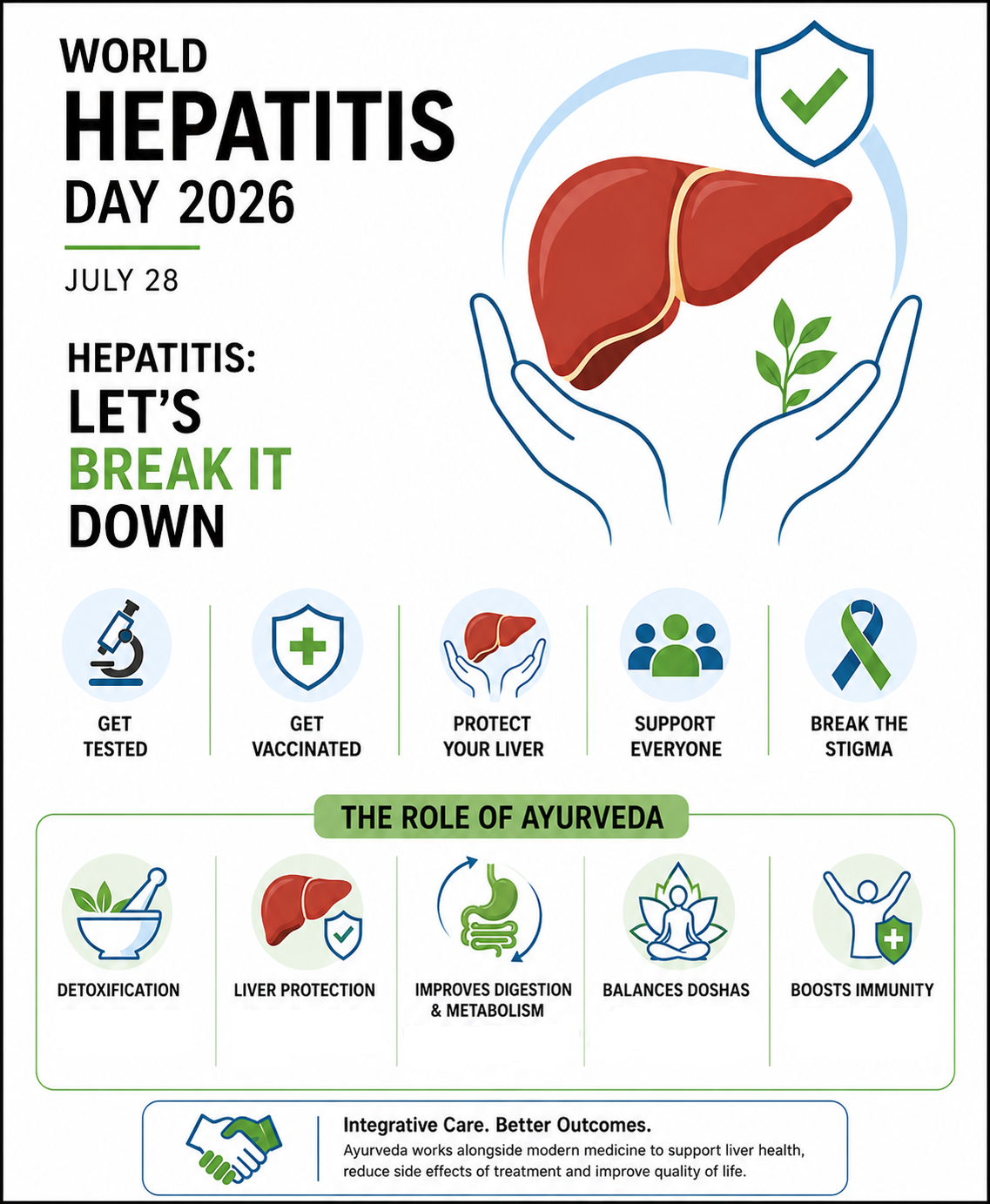
World Hepatitis Day 2026 is celebrated every year on July 28 to highlight the fact that viral hepatitis is still one of the leading causes of chronic liver disease but remains one of the most neglected. This year’s World Health Organisation (WHO) theme, “Hepatitis : Let’s Break It Down”, calls on us to break down the barriers that prevent timely diagnosis and effective treatment. These barriers include a lack of awareness, social stigma, delayed diagnosis, financial constraints and unequal access to quality healthcare.
Despite significant progress in medicine, many millions of people are living with hepatitis without even knowing they are infected. Most people seek medical help only when irreversible liver damage is already present. The good news is hepatitis can be prevented and treated. Early diagnosis, prompt care, and holistic support therapies can make a huge difference to liver health in the long term.

Hepatitis: A Hidden Worldwide Health Risk
The early stages of hepatitis are often referred to as a “silent disease” because many people do not experience any noticeable symptoms. “The most recent estimates globally suggest that almost 287 million people are living with chronic Hepatitis B or C, and around 1.3 million people die each year from hepatitis-related complications such as liver cirrhosis and liver cancer.
India continues to bear the burden of a high prevalence of Hepatitis B, estimated at between 2% and 7%. This means that millions of people could be carrying the infection without knowing it. That’s why World Hepatitis Day 2026 is so important: awareness, screening and early intervention can save lives.
Early Signs Matter
One of the main problems with hepatitis is that its symptoms can resemble common viral illnesses or a digestive upset. People often ignore them thinking they will get better on their own.
Some of the early symptoms are:
- Constant tiredness or fatigue for no obvious reason
- General lack of energy or weakness
- Mild fever, body aches
- Loss of appetite
- Occasional nausea or vomiting
- Bloating or indigestion
- A feeling of heaviness or discomfort in the upper right abdomen
When the inflammation of the liver worsens, more severe symptoms start to manifest. These include yellowing of the eyes and skin (jaundice), dark urine, pale stool, itchiness and unexplained weight loss.
Understanding Liver Health in Ayurveda
Many people on the internet search for hepatitis symptoms Ayurveda, hoping to learn about these warning signs in a holistic way.
In Ayurveda, the liver (Yakrit) is considered one of the most important organs responsible for metabolism, blood purification and maintaining overall vitality. It is closely related to Ranjaka Pitta, the functional principle responsible for healthy blood formation and transformation.
Impaired digestion leads to the accumulation of metabolic wastes (Ama), which disturbs Pitta and Rakta (blood tissue), eventually affecting Liver function. Disorders like Kamala and Yakrit Vikara describe conditions resembling hepatitis where inflammation, impaired metabolism and disturbed bile physiology play major roles.
The concept of Ayurveda liver health, therefore, goes far beyond the treatment of jaundice. It is directed at normalising digestive function, correcting metabolic imbalance, supporting liver regeneration and increasing the body’s natural healing capacity.
This approach is always tailored. Treatment will be decided after assessing the patient’s constitution (Prakriti), stage of disease, digestive strength, comorbidities, medications and general health condition.
Ayurveda for liver restoration
Ayurveda does not advocate for random detoxes or over-the-counter herbal cleanses. Liver problems need close medical examination and supervised treatment.
Virechana is one of the important Panchakarma procedures used for liver disorders when clinically indicated. It is a therapeutic purgation procedure to eliminate aggravated Pitta and metabolic toxins from the body.
Virechana is performed at Apollo AyurVAID as part of a protocol-based treatment plan under constant medical supervision.
The treatment is generally carried out in 3 carefully planned stages.
The first step is to prepare the body through internal oleation with medicated ghee and external therapies that help to mobilise accumulated toxins.
The second stage is the main Virechana process, in which selected medicines induce a controlled therapeutic purgation. This helps to eliminate aggravated Pitta and metabolic wastes via the gastrointestinal tract.
The third phase is recovery. After cleansing, digestion becomes delicate for a while, and the patient is put on a carefully graded diet, which gradually restores digestive strength and metabolism.
This approach is very different from the commercialised detox programmes that are advertised. It is individually tailored, evidence-based and only carried out after an assessment of whether the patient is medically fit for the procedure.
Studies have shown improvements in liver function parameters, including liver enzyme levels, in properly selected patients undergoing Ayurveda interventions. But the results depend on the severity of the disease, overall health and how well a person sticks to treatment.
The Difference Is an Integrated Approach
One of the most encouraging trends in liver care is the increasing acceptance of integrative medicine.
Modern antiviral drugs are still the primary treatment option for chronic Hepatitis B and Hepatitis C. They help to inhibit virus replication, reduce disease progression and prevent complications.
At the same time, Ayurveda’s emphasis is on improving longevity, providing digestive and metabolic support, enhancing recovery and improving quality of life.
At Apollo AyurVAID, Ayurveda treatment is used as an appropriate integrative approach where conventional treatment and protocol-based Ayurveda complement each other under medical supervision.
Depending upon the condition of the patient, a combination of carefully selected Ayurveda medicines, dietary modifications, lifestyle interventions and Panchakarma therapies may help:
- Help support healthy liver function
- Enhance digestion and metabolism
- Reduce the inflammatory load
- Improve general well-being
- Support enhanced recovery along with standard care
This collaborative model will allow patients to benefit from the strengths of both systems while securing safety and scientific accountability.
Overcoming the Barriers
The World Hepatitis Day 2026 Theme is not just a slogan; it is a call to action:
Breaking down barriers for hepatitis elimination means affordable testing, better vaccination coverage, early screening, less misinformation and quality healthcare for all.
Simple preventive measures can have a significant impact:
- Get a Hepatitis B vaccination
- Use safe injection and blood transfusion practices.
- Do not share needles or personal grooming items.
- If you have ongoing symptoms of a liver problem, see your doctor.
- If you are in a high-risk group, get screened.
Follow the entire course of treatment as prescribed and make regular follow-up visits.
Conclusion
On World Hepatitis Day 2026, let’s remember: hepatitis is no longer a disease to fear – it’s a disease to detect early, understand better and treat properly.
If you have persistent tiredness, digestive problems, jaundice or other worrying symptoms, don’t ignore them. Early diagnosis is the strongest predictor of better outcomes.
Ayurveda liver health is about restoring balance, supporting liver function and improving overall health through scientifically guided protocol-based care. Through an integrative approach, Ayurveda can make a significant contribution to total liver care.
This World Hepatitis Day 2026, let’s really “break it down”—the myths, the stigma, and the barriers to timely care—so more people can live healthier lives with healthier livers.