Introduction

Understanding the Disease
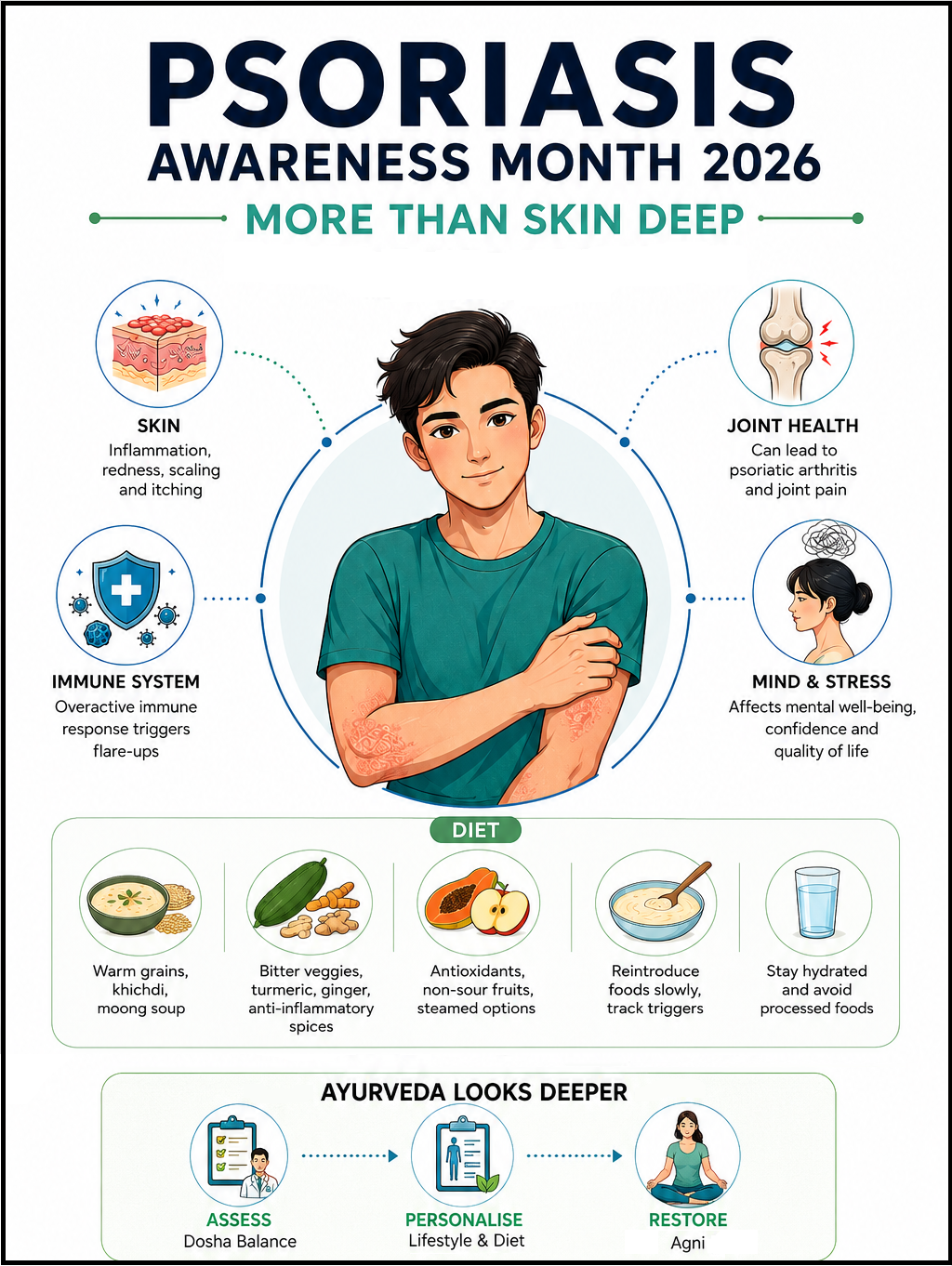
Psoriasis (referred to as “Kitibha Kushtha” or “Ekakushta” in Ayurveda) is a disorder of the immune system that causes skin cells to grow 10 times faster than normal. This produces the classic red patches of inflamed skin covered with silvery scales that often appear on the elbows, knees and scalp.
The visible signs, however, are only half the story. The scales are caused by chronic inflammation, which can lead to psoriatic arthritis attacking the joints and mobility. Surface symptoms are usually treated with steroids or immunosuppressants. Though they can offer temporary relief, many patients want a more sustainable option, such as psoriasis Ayurvedic treatment which addresses root-cause reversal and long-term health.
Why August?
The Ayurveda Point of View: It Starts Inside
According to Ayurveda, the health of the skin reflects the internal balance. The aetiology of psoriasis is considered a complex interaction of physiological and lifestyle factors. It is basically due to an imbalance of Vata andKapha doshas. The involvement ofPitta dosha leads to an inflammatory response.
When our Agni (digestive fire) is low,Ama (metabolic toxins) can build up. These toxins circulate in the blood (Rakta) and get lodged in the skin tissues, clogging channels and leading to accelerated cell turnover, which results in plaques. So a good Ayurveda treatment for psoriasis must concentrate on internal purification rather than application of creams on the skin.
The Pillar of Healing: Panchakarma therapy
Panchakarma is a disciplined detoxification protocol that is an integral part of the success of psoriasis Ayurvedic treatment. It is meant to flush out deep-rooted impurities from the body. This is not a generic “detox” but rather a specific protocol-based journey:
1. Poorvakarma (Preparation): This involves awakening the digestive fire and Snehapana (internal oleation with medicated ghee) to loosen the toxins.
2. Pradhanakarma (Main Detox): Depending on your individual dosha imbalance, your doctor may suggest Vamana (therapeutic emesis) if you have a Kapha-dominant constitution or Virechana (purgation) to purify the blood and liver of excess Pitta.
3. Paschatkarma (Post-Treatment Care): This phase of cure is very important to consolidate the gains through specific diets and rejuvenative medicines.
Clinical case studies have demonstrated that following this intensive Ayurveda treatment for psoriasis, patients frequently experience a dramatic reduction in their PASI scores (a measure of disease severity) – from severe 21.2 to near-clear 1.1 in only 28 days.
The Power of Your Plate: Your 7-Day Reset
Ayurveda teaches that food can be medicine or poison. Pathya (wholesome diet) is an essential component of psoriasis Ayurvedic treatment. Based on these principles, here’s a practical 7-day diet reset to kick off your healing this month:
Day 1-2: Stick to warm, freshly cooked grains like millet or red rice and khichdi (moong-based soups).
Day 3-4: Add skin-friendly, bitter vegetables like bitter gourd and use anti-inflammatory spices like turmeric and ginger.
Days 5-6: Focus on antioxidants with non-sour fruits such as papaya or steamed apples.
Day 7: Reintroducing single food items slowly. Keep a food diary to find out your personal triggers.
During this reset avoid Apathya (unwholesome) triggers like red meat, dairy (especially curd), highly processed snacks, alcohol, and incompatible combinations like milk with fish or sour fruits. Regularity in your diet is often the key to the longevity of any Ayurveda treatment for psoriasis.
The Mind-Skin Link
We cannot discuss Ayurveda treatment for psoriasis without also discussing stress. Psychological triggers are potent precipitants of flares. Stress moves from the head to the nervous system and then to the skin.
There are therapies such as Takra Dhara, where medicated buttermilk is poured in a steady stream over the forehead, to soothe the nervous system and calm the mind. Yoga, pranayama (breathing exercises) and regular sleep every day can be a natural defence mechanism to fight the internal stress that aggravates psoriasis.
Celebrating Awareness Month 2026
What can you do to take action this August?
- Think About Well-being: If you’ve been living with the condition, take this time to review your current plan. Right, so is it tackling the cause?
- Educate Others: Use your story or facts-based infographics to dispel myths and reduce the stigma around the “relentless itch”.
- Ask for Help: You don’t need to do this alone. Contact us for specialised psoriasis Ayurvedic treatment that sees you as a whole person – your digestion, your sleep, and your story.
- Donate: Help organisations like the National Psoriasis Foundation fund vital research and advocacy.
A Message of Hope
Psoriasis is a chronic disease, but it doesn’t have to define your life. Many patients find that Psoriasis Ayurvedic treatment offers longer periods of remission and a renewed sense of confidence in their own skin. We hope this August brings you a healing path as unique as you are.
Disclaimer: Always consult a qualified Ayurveda practitioner or physician before starting any new treatment.