Breastfeeding is more than just a way to feed a newborn. It is a biological, emotional and very nurturing process that defines the health of both mother and baby. As we celebrate World Breastfeeding Week (August 1-7), we should recognise that exclusive breastfeeding is the best option for infant nutrition. Ayurveda for breastfeeding, in conjunction with modern medical guidance, offers a holistic strategy that supports lactation, maternal recovery, digestion, mental health, and the mother-infant bond.
In Ayurveda, breast milk is called Stanya and is an Upadhatu (secondary tissue) of Rasa Dhatu (nutrient plasma). So, the quality of breast milk is directly related to the mother’s digestion, nutrition, hydration, sleep and mental condition. A mother who is well nourished with a balanced digestive fire (Agni) is better able to make high-quality milk from her food for the baby.
Ayurvedic care for breastfeeding mother is not about taking a single herb or home remedy. It is about creating the right internal environment for healthy lactation through food, routine, rest, warmth and emotional support.

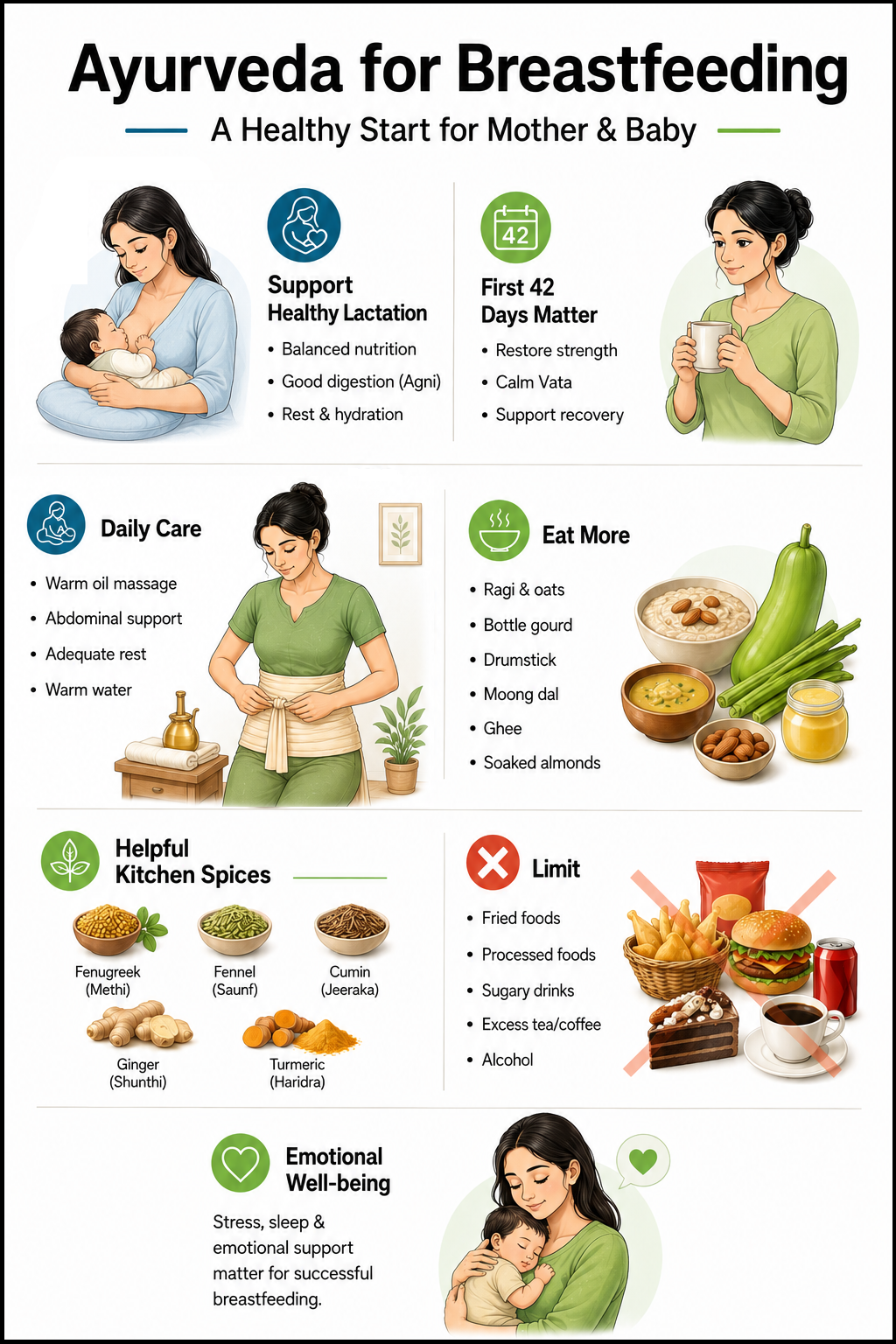
Significance of the First 42 Days
The postpartum period (Sutika Kala) is of special importance in Ayurveda. These first 42 days are the rebuilding phase. After childbirth, the body undergoes major physiological changes, and it is natural for Vata Dosha to dominate. Without proper support, this can contribute to fatigue, anxiety, disturbed sleep, body aches, constipation and an inconsistent milk flow.
Here, the role of Ayurveda in postpartum lactation care is particularly important. The aim is not only to increase milk production but also to restore strength, improve digestion, support hormonal balance and protect the mother’s vital energy (Ojas).
A Gentle Routine of the Day
One of the important benefits of Ayurvedic care for breastfeeding mothers is the emphasis on routine.
Abhyanga (Warm Oil Massage)
A daily massage with warm sesame-based oils such as Ksheerabala helps to calm the nervous system, improve circulation, reduce muscular fatigue and promote relaxation. Many mothers say that regular massage helps them feel emotionally grounded as well during the difficult postpartum period.
Abdominal support (Udara Veshtana)
A soft cotton cloth, used to gently support the abdomen, can be comforting to the lower back and pelvic area. It should not be too tight but supportive and stabilising.
Rest and warmth
Ayurveda always advises protecting the mother from overexposure to cold, cold baths and cold foods. Adequate rest is considered essential for the maintenance of Ojas, which in turn helps in steady lactation and recovery.
Hydration is important
In general, Ayurveda does not recommend cold and iced drinks when you are breastfeeding. Mothers are instead encouraged to sip warm water throughout the day. Cumin, fennel, or a combination of the two make drinks that can help with digestion and hydration.
Dehydration can definitely affect overall health and feeding comfort, but adequate hydration does not necessarily translate to increased milk supply.
The Kitchen as a Place of Healing
In the Ayurveda tradition, food is very important. Warm, freshly prepared, easily digestible and nutritious are the ideal foods for the time of lactation.
Helpful spices and galactagogues
Traditionally, these ingredients have been used to support digestion and lactation:
- Fenugreek (Methi): Traditionally used to help increase milk production.
- Fennel (Saunf): Can help digestion for both mother & baby.
- Cumin (Jeeraka): aids digestive functions.
- Ginger (Shunthi): helps in kindling Agni.
- Ajwain (Carom seeds): good for gas and bloating.
- Haridra (Turmeric): Possesses anti-inflammatory properties.
- Dill seeds (Shatapushpa): Often used in postpartum care.
- Garlic (Lashuna): Present in many classical lactation preparations.
These spices are best used in food in moderate amounts rather than in excessive medicinal doses.
Foods to Choose
For Ayurvedic care for breastfeeding mother, we usually recommend focusing on foods that are nourishing but easy to digest.
Grains
- Red rice or ripe rice
- Wheat (if tolerated well)
- Oatmeal
- Finger millet (Ragi)
- Barley for the right people
Vegetables
- Bottle gourd
- Ash gourd
- Ridge gourd
- Drumstick (moringa)
- Carrot
- Beetroot
- Sweet potatoes
- Spinach
Protein sources
- Split urad dal (moong dal)
- Lentil soup, thin
- Legumes well cooked
- Eggs (if on diet)
- Fish/meat soups for non-vegetarian mothers as per individual suitability.
Fats
- Cow’s ghee
- Fresh cow’s milk diluted (if accepted)
- Sesame seed
- Soaked almonds
- Coconut
- Use dates and figs in moderation
Foods to Reduce
Ayurveda recommends decreasing foods that can cause poor digestion or heaviness:
- Fast food, deep-fried
- Spicy or sour foods that are too hot
- Refined flour products
- Foods processed and packaged
- Fizzy drinks
- Too much tea or coffee
- Alcohol
- Leftovers foods
The aim is not to be hard on restrictions, but to help digestion work well so that nourishment is used well.
Feeding and Lifestyle Habits
Apart from diet, a few practical things are important:
Initiate breastfeeding within the first hour of life.
- Feed when necessary.
- Make sure of a deep latch.
- Empty the breasts as far as possible.
Get help early if there is pain, engorgement or poor weight gain.
Mental health is also considered in Ayurveda. Stress, grief, fear and exhaustion can impact the let-down reflex and the overall breastfeeding experience.
Basic Nutritional Preparations
Infusion of garlic milk
A traditional postpartum recipe to aid digestion and increase milk supply is to boil garlic in a little ghee with diluted milk.
Cumin and fennel water
Boil 1 tsp. each of cumin and fennel seeds in 1 litre of water. Strain and sip warm throughout the day.
Yavagu (Rice gruel)
A thin rice gruel, seasoned with dry ginger and a small pinch of rock salt, often agrees very well in the early postpartum days.
Laddus of sesame and moringa
Made with sesame seeds, moringa leaf powder, coconut, almonds, jaggery and ghee, these can provide calorie-rich nutrition for lactating mothers.
Understanding Stanya Dosha
Changes in the quality of breast milk have been described in classical Ayurveda under the concept of Stanya Dushti (vitiated milk).
Vata type: milk may be thin or foamy; baby may have gas or colic.
Pitta type: milk may be yellowish; baby may be irritable or develop rashes.
Kapha type: milk may be thick or heavy; baby may seem lethargic or congested.
In practice, this concept is a reminder to think about the mother’s diet, digestion, sleep, stress, and overall health and not just the baby’s symptoms.
Ayurveda gives helpful dietary and lifestyle recommendations but should be used in conjunction with modern medical care. Mothers who have low milk supply, severe breast pain, fever, cracked nipples, poor infant weight gain, jaundice, dehydration or feeding difficulties should see a qualified healthcare professional without delay. Ayurveda helps with recovery, digestion, nourishment, emotional balance and sustainable lactation.
To Conclude
In my experience, the best Ayurvedic care for breastfeeding mothers is often beautifully simple: warm foods, lots of fluids, digestive support, rest, gentle massage, emotional reassurance and timely breastfeeding support.
Approaching postpartum care Ayurveda lactation with this whole-person perspective, we are not simply trying to increase milk production. We’re helping a mother to heal, to gain confidence and to lay a strong foundation for her child’s early life.
Breastfeeding is more than just feeding. It is communication. It is protection. It is comfort. It is regulation. It is connection. Ayurveda teaches us that when the mother is cared for with warmth, nourishment and compassion, the baby is nourished far beyond the milk itself.