There is a kind of exhaustion that people living with pain understand immediately. You finish a long day feeling completely drained. Your body wants rest. Your eyes feel heavy. Sleep should come naturally. Then you lie down. Your back starts aching when you turn. Your shoulder hurts if you remain on one side for too long. Your knees feel stiff. Sometimes a sharp sensation travels down the leg. You adjust the pillow. Change positions. Pull the blanket closer and then push it away again. The night keeps moving. Morning arrives, and instead of feeling rested, you wake up feeling as if sleep barely happened.
For some people, this appears occasionally. For others, it slowly becomes part of everyday life. Pain starts affecting sleep, and poor sleep begins making discomfort feel stronger. Over time, it reaches beyond physical discomfort and begins influencing energy levels, concentration, mood, and routine activities.
As an Ayurveda clinician, one pattern appears repeatedly in consultations. People may come with back pain, arthritis, sciatica, neck pain, or nerve-related symptoms, but another concern usually follows a few minutes later.“I cannot sleep properly.”
This is where understanding pain and sleep becomes important. Ayurveda recognised this relationship long ago. Sleep, or Nidra, is considered one of the major pillars of health. Without proper sleep, the body struggles to repair and recover itself.
Why Chronic Pain Disrupts Sleep
When pain becomes long-standing, the body often remains in a constant state of alertness. Even when a person feels physically exhausted, the nervous system may not settle completely. People describe this in different ways. Some say they feel exhausted by the end of the day but still cannot relax once they get into bed. Others notice that they keep shifting positions through the night because one spot starts hurting after a few minutes. Some wake up feeling as though their muscles became tighter during sleep instead of loosening. A few patterns tend to appear repeatedly:
- Feeling physically tired but unable to settle into sleep
- Constantly changing positions because nothing feels comfortable for long
Stiffness or muscle tightness becomes more noticeable later in the evening
Sometimes patients say it in the simplest way possible: “My body feels tired, but sleep just doesn’t come.”
From an Ayurveda perspective, this pattern is often linked with aggravation of Vata dosha. Pain is not simply a problem in muscles or joints. It can influence the nervous system itself and interfere with the body’s natural ability to rest.

How Poor Sleep Makes Pain Worse
Most people notice this themselves without anyone explaining it. After a poor night’s sleep, the body often feels different the next morning. Stiffness feels more obvious. Movement requires more effort. Even small tasks seem heavier.
Modern medicine explains these symptoms through changes in inflammation and pain sensitivity. Ayurveda looks at it through the concepts of ojas and pain threshold.
Ojas is often described as the body’s reserve strength and resilience. It supports recovery and helps maintain balance.
When Ojas remains healthy, people generally notice:
- Better energy through the day
- Improved resilience during stress
- Stronger recovery capacity
- Emotional stability
Repeated sleep disturbance may gradually weaken these reserves. Instead of feeling restored, people may begin noticing fatigue, lower energy, increased stress sensitivity, and greater pain awareness. This phenomenon is one reason many individuals dealing with long-standing pain often say something similar: “I feel exhausted all the time.”
Pain-Specific Sleep Positions and Support
A practical question usually comes up at this point. “How do I sleep when I am already in pain?” The answer depends on the area involved.
For lower back discomfort, many people feel more comfortable sleeping on the back with a pillow beneath the knees. Others feel better sleeping on the side with a pillow placed between the knees.
For neck-related discomfort, avoid a very high pillow and keep the neck supported in a natural position
Sciatica may sometimes feel better when the hips and knees remain slightly bent during side sleeping.
Knee pain can also improve for some people when a pillow is placed beneath or between the knees.
The best sleep position for back pain is not always identical for everyone. Comfort matters. Support matters. Small adjustments sometimes make a noticeable difference.
The Pain-Sleep Vicious Cycle: Breaking It with Ayurveda
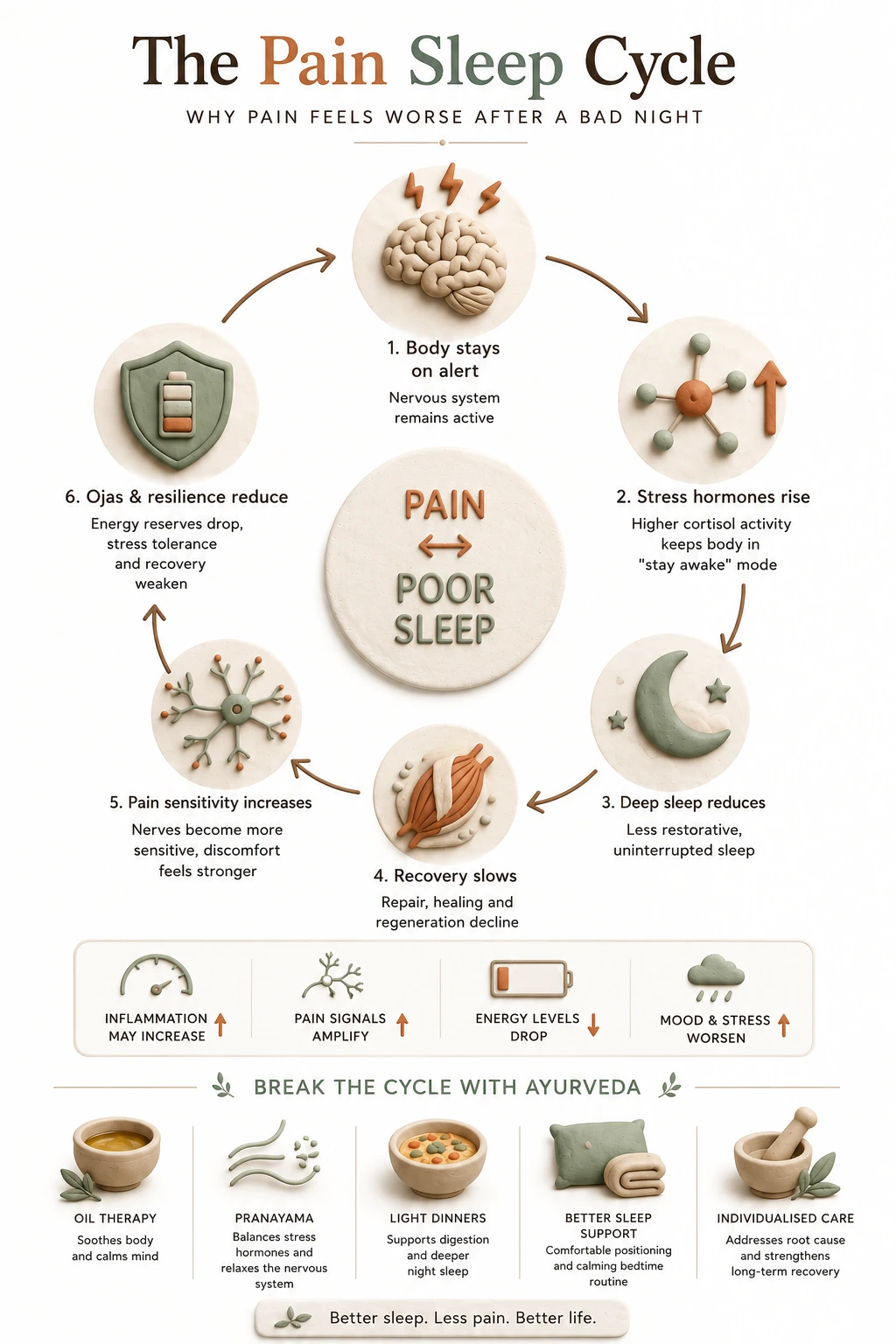
Pain and sleep can gradually become trapped in a repeating cycle. Pain makes sleeping difficult. Poor sleep increases pain sensitivity. Greater discomfort then affects sleep again. The cycle quietly continues. Many people with chronic pain and insomnia describe experiences like these:
- Waking repeatedly through the night
- Feeling tired despite sleeping
- Finding discomfort stronger after sunset
- Feeling that pain seems worse at night
Ayurveda does not look at pain as an isolated symptom in one area of the body. It asks broader questions. Why did the pain begin? Why does it continue returning? Is inflammation involved? Are nerves affected? Has sleep quality changed? Is stress becoming part of the picture?
Pain relief alone may not always be enough if recovery itself has become weaker.
Understanding the Root Cause: The Apollo AyurVAID Approach
Pain does not always begin dramatically. In many people, it starts quietly. A little stiffness after sitting too long. Neck strain after desk work. Back discomfort after travel.
Initially, short-term relief measures may seem enough. Then something changes. The pain starts returning more frequently. Recovery feels slower. Sleep becomes affected. Daily activities begin requiring more effort than before.
At Apollo AyurVAID, the Precision Ayurveda approach focuses on understanding more than just where pain exists.
Assessment may include:
- Pattern and duration of pain
- Joint, muscle, or nerve involvement
Sleep and recovery patterns
Sometimes the assessment extends further into posture habits, movement patterns, stress levels, and lifestyle factors that may continue contributing to symptoms.
Management may involve internal medicines, external therapies, rehabilitation support, dietary guidance, and lifestyle correction strategies. The larger goal extends beyond temporary relief. The aim is to help people move comfortably, rec
Ayurveda Protocol for Painful Conditions
Small routines often matter more than people realise.Foot and scalp oil massage before bed
Warm medicated oils have long been used in Ayurveda. Gentle application before bedtime may help support relaxation and comfort.
People often use it to support:
- Reduced muscle tension
- Better comfort
- A calmer feeling before sleep
Ashwagandha and Brahmi
Traditionally, combinations involving ashwagandha for sleep quality and Brahmi for sleep and pain may be considered under medical supervision. Jatamansi for pain and sleep support is often discussed because of its traditional use in calming the mind. Tagara has traditionally been used in selected Vata and sleep-related conditions.
A very important point needs emphasis here: Do not self-medicate.
Herbs are not general supplements that work the same way for everyone. The wrong medicine, incorrect dose, or prolonged use without supervision can sometimes worsen symptoms rather than improve them.
Ashwagandha and Brahmi
Traditionally, combinations involving ashwagandha for sleep quality and Brahmi for sleep and pain may be considered under medical supervision. Jatamansi for pain and sleep support is often discussed because of its traditional use in calming the mind. Tagara has traditionally been used in selected Vata and sleep-related conditions.A very important point needs emphasis here: Do not self-medicate.
Herbs are not general supplements that work the same way for everyone. The wrong medicine, incorrect dose, or prolonged use without supervision can sometimes worsen symptoms rather than improve them.
Pranayama for pain-related insomnia
Simple breathing practices before bed may help settle mental activity. Examples include deep breathing, alternate nostril breathing, and slower breathing exercises.
Shirodhara: The Sleep and Pain Connection
- Sleep disturbances
- Stress-related symptoms
- Vata imbalance
- Nervous system overactivity
Diet and Timing for Better Sleep with Chronic Pain
Food habits affect both pain and sleep more than many people realise. Ayurveda generally encourages:
- Warm, freshly prepared meals
- Regular meal timing
- Lighter evening meals
Late heavy dinners and highly processed foods may sometimes interfere with both digestion and sleep quality.
Sleep does not begin when you enter the bedroom. It begins earlier. It starts with what you eat, how you move, how stressed you feel, and how well your body recovers each day.
Conclusion
References