World Digestive Health Day celebrated every year on the 29th of May, is an important occasion that reminds us that good health starts in our digestive systems. In Ayurveda, digestion goes beyond simply processing food – it becomes the key to transformation, vitality, the immune system and clarity. With a strong digestive fire, the whole system works easily and effectively. Weakness of digestive fire leads to an imbalance in the body. This is why Ayurvedic gut health deserves our attention not as a trend, but as a basic principle of lasting wellness.
Modern lifestyle habits – rushed meals, irregular timing, processed food, stress, poor sleep – often weaken digestion long before major disease appears. That is why Ayurveda, which focuses so deeply on digestive health and strengthening the digestive fire before problems become chronic.
Concept of Agni
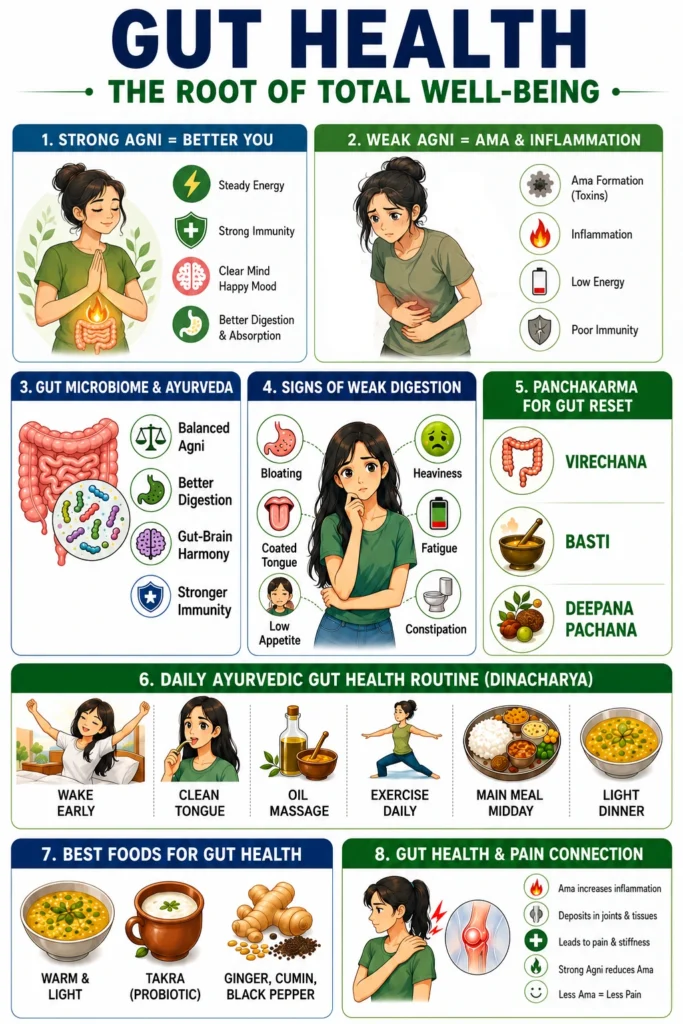
In Ayurveda, Agni is the inner fire that governs digestion, absorption, metabolism, and transformation. It is not just about stomach acid or enzymes. Agni is the intelligence of the body that transforms food into nutrition and energy.In Samagni state, a person has a good and consistent appetite, proper digestive process, energy level and clarity of mind. If there is an imbalance in Agni – if it becomes weak, erratic or too active – then the body will not be able to digest the consumed food properly. This is when symptoms like bloating, heaviness, acidity, constipation, gas, and fatigue begin to appear.
Understanding how to improve digestion starts with understanding Agni.

The 13 Types of Agni
Ayurveda describes digestion and metabolism as a layered process, not a single event. There are 13 types of Agni. Jatharagni is the main digestive fire in the stomach and duodenum. Bhutagni helps process the basic elements in food. Dhatvagni works at the tissue level and helps nourish blood, muscle, fat, bone, and other tissues.When these fires work in harmony, the body functions efficiently. When they are disturbed, digestion becomes incomplete, and the body begins to struggle at multiple levels.
This is why how to improve digestion is never one-size-fits-all in Ayurveda. Some people have slow digestion, some have sharp digestion with acidity, and others have variable digestion with gas and bloating. Each pattern needs a different approach.
When Weak Digestion Creates Disease
When Agni is weak, food is not fully transformed. Ayurveda calls this incomplete metabolic residue Ama. Ama is sticky, heavy and obstructive. It may deposit itself in the channels and tissues, impacting the body’s energy, immune system, joints and cognitive abilities.This explains why digestive problems are not simply a matter of indigestion. Poor digestion can cause weight gain, hormonal imbalances, inflammation and even depression. Chronic diseases often stem from persistent digestive issues.
From this perspective, Ayurvedic gut health is a foundation for prevention, not merely a remedy for discomfort.
Gut Microbiome and Ayurveda
Modern science now strongly supports the importance of the gut. The gut microbiome Ayurveda link is also quite fascinating, considering that both theories acknowledge the role of the gut in metabolic processes, immune response, and inflammation.
In such an instance, a healthy gut microbiome ecosystem facilitates efficient digestion, proper absorption, and increased resilience. According to Ayurveda, a healthy gut ecosystem is characterised by a healthy and robust Agni, which makes it easier to maintain balance.
As stated above, the idea is simple: a healthy gut ensures a healthy body, while an unhealthy one causes disturbance within the entire body.
Ama: The Cause of Heaviness
The term ‘ama’ means ‘unripe’ or something that cannot be fully processed or assimilated by the body. The accumulation of unripe substances is toxic and heavy for the body.
Common symptoms ofama toxicity include low energy levels, dull appetite, coating on the tongue, constipation, feeling heavy after eating and lack of focus. If ignored, it can contribute to a deeper imbalance.This is why Ayurveda emphasises cleansing and strengthening together. We not only remove what is harmful, but we also restore the fire that prevents it from forming again.
Signs Your Digestive Fire Needs Support
A weak Agni often shows itself quietly. You may not feel dramatic symptoms at first, but the body gives clues: heaviness after eating, bloating, loss of appetite, sluggish bowels, tiredness, and a sticky tongue coating in the morning.
These signs matter. They tell us that digestion is not functioning at its best. Addressing them early makes recovery much easier.
Panchakarma for Gut Health
Sometimes diet changes alone are not enough. For such instances, Panchakarma for gut health might be explored with suitable guidance. It does not constitute a fast or trendy cleanse but an established practice in Ayurveda for flushing out toxins.
Virechana for gut reset method proves helpful in the cleansing of excessive Pitta and Ama in the body. It helps restore balance, improve digestion, and reduce internal heat and toxicity.
Basti is another important therapy, especially when Vata imbalance affects the colon, elimination, and the gut-brain axis. The right therapy depends on the person’s constitution, current imbalance, and strength.
Triphala and Daily Digestive Support
Daily Routine for Better Digestion
Foods That Support Gut Health
Gut Health and Pain
Final Thought
References
- Surnar RP, Deshmukh A, Amle D. Concept of Agni and Its Clinical Importance. World J Pharm Med Res (WJPMR). 2019;5(12):120-124.
- Mishra G, Kumar A, Sharma S. Concept of Agni and its Importance in Ayurveda: A Review. J Ayurveda Integr Med Sci (JAIMS). 2017;2(3):184-188.
- Verma P, Sajeesh US, Prasad M, Gurao RP. Understanding of Mandagni with special reference to different vyadhi: A Review. Int J Res Ayurveda Pharm (IJRAP). 2024;15(5):166-170.
- Choudhary N, Prajapati PK, Soni P. Takrarishta a potent ayurvedic probiotic: evidence based microbial study. World Journal of Pharmaceutical Research. 2026;15(7):1881-1894.
- Chathurika LAWJ, Yadav CR, Yadav S. Decoding gut microbiome diversity through Prakriti: Insights from an Ayurgenomics perspective: A narrative review. In: Proceedings of the Annual Research Symposium-2025. Colombo: University of Colombo; 2025. p. 432.