Recovering after a stroke is rarely a straight line. As a clinician and communicator, I’ve sat with many patients and families who tell me the same things: fear, frustration, and a fierce wish to get better. The good news is that carefully planned stroke exercises — especially those that target the hand and upper limb — give the brain and body strong signals to re-learn movement. Combining targeted hand exercises for stroke patients with broader exercises for stroke patients (balance, gait, core) and an integrative care plan can make recovery more effective and less lonely. Apollo AyurVAID’s structured, integrative approach to stroke rehabilitation shows how combining modern neurorehabilitation with Ayurveda can personalise recovery pathways for each person.
Why movement matters
After a stroke, the brain’s connections are disrupted. Repetitive, goal-directed movement helps the brain rewire itself, a process called neuroplasticity, and much of this important rewiring happens in the early months after stroke, though gains can continue for many months with consistent therapy. Early, frequent rehabilitation is associated with better functional outcomes, and focused training of the upper limb and hand is essential because many survivors list hand function as a top priority for regaining independence.

Principles before you start
- Safety first — consult your rehabilitation team (physiatrist/neurologist physiotherapist/occupational therapist).
- Start simple and repeat — short, regular practice is better than occasional long sessions.
- Focus on function — choose exercises that mimic real tasks (holding a cup, buttoning a shirt).
- Be patient and consistent — change takes time; little daily progress adds up.
Hand exercises for stroke patients
Below are evidence-based, therapist-friendly ideas you can adapt at home. Aim for multiple short sessions daily; always stop if pain increases or the therapist advises.
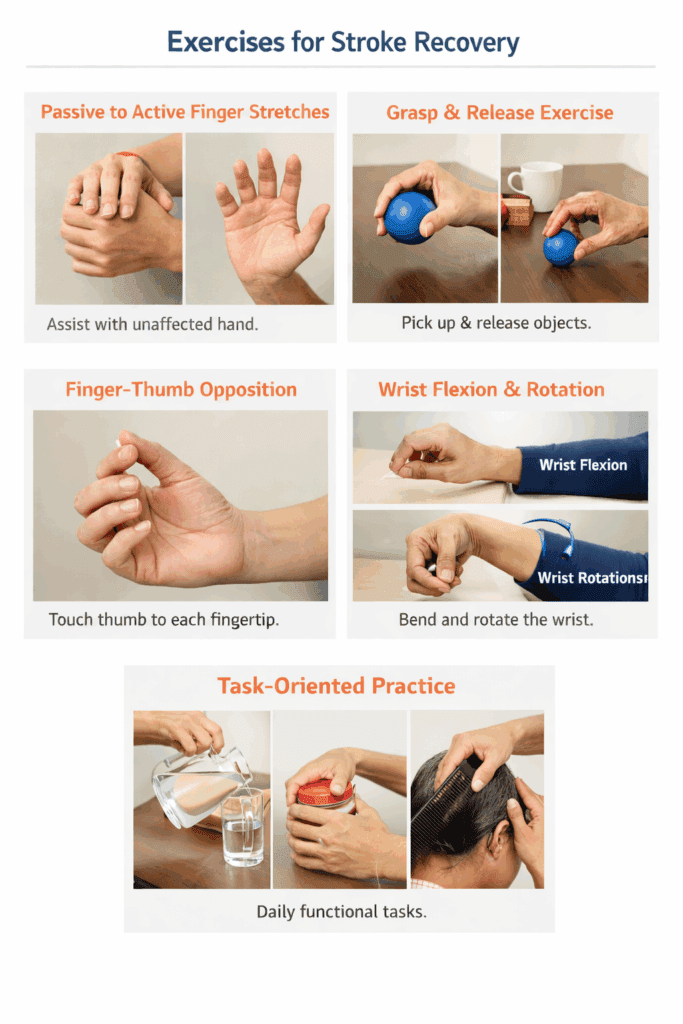
Passive-to-active finger stretches
What: Gently open and close the fingers. If weak, use the unaffected hand to assist (passive), then try active opening.
Why: Prevents stiffness, maintains joint mobility and primes muscles for later strengthening.
Progression: Move from assisted to active repetitions; add resistance with a soft therapy putty or a cloth.
Grasp-and-release
What: Pick up items of varying size (foam ball, cup, spoon) and release after brief possession.
Why: Enhances grasp-and-release skills, which are essential for the human hand in daily living. Devices such as therapy gloves or the CCFES/Musical Glove devices have been effective in increasing repetition.
Finger/thumb opposition exercises
What: Each finger should be touched to the thumb one by one.
Why: The motor skills required for writing, buttoning, and the use of cutlery.
Wrist flexion/extension
What: Bending wrists up and down as well as rotating in circular motions.
Why: Helps loosen the wrist and prepare the hand for functional activities. Pre-practice warm heating and warm soaks may help alleviate stiffness. (Check with your doctor.)
Task-oriented Practice
What: Engage in dry activity practice tasks such as pouring water, combing, and opening a jar lid.
Why: The brain learns best when movement is meaningful; task practice is among the most effective stroke exercises for translating gains into independence.
Other essential stroke exercises
A complete recovery plan blends handwork with broader exercises.
- Balance and vestibular exercises: Head-eye coordination, weight shifts, and gaze stabilisation help reduce dizziness and improve walking confidence. Vestibular rehabilitation is effective for stroke-related dizziness and balance problems when tailored to the person.
- Gait and stepping practice: Repetitive stepping, treadmill training or overground walking with cues builds endurance and safety.
- Core and posture work: seat reaches, pelvic tilts, and trunk rotations enhance sitting balance, a foundation for safe use of the arm and hand.
- Cardio conditioning: Light aerobic activity (walking, recumbent bike) supports brain health and stamina; discuss timing and intensity with your team.
How Ayurveda and integrative care can help
Recovery after a stroke requires gentle, purposeful physical activity. The Ayurveda emphasis on Vyayama, a light and steady type of exercise, matches well with contemporary practice, which recommends a return to normal functioning without tiring.
- Gatra Laghavam (Lightness): Elegant, rhythmic movements help soften the body and make all activities seem easier.
- Svedagama (sweating): Moderate effort: Warm and slightly breathy, but not breathless.
- Deepta Agni (Improved Metabolic Fire): The level of light physical activity can include short periods of walking or recumbent bike exercising.
- Medas Kshaya (Reduce fat): Increased activity is useful for building strength, so exercises become easier.
- Mamsa Sthairya (Strengthen tissues): Progressive, safe strengthening (grip work, supported weight-bearing) rebuilds muscle and bone.
NOTE: Ayurveda recommends gentle exercise followed by oil massage in people suffering from Vata diseases, including stroke.
Apollo AyurVAID and similar integrative programs use a personalised cycle: assessment, goal-setting, therapies (Ayurveda procedures + rehabilitative exercises), and reassessment. Ayurveda offers supportive therapies – gentle oil massage (Abhyanga), Swedana (sudation therapy), and Nasya, which may reduce muscle stiffness, improve circulation, and support relaxation. When combined with modern stroke exercises, these therapies can improve comfort, engagement, and overall function, especially when coordinated by a multidisciplinary team. Ensure that trained clinicians deliver any Ayurveda therapy within an integrated rehabilitation plan.
Practical tips for caregivers and patients
- Keep intensity moderate: be able to talk, have a slight sweat, and have no heavy panting.
- Prefer short, frequent sessions over long, exhausting ones.
- Make exercises functional (pouring, combing, buttoning).
- Stop and seek care for chest pain, sudden dizziness, severe headaches, or new weakness.
- Combine Ayurveda supportive therapies, as advised, with medical rehabilitation provided by a healthcare team.
To Conclude
If you or a loved one is on the road to recovery, here are a few things to keep in mind: Gentle persistence is crucial, rather than heroic individual actions. Work on targeted hand exercises for stroke patients and overall stroke exercises together, stay in touch with your rehab team, and when the time comes, supplement their work with integrative healing methods. Every individual’s journey is unique; take heart in small victories, don’t be afraid to ask for help, and keep at it, because the human brain is a mighty adaptable thing, and a lot can be accomplished through gentle, loving effort. If you’re interested, I can write up a quick 2-week plan for you to follow on your own for hand exercises.
References