Some evenings are harder than others. You eat carefully the whole day, avoid sweets at office celebrations, and even skip dessert at family dinners… and still, your sugar reading surprises you. It can feel unfair. Many patients quietly tell us they feel like they’re “doing everything right” but still not seeing results.
That’s usually when the question comes up — do diabetes superfoods really help?
It’s an important question. And I want to answer it honestly, the way I would in my clinic. Certain foods can definitely support your body in managing sugar levels better. But they are not cures, and they should never be used without proper medical consultation. Used blindly, even healthy foods can sometimes create problems.
Let’s talk about how the right natural food for diabetes can help — safely, sensibly, and realistically.
Why Food Feels So Powerful in Diabetes
Food is deeply emotional. It’s comfort, routine, culture, family… everything. So when diabetes enters your life, food suddenly becomes stressful. Patients often say they feel scared of eating.
One of the biggest differences patients notice when they consult us is this — Ayurveda does not view diabetes only as a sugar disorder. It is understood as Prameha, a condition where metabolism, fluid balance, fat tissue, muscle tissue, and energy regulation gradually lose coordination. Ayurveda explains that diabetes often begins with excessive nourishment — called Santarpana. This includes overeating, a sedentary lifestyle, stress eating, irregular sleep, and frequent consumption of heavy, oily, or processed foods.
Over time, this leads to disturbances in metabolic tissues, especially fat tissues (Meda Dhatu). As metabolism weakens, digestive strength (Agni) reduces, and toxins (Ama) begin accumulating. Eventually, the body struggles to use glucose properly.
Modern medicine explains a similar story using different words — insulin resistance, inflammation, gut imbalance, and stress hormones. Different languages, same problem.
That’s why people start searching for foods that cure diabetes. It comes from hope. But the truth is gentler and more realistic — food supports healing. It doesn’t replace treatment.
What Actually Makes Foods Helpful for Diabetes?
Not every “healthy” food works the same way for blood sugar. The diabetes superfoods we recommend usually do a few important things quietly in the background:
- Reduces sugar spikes
- They help insulin work better
- They reduce internal inflammation
- They improve digestion and metabolism
- They give steady energy instead of sudden spikes
Ayurveda places great importance on Pathya and Apathya — foods that support health versus foods that disturb metabolism. Patients often think avoiding sweets alone is enough. But Ayurveda explains that excessively heavy (Guru), oily (Snigdha), sticky, processed, or difficult-to-digest foods can also worsen metabolic imbalances—even if they don’t taste sweet. That’s where the idea of diabetes superfoods becomes meaningful. These are foods that lighten metabolic loads, support digestion, and gently improve glucose utilisation.
Ayurveda also highlights something patients rarely hear — the timing, combination, and preparation of food often matter as much as the food itself. Eating before the previous meal is digested, mixing incompatible foods, or consuming heavy meals late at night can disturb metabolic rhythm, even if the food itself is considered healthy.
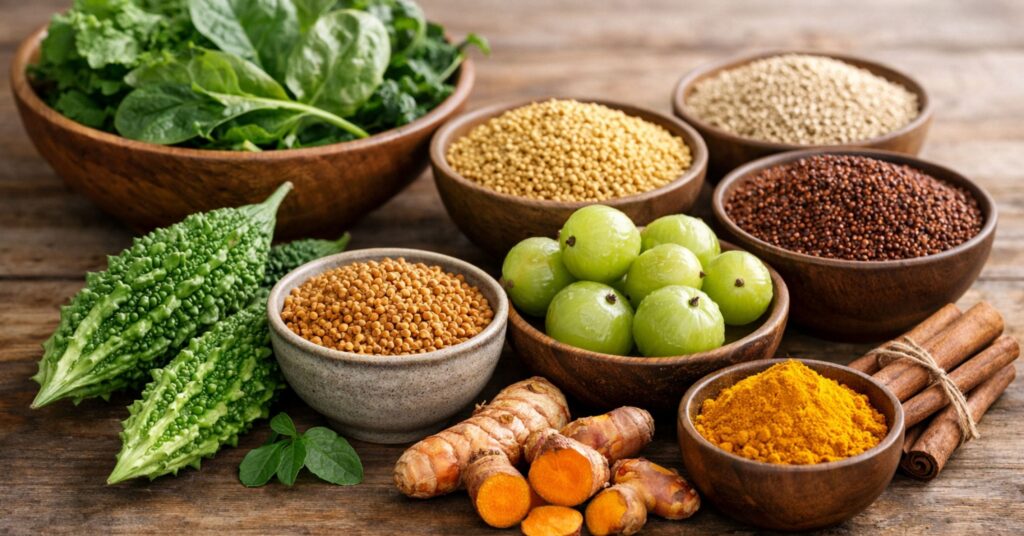
Fenugreek Seeds: Small But Surprisingly Powerful
Many people grow up hearing about fenugreek from their grandparents. There’s truth behind that traditional wisdom, which is why it often appears in conversations about foods that cure diabetes.
Fenugreek contains a natural fibre that slows how quickly glucose enters your bloodstream. It supports digestion and helps improve nutrient absorption, which is important because Prameha is not just excess sugar — it also involves improper nourishment of body tissues.
But here’s something patients don’t always realise—taking too much fenugreek or using it incorrectly can cause bloating or even sudden sugar drops, especially if you’re already on medication. This is exactly why medical guidance matters.
Bitter Gourd: The Vegetable People Love to Hate
Let’s be honest. Most people don’t enjoy bitter gourd.
Yet it keeps showing up whenever someone asks about what foods can reverse diabetes. That’s because it contains plant compounds that help cells absorb glucose more efficiently.
Ayurveda associates Prameha strongly withKapha imbalance and excess Meda Dhatu (fat metabolism disturbance). Bitter foods traditionally help reduce this metabolic heaviness and support cleansing of internal channels (Srotas). It can be helpful. But drinking large glasses of bitter gourd juice every morning—something we see often—can actually make some patients unsafe. Balance always matters more than enthusiasm.
Amla: Gentle Support for Metabolism and Immunity
Prameha is also described as a condition that gradually weakens body tissues (Dhatu Kshaya). Patients often experience fatigue, muscle weakness, low immunity, and slow healing.
That is why amla is valued as a natural food for diabetes. Ayurveda describes it as nourishing yet metabolically balancing. It strengthens tissues while reducing oxidative stress, supporting digestive and pancreatic function. It works quietly and gradually and usually suits many body types — but again, preparation and quantity matter.

Millets and Ancient Grains: A Steadier Way to Eat
Many patients feel relieved when they realise that diabetes management is not about starving or completely avoiding carbohydrates.
Millets are often recommended among diabetes superfoods because they release sugar slowly. That helps prevent those exhausting highs and lows many patients experience.
Ayurveda also considers millets lighter and easier to metabolise compared to heavily processed grains. Still, even millets need portion control and correct cooking methods to work well.
Lifestyle Changes That Can Support Sexual Health in Diabetes
Treatment works best when combined with consistent daily habits. Patients are often surprised to learn how strongly lifestyle influences recovery.
Supportive practices include:
- Maintaining stable blood sugar levels through structured meals
- Regular physical activity suited to individual capacity
- Prioritising sleep quality
- Stress management through relaxation and mindful practices
- Avoiding tobacco and excessive alcohol consumption
These measures strengthen both metabolic balance and sexual vitality.
Leafy Greens: Simple Foods That Do More Than You Think
Leafy vegetables rarely get the attention they deserve. But they are among the most practical foods that cure diabetes in supportive diet planning.
They help regulate sugar absorption, support liver detoxification, and improve nutrient delivery throughout the body. Plus, they’re usually easy to include in daily meals — which makes long-term consistency possible.
Turmeric: The Golden Herb
Turmeric, or Nisa, is well known for its ability to balance sugar levels and reduce inflammation. Research also suggests it may help with complications related to diabetes, including nerve, liver, kidney, and vascular changes.
Ayurveda has traditionally used turmeric to support digestion, immunity, and tissue healing. In practice, I usually advise patients to use turmeric in balanced, supervised amounts. Excess intake or self-supplementation may not suit everyone and can sometimes interfere with digestion or ongoing medications.
Cinnamon: The Quiet Metabolic Helper
Cinnamon often enters conversations about what foods can reverse diabetes because research shows it may improve insulin sensitivity.
Ayurveda also values cinnamon for improving circulation and digestion. But I often remind patients: cinnamon is helpful in small, supervised amounts. Too much can irritate digestion or interfere with medications.
A Story We See Very Often
Let me share a very familiar situation.
A working professional once visited us after trying multiple online diet plans. He was drinking bitter gourd juice every single day. He had completely switched to millets overnight. He was also skipping meals because he thought eating less meant better sugar control.
Instead, he felt constantly worn out, and his sugar levels were fluctuating more.
After evaluation at AyurVAID, we didn’t increase superfoods. We slowed things down. We corrected meal timing. We supported digestion. We balanced food combinations.
Gradually, his energy improved. Sugar readings became steadier. Nothing dramatic. Real healing typically manifests as steady, safe progress.
Why Personalisation Changes Everything
This is where Apollo AyurVAID’s clinical approach stands apart.
Physician-Led Care
You are assessed by qualified Ayurveda doctors trained in structured clinical protocols.
Evidence-Based Ayurveda
We combine classical Ayurveda understanding with modern diagnostics and glucose monitoring.
Truly Personalised Planning
Your digestion, body constitution, work stress, sleep, and medication history all influence dietary advice.
Safe Integration
Food therapies support your treatment plan. They are never used as replacements without medical supervision.
A Gentle Next Step
If you’re trying to improve sugar control naturally but feel confused by mixed advice, speaking with an AyurVAID physician can help you feel more confident and safe. A personalised consultation helps you understand your body’s metabolic patterns and build a realistic, structured plan that fits your life.
Managing diabetes is not about perfection. It’s about steady, supported progress — and you deserve guidance that respects both science and your everyday reality.
Key Takeaway
- Diabetes superfoods support sugar balance, but do not cure diabetes
- Self-experimenting with traditional remedies can sometimes backfire
- Your digestion and metabolism decide which foods suit you
- Combining Ayurveda with modern monitoring gives safer long-term results
- Medical guidance prevents complications and builds sustainable habits
References